
Summary: Researchers are debating the limits of fMRI research and how far it should be allowed to probe the contents of our minds.
Source: University of Cambridge.
Brain imaging can reveal a great deal about who we are and what is happening inside our heads. But how far can—and should—this research go? Julia Gottwald and Barbara Sahakian, authors of Sex, Lies, and Brain Scans: How fMRI Reveals What Really Goes on in our Minds, examine the promise and the ethical challenges.
Are you lying? Do you hold a racial bias? Is your moral judgment intact? Traditionally, we learn what people think or feel through interviews, questionnaires and self-report measures. Those techniques have value, but they are imperfect: people may conceal their beliefs, present themselves more favorably, or simply be unaware of implicit attitudes that influence their behaviour.
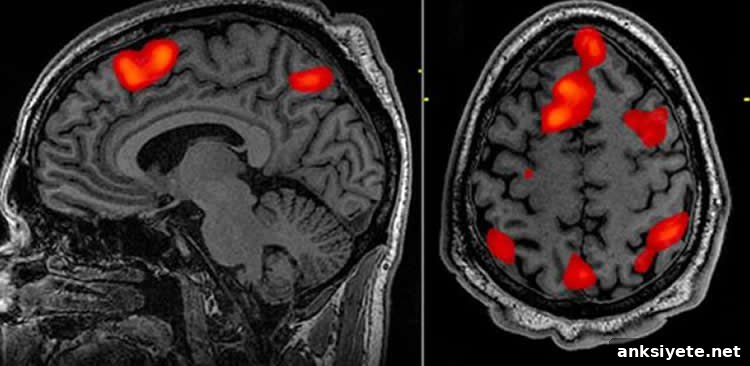
Functional magnetic resonance imaging (fMRI) offers a different approach. By tracking blood-flow changes that accompany neural activity, fMRI lets researchers observe the brain in action. Because it is non-invasive and widely available, fMRI has revolutionised our understanding of brain systems that support speech, movement, memory and many other functions. In recent years, scientists have pushed fMRI beyond mapping basic functions toward decoding more complex mental states.
One striking example comes from work in Jack Gallant’s laboratory, where researchers showed participants movie trailers and used machine learning to reconstruct rough versions of the clips from subjects’ brain activity. In that paradigm, a computer model learns patterns of neural activation associated with particular visual stimuli rather than relying on a pre-programmed template. With enough training data, the algorithm can decode brain activity and generate blurry but recognisable reconstructions of what the subject watched. Although imperfect and resource-intensive, such studies demonstrate that complex external stimuli can be inferred from measured brain activity.
Enormous potential
In their book, Gottwald and Sahakian explore the future possibilities of fMRI, including lie detection. Earlier studies identified brain regions involved in deception; more recent work attempts to use fMRI to classify truthful versus deceptive responses. Typical experimental designs ask participants to answer sets of questions where some responses are truthful and others intentionally false. The model is trained on those labelled responses to learn an individual’s “brain signature of lying,” the specific activation patterns that distinguish deceptive from truthful answers.
Some studies report classification accuracies around 90% for distinguishing lies from truths in controlled laboratory settings. That compares favourably to traditional physiological measures such as the polygraph, which typically show lower accuracy. A few commercial ventures have pursued licensing of lie-detection algorithms and have sought legal acceptance of fMRI evidence.
Courts so far have been reluctant to admit fMRI-based lie detection. Even a high accuracy rate does not eliminate the risk of false positive or false negative outcomes, and the stakes in legal cases are high. Moreover, fMRI reflects a person’s beliefs and perceptions at the time of scanning, not objective truth. If someone genuinely remembers a false event, brain activity will mirror that belief. Scans are not infallible records of external reality—they are measurements of internal mental states that can be mistaken.
Concerns about misuse extend beyond courtroom accuracy. The notion of an Orwellian “Big Brother” that routinely reads minds provokes understandable alarm, but practical and technical barriers remain. fMRI requires cooperation: scans typically last many minutes to hours, and even small head movements can corrupt the data. Covert, on-the-fly mind reading in public spaces is not feasible with current technology.
That said, ethical risks persist. Unlike academic research, commercial applications may operate without the same oversight. Academic studies undergo rigorous ethical review to weigh potential benefits and harms and to ensure informed consent. Private companies, if unregulated, could employ fMRI in ways that expose sensitive thoughts, show distressing stimuli, or fail to inform participants about clinically relevant incidental findings revealed by the scan.
Mapping brain circuits reveals mechanisms behind self-control, moral reasoning and implicit attitudes. Some propose using these insights for screening—whether to identify individuals at risk of harmful behaviour or to detect unconscious biases. But neural markers do not straightforwardly predict behaviour outside the lab. Implicit evidence of bias does not determine how a person will act in complex social situations, and using brain data as a blunt screening tool risks injustice and stigmatization.
fMRI is not yet—and may never be—a definitive tool for firing, imprisoning, or otherwise decisively judging people. However, advances in machine learning and imaging methods could narrow the gap between experimental demonstrations and real-world applications. For that reason, informed public debate and clear ethical frameworks are needed now. Which uses of brain-reading technologies provide genuine societal benefit, and which cross an ethical line? Do we want neural screening at airports, or to mandate bias-free brain profiles for teachers, judges or other professionals? These are public policy questions that require careful consideration before the technology moves further into everyday life.
Source: Julia Gottwald and Barbara Sahakian – University of Cambridge
Image source: Image adapted from University of Cambridge press release.
University of Cambridge. Brain Scanners Allow Scientists to ‘Read Minds’ – Could They Now Enable a ‘Big Brother’ Future? Neuroscience coverage, February 2017.