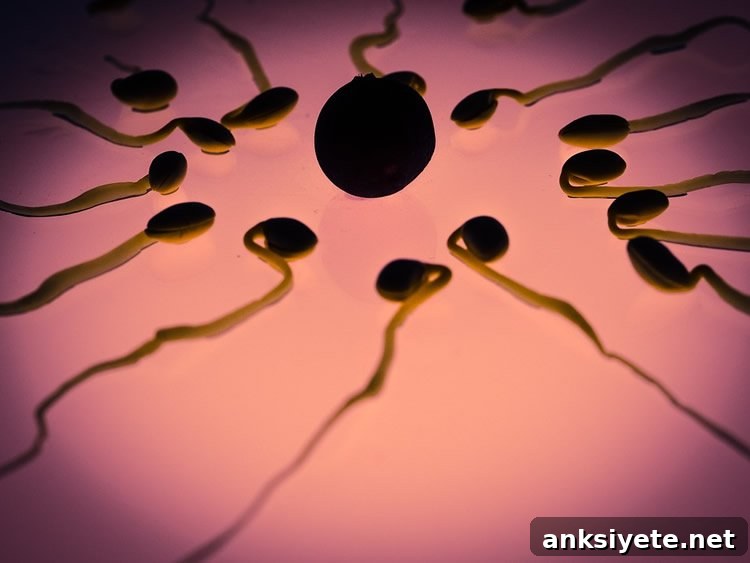
Summary: Researchers have identified an association between men’s sleep duration and the chromosomal quality of their sperm.
Source: Wiley.
New research reports a link between sleep duration and sperm chromatin integrity. The findings appear in the Journal of Sleep Research.
A study of 1,920 semen samples collected from 796 male college volunteers in Chongqing, China, between 2013 and 2015 found that sleep duration is associated with an indicator of sperm chromatin maturity. The study measured habitual sleep using a modified Munich Chronotype Questionnaire and evaluated sperm DNA and chromatin using the Sperm Chromatin Structure Assay and Comet assay.
When the researchers used 7.0–7.5 hours of sleep per day as the reference category, they observed that both shorter and longer sleep durations were associated with lower values of High DNA Stainability (HDS), a parameter that reflects the proportion of sperm with immature chromatin. Specifically, men who reported more than 9.0 hours of sleep per day and those who reported 6.5 hours or less per day had approximately 40.7% and 30.3% lower HDS, respectively, compared with men sleeping 7.0–7.5 hours per day. The association with HDS reached statistical significance (P = 0.009).
HDS is one of several measures of sperm chromatin and DNA status. The study did not find a significant relationship between sleep duration and the DNA fragmentation index or Comet assay parameters in this sample. The authors note that HDS is an indicator of chromatin immaturity, which can reflect the quality of chromatin packaging during sperm development.
“This finding adds to our earlier work showing that sleep duration has an inverse U-shaped relationship with semen volume and total sperm count,” said Dr. Jia Cao, co-author of the study. “In the prior analysis, semen volume and total sperm count were highest at about 7.0 to 7.5 hours of sleep per day, and both shorter and longer sleep were associated with decreases in those parameters. The current results suggest a similar pattern for chromatin maturity as measured by HDS.”
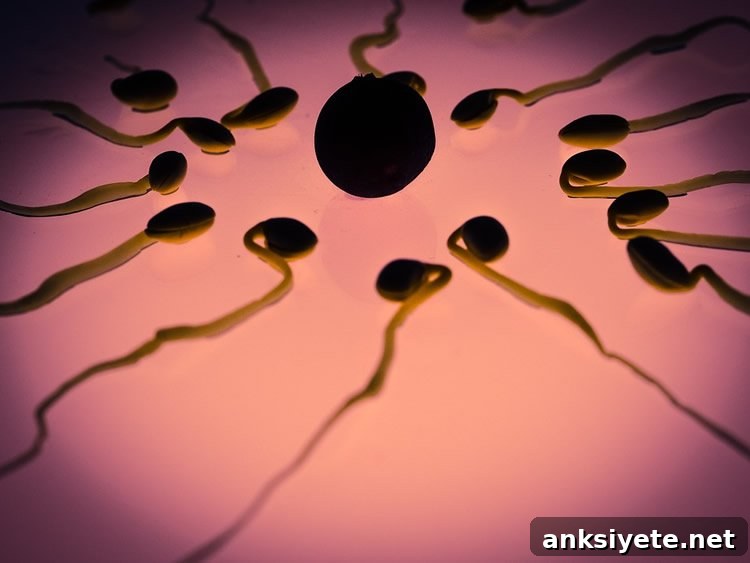
Study setting and methods: This three-phase panel study enrolled 796 healthy young men attending colleges in Chongqing between 2013 and 2015. Habitual sleep duration was self-reported using a modified Munich Chronotype Questionnaire. Sperm chromatin and DNA status were assessed with standardized laboratory assays (Sperm Chromatin Structure Assay and Comet assay) performed on 1,920 semen samples collected across the study period.
Key findings: Compared with 7.0–7.5 hours of sleep per day, both shorter (≤ 6.5 hours) and longer (> 9.0 hours) sleep durations were linked with lower High DNA Stainability (HDS), suggesting a higher degree of chromatin immaturity among men whose sleep deviated from the mid-range. No meaningful associations were observed between sleep duration and DNA fragmentation index or Comet assay measures.
Interpretation and implications: The results indicate that habitual sleep duration may be related to aspects of sperm chromatin integrity in young men. Because chromatin packaging is critical for genome stability in sperm, these findings may have implications for male reproductive health. The authors emphasize that further research is needed to replicate these results in other populations and to explore underlying biological mechanisms.
Publication details: The full research article, titled “Sleep duration is associated with sperm chromatin integrity among young men in Chongqing, China,” was published online in the Journal of Sleep Research on October 9, 2017 (doi:10.1111/jsr.12615). Authors include Xiaogang Wang, Qing Chen, Peng Zou, Taixiu Liu, Min Mo, Huan Yang, Niya Zhou, Lei Sun, Hongqiang Chen, Xi Ling, Kaige Peng, Lin Ao, Huifang Yang, Jia Cao, and Zhihong Cui.
Press source: Penny Smith, Wiley.
Publisher note: Organized reporting by NeuroscienceNews.com.
Image source: NeuroscienceNews.com (public domain).
Abstract (paraphrased): This study evaluated whether habitual sleep duration is associated with sperm chromatin integrity in a sample of young men from Chongqing, China. Using questionnaires and laboratory assays on nearly 2,000 semen samples, researchers found that sleeping either less than or more than the mid-range of about 7–7.5 hours per day was associated with lower HDS, an indicator of chromatin immaturity. No significant link was observed with DNA fragmentation or Comet assay parameters. The authors conclude that sleep duration appears related to sperm chromatin status and call for further studies to confirm and clarify mechanisms.
Feel free to share this summary of the research while preserving attribution to the original publication and authors.