
Summary: Researchers at Newcastle University report that people with two common dementia types—Lewy body dementia and Alzheimer’s disease—display distinct walking patterns. Differences in step variability, timing and asymmetry suggest gait could serve as a clinical biomarker to help distinguish dementia subtypes and guide more targeted care.
Source: Newcastle University
Newcastle University researchers have shown for the first time that people with Alzheimer’s disease and those with Lewy body dementia exhibit different, identifiable gait patterns.
The study, published in Alzheimer’s & Dementia: The Journal of the Alzheimer’s Association, found that people with Lewy body dementia exhibit greater variability in step time and step length and more asymmetry between left and right steps than those with Alzheimer’s disease. These gait differences point to subtle but measurable differences in how each disease affects movement.
Useful diagnostic tool
Dr Ríona McArdle, a postdoctoral researcher in Newcastle University’s Faculty of Medical Sciences who led the Alzheimer’s Society–funded project, explained that walking reflects underlying brain function. “The way we walk can reveal changes in thinking and memory associated with brain disorders such as dementia,” she said. Accurate identification of the dementia subtype is crucial so people receive the most appropriate treatment and care as early as possible.
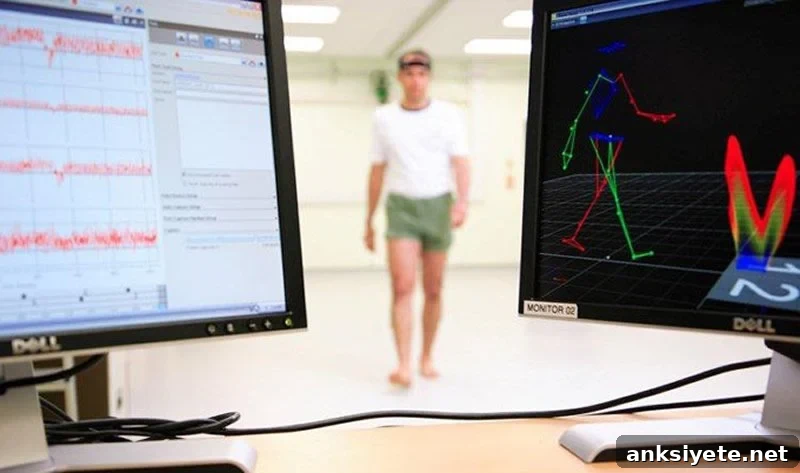
The researchers evaluated gait in 110 participants: 29 older adults with intact cognition, 36 people diagnosed with Alzheimer’s disease and 45 with Lewy body dementia. Each participant completed a straightforward walking test on an instrumented walkway at the Clinical Ageing Research Unit’s Gait Lab. The walkway is a mat embedded with thousands of sensors that record footfall timing and position as people walk at their normal pace.
Analysis showed that people with Lewy body dementia tended to vary the timing and length of their steps more frequently and had more pronounced asymmetry between left and right steps than people with Alzheimer’s disease, whose gait patterns were more consistent. Increased irregularity and asymmetry in gait are associated with a higher risk of falls and reflect differences in the underlying pathology affecting movement control.
Combining measures of step length variability and step time asymmetry allowed the research team to correctly identify approximately 60% of dementia subtype cases in this study—an encouraging first step toward using gait characteristics as diagnostic indicators.
Future research will explore how these gait markers can complement existing diagnostic procedures and evaluate their practicality as a screening method. Researchers hope a validated, clinically useful tool could be available through the NHS within five years.
Pioneering study
Dr James Pickett, Head of Research at Alzheimer’s Society, described the findings as pioneering for dementia research. He highlighted the potential for gait analysis to contribute to earlier and more accurate differentiation between Alzheimer’s disease and Lewy body dementia, and urged continued investment in larger, longer studies to validate these results and clarify how gait relates to cognitive and pathological changes.
Dementia encompasses a range of progressive brain disorders that impair memory, thinking and daily function. The Alzheimer’s Society estimates that the number of people living with dementia in the UK is rising and could exceed one million by 2025, reinforcing the need for improved diagnostic approaches and management strategies.
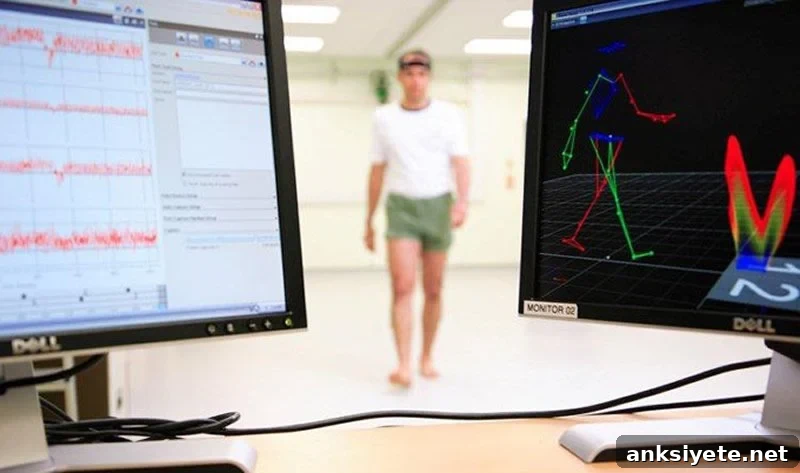
Newcastle University will also contribute to the €50 MOBILISED-D digital monitoring project, led by Professor Lynn Rochester. That work aims to develop wearable sensor systems to track walking in daily life, using small body-worn devices to monitor gait as a sign of overall health and function.
Living with Lewy body dementia
John Tinkler, a 70-year-old father and grandfather from Langley Park, County Durham, has lived with Lewy body dementia for three years. His family first noticed walking difficulties: a shuffling gait and frequent trips. John’s wife, Jenny, who is a physiotherapist, describes how his mobility, balance and coordination have declined and how fatigue, joint pain and muscle cramps have further affected his daily activity.
John and his family took part in the Newcastle University study to support research. Jenny emphasized the importance of identifying the correct dementia subtype early: “A definitive diagnosis helps patients access the right management program as soon as possible and allows families to better understand their loved one’s needs.”
The family hopes that screening tools based on gait will become widely available through the NHS, enabling timely, tailored care.
Source:
Newcastle University
Media Contacts:
Press Office – Newcastle University
Image Source:
The image is credited to Gait Lab.
Original Research: Closed access. “Do Alzheimer’s and Lewy body disease have discrete pathological signatures of gait?” Ríona McArdle et al., Alzheimer’s and Dementia. DOI: 10.1016/j.jalz.2019.06.4953.
Abstract (summary)
The study tested the hypothesis that Alzheimer’s disease (AD) and Lewy body disease (LBD) produce distinct gait signatures reflecting their specific cognitive profiles and pathologies. An instrumented walkway measured 16 gait characteristics across five locomotion domains: pace, rhythm, variability, asymmetry and postural control. Compared with controls, both AD and LBD groups showed impairments in pace and variability. The LBD group exhibited greater asymmetry and variability than the AD group. Cognitive measures explained some variance in gait: executive dysfunction accounted for variance in gait variability in LBD, while global cognitive impairment explained variance in AD. The findings support the idea that gait-cognition interactions reflect disease-specific brain network changes and motivate further studies linking validated gait models to neural biomarkers and postmortem confirmation.