
Summary: Researchers have identified a psychological pathway that can cause body size and shape misperception, increasing the risk of eating disorders and compulsive exercise.
Source: Macquarie University.
Researchers at Macquarie University have identified a perceptual pathway that helps explain why some people develop body size and shape misperception. This visual mechanism may increase the risk of conditions such as anorexia nervosa, bulimia nervosa and muscle dysmorphia. The study shows that people who are dissatisfied with their bodies tend to look longer at thinner body images, and this selective attention changes how the brain encodes “normal” body size. Over time, thinner bodies come to be perceived as normal, which can make an average-sized body seem larger and lead to overestimation of one’s own size.
“When presented with images of thin and larger bodies at the same time, people who are less satisfied with their bodies spend more time looking at the thin bodies,” said Dr Ian Stephen from Macquarie University, the study’s lead author.
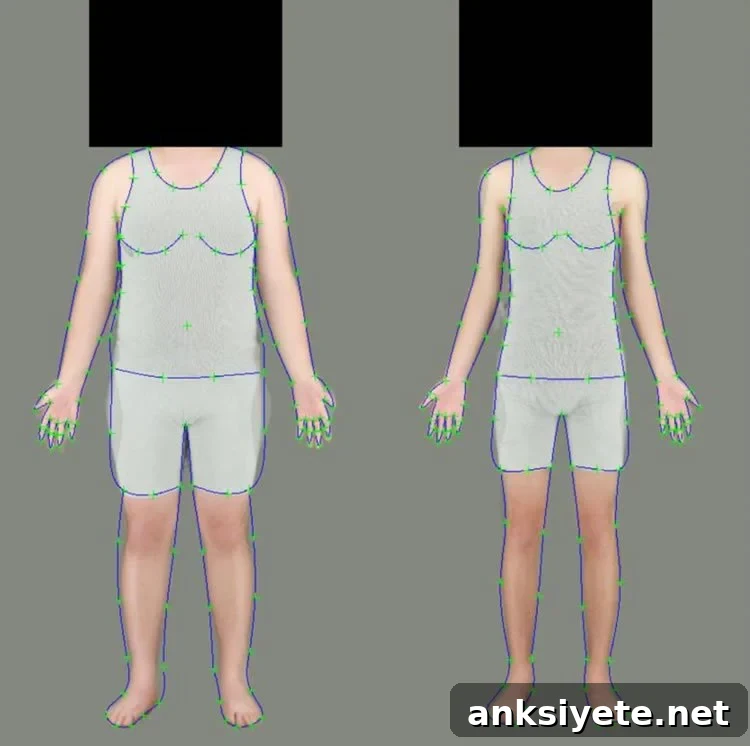
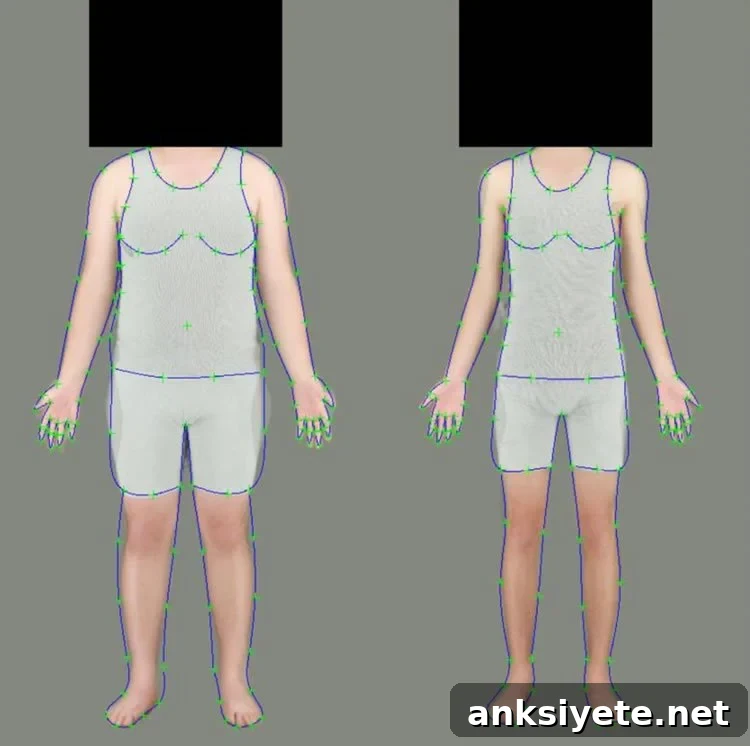
The researchers explain that the problem stems from visual adaptation: prolonged exposure to a particular stimulus shifts perceptual norms. Previous studies have shown that just a couple of minutes of viewing very thin bodies can recalibrate the brain’s mechanisms that represent body fatness. After this recalibration, an average-sized body can appear larger than it actually is.
“We know from earlier work that gazing at thin bodies for as little as two minutes changes the neural encoding of body fatness,” said Associate Professor Kevin Brooks, a senior author on the study. “In our experiment, participants used an app to adjust test body images to what they perceived as ‘normal’ before and after exposure to thin and fat body images. Those who looked more often and for longer at thin bodies adjusted their ‘normal’ settings toward thinner bodies after exposure than they did before—and the reverse was true for those who focused on larger bodies.”
Importantly, these adaptation effects transfer beyond images of other people and also influence how individuals see their own bodies. The study’s authors argue that selective visual attention—spending more time looking at a certain body type—can intensify the visual adaptation process. This reinforces the perception that the repeated stimulus is the norm and increases the likelihood of overestimating one’s own body size, which is a risk factor for disordered eating.
Body size and shape misperception affects a significant and growing share of the population and is linked to eating disorders, excessive exercise behavior and steroid use. The new findings add a perceptual dimension to psychological and social explanations for these problems and help explain why some people exposed to similar cultural images develop misperception while others do not.
“These findings have implications for treating clinical populations where high levels of body size and shape misperception are common, such as patients with anorexia or bulimia and possibly those with muscle dysmorphia,” Dr Stephen added. “While issues around power and control remain central to our understanding of disorders like anorexia, this study highlights perceptual mechanisms that may help precipitate such conditions.”
Understanding how misperception develops can improve treatment by addressing not only the psychological drivers but also the perceptual processes that sustain distorted body image. Since people with eating disorders often face barriers to seeking help, clarifying the mechanisms behind body misperception could inform more effective interventions and preventive approaches.
About this research
Study title: Visual attention mediates the relationship between body satisfaction and susceptibility to the body size adaptation effect
Source: Macquarie University (reported via NeuroscienceNews)
Publisher note: Article summarizes open access research published in PLOS ONE.
Image credit: Stephen et al.
Original research: Open access article in PLOS ONE, doi: 10.1371/journal.pone.0189855
Abstract (summary)
Body size misperception—the belief that one’s body is larger or smaller than it actually is—affects many people and is a risk factor for eating disorders and related behaviors. Recent evidence suggests that visual adaptation to extreme body images shifts the point of subjective normality, meaning that repeated exposure to very thin or very large bodies can alter what individuals perceive as a normal body. This study tested whether differences in body satisfaction influence selective visual attention to thin versus fat bodies, and whether this attention mediates the direction and magnitude of body size adaptation. Results showed significant mediation effects for both men and women: lower body satisfaction increased attention to thin bodies, which in turn amplified visual adaptation toward thinner norms. These perceptual changes offer a possible mechanism explaining why some people develop body size misperception while others do not.
Suggested citation
Macquarie University (2018). Perceptual pathway that causes body dysmorphia and increased risk of eating disorders identified. NeuroscienceNews. Summary of PLOS ONE research.