
Summary: Mutations in the cholesterol-transporting protein ABCA13 are linked to schizophrenia-like behaviors in mouse models and impair cholesterol trafficking in neurons.
Source: Kyoto University
Researchers led by Kazumitsu Ueda at Kyoto University’s Institute for Integrated Cell-Material Sciences (iCeMS) report new evidence that loss of ABCA13 function disrupts cholesterol handling in brain cells and produces behavioural changes in mice that resemble features of schizophrenia.
ABCA13 is a member of the ATP-binding cassette (ABC) transporter family, proteins that move cholesterol and other lipids across cellular membranes. Ueda and his group, who have decades of experience studying ABC transporters, focused on ABCA13 because it is predicted to be the largest ABC protein and has been genetically linked to several psychiatric conditions, including schizophrenia, bipolar disorder and major depression.
The research team combined cellular, molecular and animal approaches. They expressed ABCA13 in cultured human cells, engineered mice lacking the Abca13 gene, and analyzed ABCA13 variants observed in patients. Their results, published in the Journal of Biological Chemistry, show that ABCA13 localizes to intracellular vesicles and promotes the internalization of cholesterol from the plasma membrane into these vesicles. This vesicular trafficking requires the protein’s long N-terminal region and ATP hydrolysis activity.
“Our data indicate that ABCA13 accelerates cholesterol internalization by endocytic retrograde transport, and that disrupting this activity may contribute to the biology underlying some psychiatric disorders,” says Ueda.
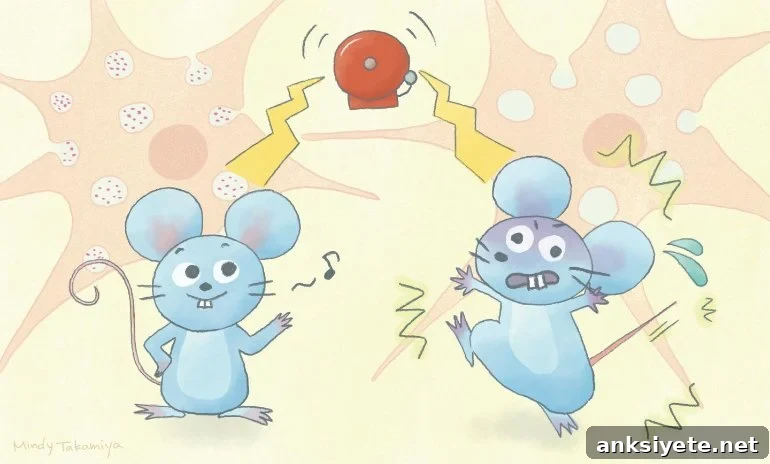
Although mice lacking Abca13 appeared outwardly normal and had a typical lifespan, behavioural testing revealed a selective deficit in prepulse inhibition (PPI), a well-established sensorimotor gating measure used in psychiatric research. In PPI testing, a weak pre-stimulus normally diminishes the startle reflex to a subsequent stronger stimulus. In many people with schizophrenia and related disorders, this gating mechanism is impaired and the prepulse fails to reduce the startle response. In the study, both control and Abca13 knockout mice showed normal basic startle responses, but only the knockout mice failed to display normal PPI — they remained startled when the startling pulse was preceded by a prepulse. This phenotype aligns with PPI deficits seen in several neuropsychiatric conditions and suggests ABCA13 loss affects neural circuits governing sensorimotor gating.
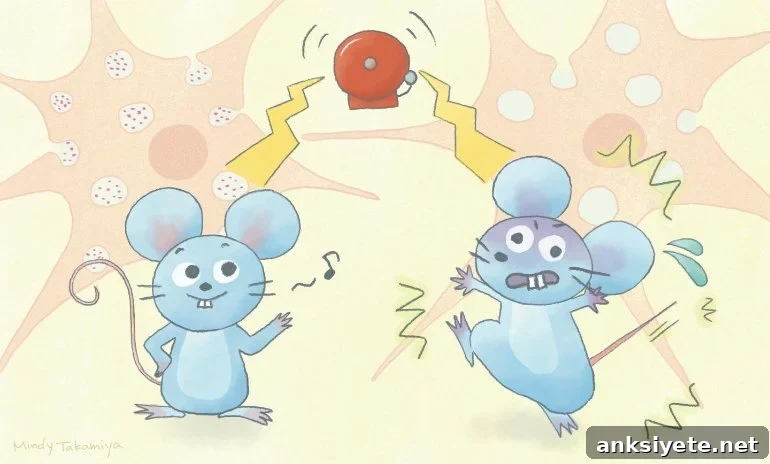
At the cellular level, the researchers examined neuronal terminals from Abca13-deficient mice and observed that vesicles in synaptic endings failed to accumulate cholesterol. Synaptic vesicles are essential for neurotransmitter release and recycling during synaptic transmission. Impaired vesicular cholesterol accumulation may therefore disrupt synaptic vesicle endocytosis and neuronal communication — mechanisms that can plausibly contribute to psychiatric dysfunction.
To strengthen the clinical relevance of their findings, the team tested human ABCA13 variants that have been reported in patients with psychiatric disorders. These mutant proteins mislocalized within cells and showed reduced capacity to mediate cholesterol internalization, consistent with the loss-of-function effects seen in the knockout mice. Together, these results tie genetic alterations in ABCA13 to concrete cellular deficits and to behavioural changes in an animal model.
The investigators propose that further exploration of ABCA13’s role in neuronal cholesterol trafficking could reveal new molecular targets for therapeutic strategies aimed at schizophrenia, bipolar disorder and major depression. Understanding how lipid transport and membrane composition influence synaptic function may open avenues for treatments that restore normal vesicle dynamics and neural circuit performance.
About this schizophrenia research news
Source: Kyoto University
Contact: Mindy Takamiya – Kyoto University
Image: The image is credited to Mindy Takamiya/Kyoto University iCeMS
Original Research: Closed access.
“ABCA13 dysfunction associated with psychiatric disorders causes impaired cholesterol trafficking” by Kazumitsu Ueda et al., Journal of Biological Chemistry
Abstract
ABCA13 dysfunction associated with psychiatric disorders causes impaired cholesterol trafficking
ATP-binding cassette subfamily A member 13 (ABCA13) is predicted to be the largest ABC protein, consisting of 5,058 amino acids and a long N-terminal region. Mutations in the ABCA13 gene were reported to increase susceptibility to schizophrenia, bipolar disorder and major depression. However, little is known about the molecular functions of ABCA13 or how they relate to psychiatric disease. Using HEK293 cells expressing mouse ABCA13, the researchers found that ABCA13 expression promotes internalization of cholesterol and gangliosides from the plasma membrane into intracellular vesicles. This cholesterol internalization depends on the long N-terminal region and ATP hydrolysis. Abca13 knockout mice generated by CRISPR/Cas exhibited deficits in prepulse inhibition. In primary cortical neurons from knockout mice, vesicular cholesterol accumulation and synaptic vesicle endocytosis were impaired. Furthermore, psychiatric disorder–associated mutations in ABCA13 disrupted its subcellular localization and impaired cholesterol trafficking. These findings suggest ABCA13 accelerates cholesterol internalization through endocytic retrograde transport in neurons and that loss of this function may contribute to the pathophysiology of psychiatric disorders.