New Salk study reveals how bipolar disorder alters neuronal sensitivity and shows fundamental cellular differences tied to lithium response
Researchers at the Salk Institute have found that neurons derived from patients with bipolar disorder are unusually sensitive to stimulation compared with neurons from healthy individuals. The study, published in October 2015 in Nature, is one of the first to demonstrate cellular-level differences in human neurons tied to bipolar disorder and to link those differences with patients’ clinical responses to lithium treatment.
Bipolar disorder, which affects millions of people worldwide, is marked by recurrent episodes of mania and depression and can be difficult to treat effectively. Lithium remains a cornerstone therapy for many patients, but a significant subset do not benefit from it. Clinicians often combine antipsychotics, antidepressants and other mood stabilizers to manage symptoms, yet these approaches may address either manic or depressive episodes—not both—leaving an unmet need for targeted treatments.
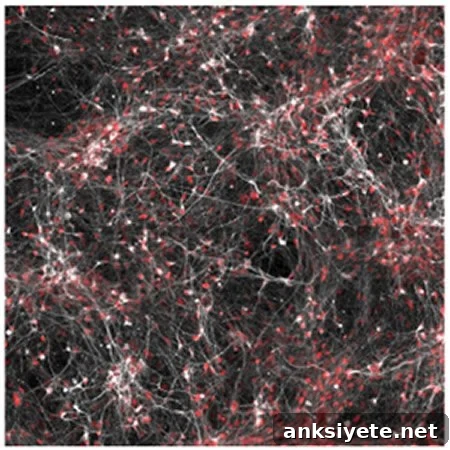
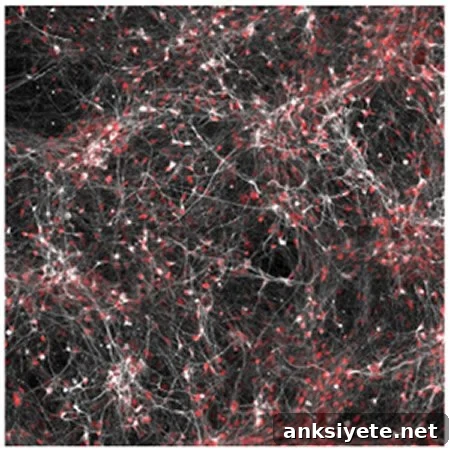
To explore the cellular basis of bipolar disorder, the research team collected skin cells from six diagnosed patients and reprogrammed them into induced pluripotent stem cells (iPSCs). Those iPSCs were then guided to become hippocampal dentate gyrus-like neurons, which were compared to neurons derived from healthy control donors. This patient-derived neuronal model enabled direct investigation of disease-related cellular phenotypes in human neurons.
Using electrophysiology and calcium imaging, the investigators observed that neurons from all six bipolar patients fired action potentials more readily than control neurons. “These patient-derived neurons are hyperexcitable — they require much less input to produce a response,” says Jerome Mertens, the study’s first author. The team also detected increased mitochondrial activity in these neurons, suggesting altered cellular energy dynamics accompany the heightened excitability.
Crucially, the study examined neurons from patients with known clinical histories of lithium response: three patients who had been clinical responders to lithium and three who had not. When neurons were cultured in medium containing lithium, a striking divergence emerged. Neurons from patients who had benefited from lithium in the clinic showed a normalization of their hyperexcitability after lithium exposure. In contrast, neurons from patients who did not respond to lithium remained hyperexcitable despite the drug treatment.
These results provide a cellular correlate that mirrors patient-level variability in lithium responsiveness. While the work does not yet resolve the exact molecular mechanisms that enable lithium to reduce excitability in responsive patients, it establishes a clear, reproducible cellular phenotype—hyperexcitability—that can be measured and used to probe underlying biology.
The Salk team proposes that this iPSC-derived neuronal platform could be used to screen candidate drugs and to identify biomarkers that predict treatment response. “If a compound can reverse hyperexcitability in these neurons, it may have therapeutic potential for bipolar disorder,” says Mertens. Such a screening strategy would be particularly valuable for discovering treatments for patients who are refractory to lithium.
Gage and colleagues also plan longitudinal studies of the patient-derived neurons to determine whether the measured hyperexcitability is an early, transient property of young neurons or a persistent feature that changes over time. “It’s possible that hyperexcitability is an early state that ultimately destabilizes the neuron, leading to a less excitable phase,” says Rusty Gage, senior author. That cellular trajectory could model the clinical swings between mania and depression.
Funding: This research was supported by multiple sources, including national research grants, private foundations and institutions such as the National Institute of Mental Health and the Department of Veterans Affairs.
Source: Salk Institute for Biological Studies
Image credit: Salk Institute for Biological Studies
Original research: Abstract for “Differential responses to lithium in hyperexcitable neurons from patients with bipolar disorder” published in Nature, October 28, 2015 (doi:10.1038/nature15526)
Abstract
Differential responses to lithium in hyperexcitable neurons from patients with bipolar disorder
Bipolar disorder is a complex neuropsychiatric illness characterized by alternating episodes of mania and depression and substantial morbidity. Previous postmortem and animal studies have identified a range of molecular and cellular alterations, but translating those findings to human neuronal physiology has been challenging. Using induced pluripotent stem-cell technology, the authors developed a human neuronal model derived from patients with bipolar disorder and identified an early cellular phenotype: increased mitochondrial activity and hyperexcitability in young hippocampal dentate gyrus-like neurons. Importantly, this hyperexcitability was selectively reversed by lithium treatment in neurons derived from patients who were clinically responsive to lithium, while neurons from lithium non-responders remained hyperexcitable. These findings suggest hyperexcitability as an early endophenotype of bipolar disorder and demonstrate the utility of patient-specific iPSC-derived neurons for modeling disease mechanisms and screening potential therapeutics.