
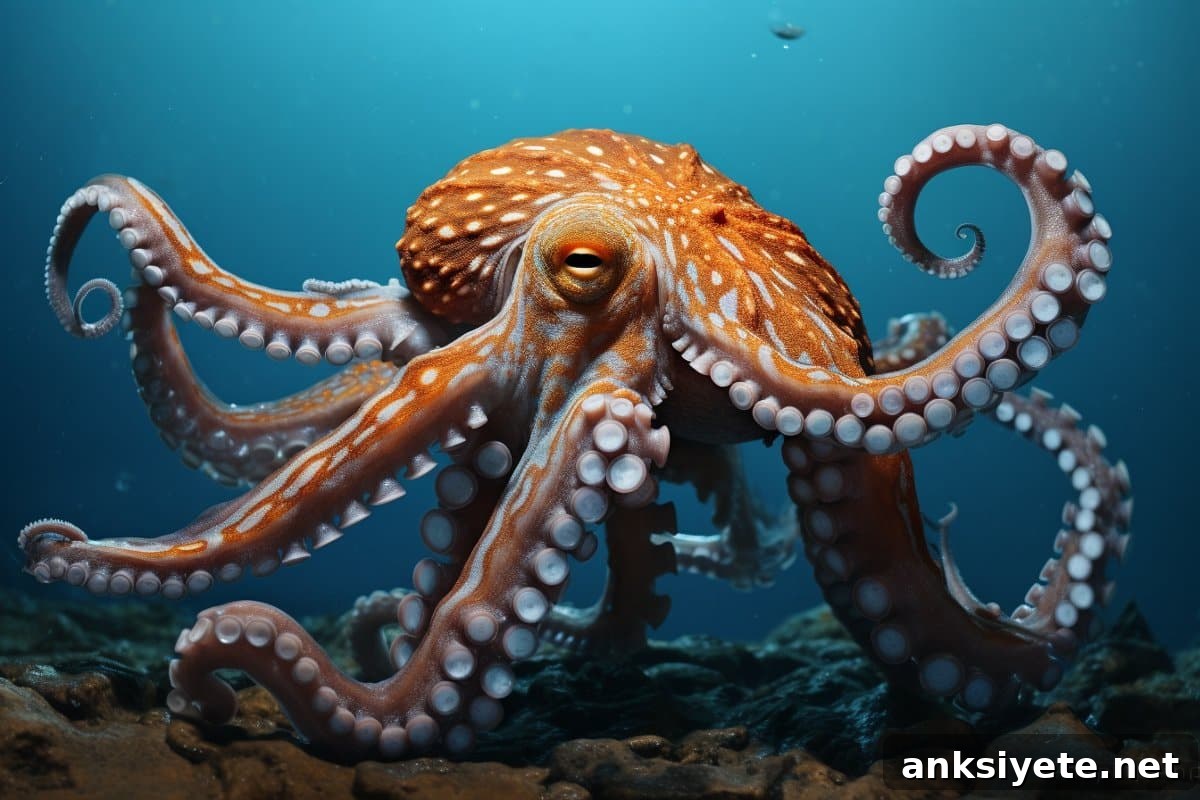
Summary: Researchers have produced a high-quality, chromosome-level reference genome for the common octopus, revealing about 2.8 billion base pairs organized across 30 chromosomes. This achievement comes from extensive, computer-assisted genome assembly and comparative analyses with other cephalopods.
This reference sequence opens new avenues for understanding octopus biology, from neural organization and behavior to development and evolution.
Key Facts:
- The Octopus vulgaris genome comprises 30 chromosomes, containing 99.34% of roughly 2.8 billion base pairs.
- Chromosomal mapping reveals widespread structural rearrangements, indicating a dynamic evolutionary history over an estimated 44 million years.
- This chromosome-scale assembly connects decades of octopus research in neurobiology and developmental biology with modern molecular genetics.
Source: University of Vienna
Octopuses are remarkable animals and valuable model organisms in neuroscience, cognition studies, and developmental biology. Reliable, chromosome-level genomic data for these animals has been limited until now.
A team led by scientists at the University of Vienna, together with collaborators from Belgium, Spain and Italy, has filled that gap. Their analyses yielded a comprehensive genome assembly for Octopus vulgaris: roughly 2.8 billion base pairs arranged into 30 chromosomes.
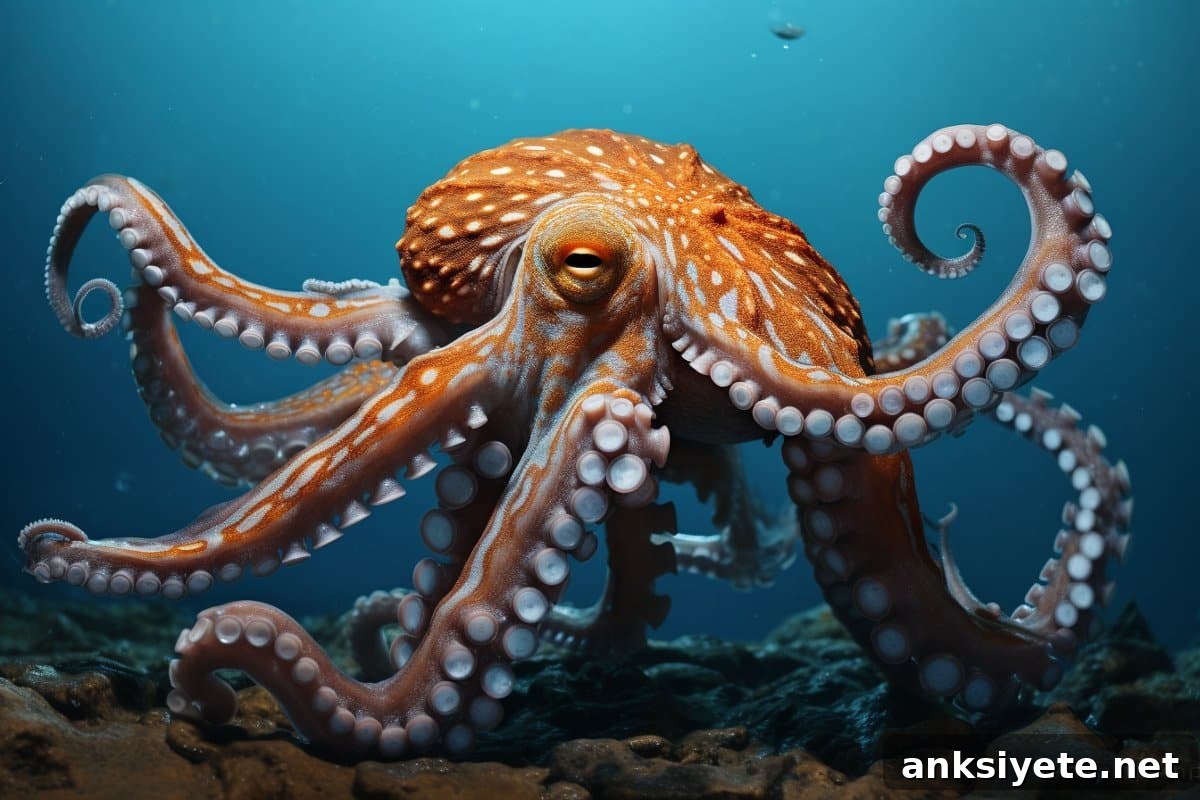
Producing a chromosome-scale genome required complex laboratory work followed by advanced, computer-assisted assembly and comparative genomics across related cephalopod species.
The results appear in the peer-reviewed journal G3: Genes | Genomes | Genetics.
Coleoid cephalopods—octopuses, squids and cuttlefish—comprise hundreds of species with diverse lifestyles and remarkable anatomical and behavioral adaptations. Octopuses in particular have long been studied because their brains show exceptional neuronal plasticity and behavioral complexity, traits that make them powerful comparative models for understanding nervous system function and cognitive behavior.
In addition, octopuses exhibit rapid, complex skin patterning for camouflage and communication, and many species can regenerate body parts. A high-quality genome helps researchers investigate how these capabilities emerged and changed during evolution.
Filling a major gap
Until now, no chromosome-level assembly existed for the common octopus, which limited molecular and functional studies. The new assembly provides a genome “map” at chromosome resolution, detailing how genetic information is physically arranged. This enables direct comparisons of chromosome structure across species and supports gene function studies tied to behavior, development and neural mechanisms.
Dalila Destanović, the study’s first author from the Simakov Laboratory in the Department of Neuroscience and Developmental Biology at the University of Vienna, explains that current genomic technologies made it possible to assemble and validate this high-resolution reference sequence. The resource will support future research on Octopus vulgaris and on more distantly related molluscs such as clams and snails.
2.8 billion base pairs on 30 chromosomes
The team assembled a genome that spans roughly 2.8 billion base pairs, with 99.34% of that sequence represented in 30 chromosome-scale scaffolds. Hi-C contact maps support a karyotype of 1n = 30 chromosomes. With this assembly, scientists now have a reliable backbone for annotating genes, studying regulatory regions and linking genotypes to the octopus’s distinctive phenotypes.
Comparative analyses with genomes from four other octopus species reveal that although a conserved karyotype is present across octopuses, individual chromosomes show extensive structural variation. The researchers documented numerous events of chromosome fragmentations, rearrangements and rejoining within chromosomes, even among closely related species.
“We observed many structural changes across chromosomes, even between closely related species. These dynamics prompt new questions about genome evolution in cephalopods and how genomic reorganization relates to their unique traits,” says Dalila Destanović.
Estimated rates of chromosomal rearrangement indicate that this dynamic genomic history unfolded over approximately 44 million years. The chromosome-level assembly will help address open questions about the genetic basis of neural complexity, regeneration, camouflage and behavior in octopuses.
Overall, this chromosome-scale reference bridges long-standing organismal and physiological studies of Octopus vulgaris with modern molecular genetics, providing a foundation for future work in neurobiology, behavior, development and evolutionary genomics.
About this genetics research news
Author: Theresa Bittermann
Source: University of Vienna
Contact: Theresa Bittermann – University of Vienna
Image: Image credit: Neuroscience News
Original Research: Open access. “A chromosome-level reference genome for the common octopus, Octopus vulgaris (Cuvier, 1797)” by Dalila Destanović et al., published in G3: Genes, Genomes, Genetics.
Abstract
A chromosome-level reference genome for the common octopus, Octopus vulgaris (Cuvier, 1797)
Cephalopods are emerging as important animal models for linking genomic innovation to physiological and behavioral complexity. Coleoid cephalopods possess the largest nervous systems among invertebrates, in terms of cell counts and brain-to-body ratio.
Octopus vulgaris has long been central to research on behavioral and neural plasticity, learning and memory, regeneration and complex cognition. However, functional studies were previously limited by the lack of a chromosome-scale assembly. To address this, the authors generated and validated a chromosome-level genome for O. vulgaris.
The final assembly covers approximately 2.8 billion base pairs, with 99.34% anchored to 30 chromosome-scale scaffolds. Hi-C analyses support a haploid chromosome number of 30. Comparative genomics with other octopus species reveals a conserved karyotype together with patterns of local genome rearrangement between species.
This new chromosome-scale genome will accelerate research across all aspects of cephalopod biology, from neural circuitry and behavioral plasticity to the evolutionary processes that produced their remarkable traits.