
Researchers at the University of Exeter and UCL identify AKT1 gene as a predictor of sensitivity to the mind-altering effects of smoked cannabis
New research led by teams at the University of Exeter and University College London (UCL) has identified variation in the AKT1 gene that predicts how strongly a young person may experience the acute, mind-altering effects of smoking cannabis. Published in the journal Translational Psychiatry and funded by the Medical Research Council, the study also found that female cannabis users showed greater short-term memory impairment than males after smoking.
The study is distinctive because it examined healthy young people’s immediate responses to naturalistically smoked cannabis rather than focusing only on individuals already diagnosed with psychosis. Earlier work linked AKT1 to later development of psychotic disorders; this study demonstrates that the same gene variation influences the intensity of psychotic-like symptoms, such as visual distortion and paranoia, experienced while intoxicated.
Approximately one per cent of cannabis users go on to develop psychosis. While this proportion is small, the consequences can be severe for those affected. Prior studies had already observed a higher prevalence of a particular AKT1 variant among cannabis users who later developed psychosis. This new work is the first to show that the AKT1 genotype also moderates the acute psychotomimetic effects of smoked cannabis in otherwise healthy young users.
Lead investigators, including Professor Celia Morgan (University of Exeter) and Professor Val Curran (UCL), report that young people carrying the AKT1 rs2494732 variant experienced stronger psychotic-like reactions—such as paranoia and visual distortions—during intoxication than those without the variant. The findings suggest a biological mechanism by which repeated exposure to intense, drug-induced psychotic states might increase the likelihood of later transition to clinical psychosis in susceptible individuals.
Professor Morgan commented that identifying a genetic marker linked to heightened sensitivity provides a significant clue about why some people develop severe adverse reactions to cannabis while most do not. She noted that repeatedly experiencing psychotic or paranoid episodes under the influence could be one pathway to longer-term psychiatric harm, and that understanding the genetic risk factors could inform prevention and targeted treatments for cannabis-related psychosis.
Professor Curran added that this study is the largest investigation to date of acute responses to smoked cannabis, and emphasized that psychotic-like symptoms experienced while ‘stoned’ are considered a potential marker of increased risk for later psychotic illness. Demonstrating that AKT1 predicts these acute responses in healthy young users is therefore an important advance.
The research tested 442 young cannabis users twice: once while they were intoxicated from smoking their own cannabis and again approximately seven days later when drug-free. During both sessions, investigators assessed psychotomimetic symptoms and working memory. The researchers also obtained Home Office permission to analyse the confiscated cannabis samples for delta-9-tetrahydrocannabinol (THC) and cannabidiol (CBD) content; samples were submitted to the forensic science service for chemical analysis.
Results showed that variation at the AKT1 rs2494732 locus predicted the intensity of acute psychotic responses to cannabis, and was also associated with measures of dependence and baseline schizotypal traits. In addition, the study found a clear sex difference in cognitive vulnerability: women experienced greater short-term memory impairment after smoking cannabis than men. Animal research cited by the authors suggests that males may have higher densities of cannabinoid-sensitive receptors in brain regions involved in working memory, which could explain some of the sex-based differences, but the authors call for further research to clarify mechanisms.
Funding: This work was funded by the Medical Research Council.
Source: Louise Vennells – University of Exeter
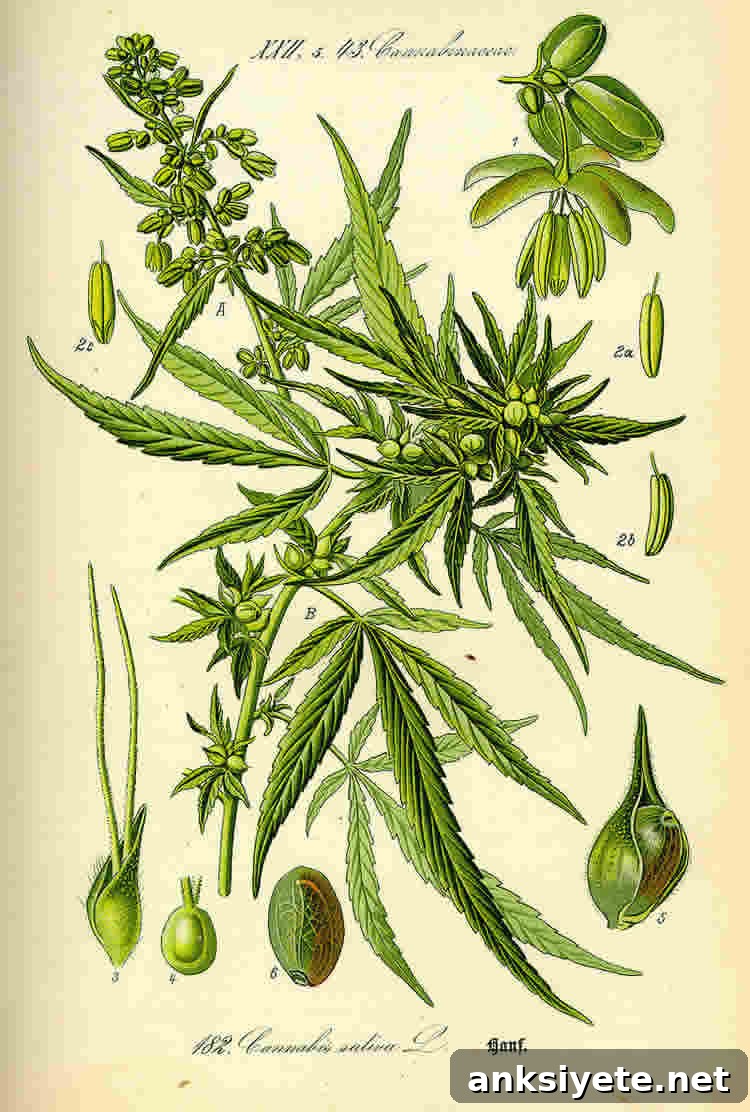
Image Credit: The image is in the public domain.
Original Research: Full open access research: “AKT1 genotype moderates the acute psychotomimetic effects of naturalistically smoked cannabis in young cannabis smokers” by C. J. A. Morgan, T. P. Freeman, J. Powell and H. V. Curran in Translational Psychiatry. Published online February 16, 2016. doi:10.1038/tp.2015.219
Abstract
AKT1 genotype moderates the acute psychotomimetic effects of naturalistically smoked cannabis in young cannabis smokers
Daily cannabis smoking is known to double the risk of developing a psychotic disorder, but specific indicators for individual vulnerability have been hard to establish. Genetic variation offers a plausible modifier of risk. Polymorphisms in AKT1 and catechol-O-methyltransferase (COMT) have been implicated in interactions between cannabis, psychosis and cognition, but their role in acute response to smoked cannabis had not been assessed prior to this study. In a cohort of 442 healthy young cannabis users tested both while intoxicated with their own cannabis (chemically analysed for THC and CBD content) and about seven days later when drug-free, researchers measured psychotomimetic symptoms and working memory. Variation at the rs2494732 locus of AKT1 predicted acute psychotic response to cannabis and related measures of dependence and baseline schizotypal symptoms. Working memory was more impaired acutely in females, and there was some indication of COMT effects on working memory when drug-free. These results are the first to demonstrate that AKT1 mediates the immediate psychotomimetic effects of smoked cannabis in otherwise healthy individuals and point to the AKT1 pathway as a potential target for prevention and treatment strategies for cannabis-related psychosis.
“AKT1 genotype moderates the acute psychotomimetic effects of naturalistically smoked cannabis in young cannabis smokers” by C. J. A. Morgan, T. P. Freeman, J. Powell and H. V. Curran. Translational Psychiatry. Published online February 16, 2016. doi:10.1038/tp.2015.219