
Summary: A team at the University of Gothenburg has developed a new blood test for Alzheimer’s disease that measures a specific phosphorylated form of the tau protein, P-tau181. Early results show the test distinguishes Alzheimer’s from other neurodegenerative disorders and can detect disease-related changes at an early stage.
Source: University of Gothenburg
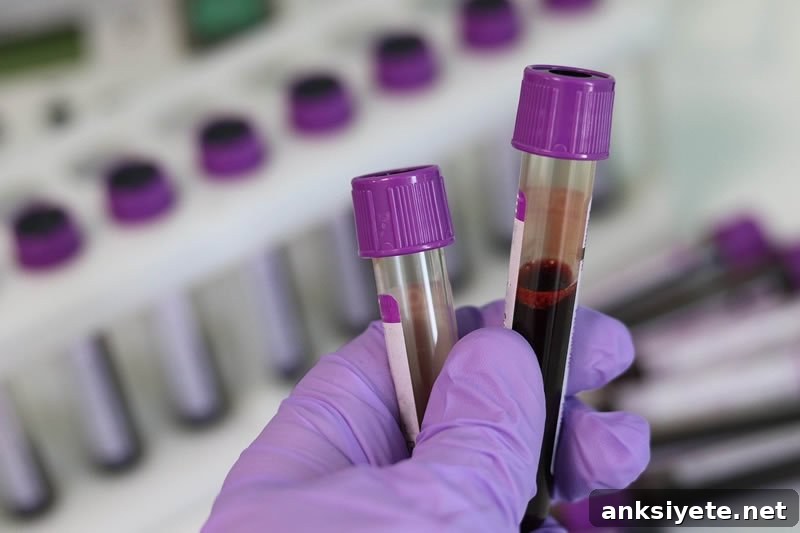
Researchers at the University of Gothenburg, Sweden, have created a clinically accessible blood test for Alzheimer’s disease that detects a phosphorylated variant of tau protein, called P-tau181. Because the test uses routine blood samples and an ultrasensitive assay, it promises to be relatively inexpensive and easy to implement in many care settings, including primary care.
The study was led by Professor Kaj Blennow, a specialist in Clinical Neurochemistry, and Professor Henrik Zetterberg, a specialist in Neurochemistry at Sahlgrenska Academy, University of Gothenburg. Their findings are reported in an article published in The Lancet Neurology.
Alzheimer’s disease is defined by two characteristic brain changes: extracellular deposits of beta-amyloid protein (amyloid plaques) and intracellular neurofibrillary tangles made of aggregated tau protein. The tau tangles form through abnormal phosphorylation of tau, a process closely linked to neuronal degeneration and cognitive decline.
The new method measures plasma levels of phosphorylated tau at threonine 181 (P-tau181) using an ultrasensitive Single Molecule Array (Simoa) immunoassay. Simoa technology can detect far lower concentrations of protein biomarkers than conventional assays, enabling reliable measurement of P-tau181 in ordinary blood samples.
Until recently, P-tau181 was mainly assessed in cerebrospinal fluid (CSF), where levels are substantially higher than in blood. Neurofibrillary tangles can also be imaged with advanced positron emission tomography (PET) tracers, but both CSF sampling and PET imaging are invasive or costly and therefore limited in routine clinical use. A validated blood biomarker for tau pathology would therefore be a major advance for screening, diagnosis, and monitoring of Alzheimer’s disease.
The published results show that plasma P-tau181 is markedly elevated in people with Alzheimer’s disease, including those at the early clinical stage known as mild cognitive impairment (MCI). Importantly, the elevation of plasma P-tau181 was observed primarily in individuals who also had amyloid plaques as detected by PET imaging, indicating that the blood marker reflects Alzheimer’s-specific pathology.
Plasma P-tau181 correlated strongly with PET-measured tau load in the brain. The blood assay also identified individuals who already had amyloid pathology but did not yet show increased tau on PET, suggesting the marker may detect disease processes at a stage when tau pathology is beginning to develop. In comparative analyses, the plasma P-tau181 test reliably distinguished Alzheimer’s disease from other neurodegenerative disorders—such as frontotemporal dementia and Parkinson’s disease—where plasma P-tau181 levels remained within normal ranges.
The blood test developed by the University of Gothenburg team produced results consistent with a similar plasma P-tau181 assay recently reported by a separate research group at a pharmaceutical company. Both lines of evidence support the robustness of plasma P-tau181 as an Alzheimer’s biomarker.
Professor Kaj Blennow highlights the clinical potential: “We believe a key future use of this blood test will be screening in primary care.” The team demonstrated feasibility in a study that included patients referred from primary care with memory complaints. Professor Henrik Zetterberg adds that plasma P-tau181 may also serve as an important marker to monitor the effects of emerging Alzheimer’s therapies in clinical trials and treatment settings.
About this neuroscience research article
Source:
University of Gothenburg
Media Contacts:
Kaj Blennow – University of Gothenburg
Image Source:
The image is in the public domain.
Original Research: Closed access
Title: “Blood phosphorylated tau 181 as a biomarker for Alzheimer’s disease: a diagnostic performance and prediction modelling study using data from four prospective cohorts” by Kaj Blennow et al.
Journal: Lancet Neurology, doi: 10.1016/S1474-4422(20)30071-5
Abstract (summary)
Background:
Current cerebrospinal fluid and PET biomarkers accurately identify amyloid β and tau pathologies but are limited by invasiveness, high cost, and limited availability. CSF phosphorylated tau at threonine 181 (p-tau181) is highly specific for Alzheimer’s pathology. The study evaluated whether a blood-based p-tau181 assay could detect Alzheimer’s disease and predict clinical progression, including cognitive decline and hippocampal atrophy.
Methods:
An ultrasensitive blood immunoassay for plasma p-tau181 was developed and validated across four clinic-based prospective cohorts. These included discovery and validation cohorts, groups with cognitively unimpaired older adults, people with MCI, patients with Alzheimer’s disease, individuals with other neurodegenerative disorders, and a primary care cohort. Plasma p-tau181 concentrations were compared with established CSF and PET biomarkers and longitudinal clinical measures using correlation, area under the curve (AUC), and regression analyses.
Findings:
Across 1,131 individuals from four cohorts, plasma p-tau181 increased progressively along the Alzheimer’s continuum—from low levels in amyloid-negative young adults and cognitively unimpaired older adults to higher levels in amyloid-positive unimpaired adults, MCI, and highest in Alzheimer’s dementia. Plasma p-tau181 distinguished Alzheimer’s dementia from amyloid-negative controls and from several other neurodegenerative disorders with high accuracy (AUC values indicating strong diagnostic performance). Plasma p-tau181 associated with PET-measured brain tau and amyloid pathologies and predicted one-year cognitive decline and hippocampal atrophy in longitudinal analyses. In a primary care sample, plasma p-tau181 differentiated Alzheimer’s disease from healthy controls but had limited discrimination between Alzheimer’s and MCI in that specific cohort.
Interpretation:
Blood p-tau181 can predict tau and amyloid pathologies, differentiate Alzheimer’s disease from other neurodegenerative disorders, and identify Alzheimer’s across the clinical continuum. As a simple, accessible, and scalable blood test, plasma p-tau181 has strong potential for screening, diagnosis, and monitoring of Alzheimer’s disease in clinical practice and research.
Funding:
Alzheimer Drug Discovery Foundation, European Research Council, Swedish Research Council, Swedish Alzheimer Foundation, Swedish Dementia Foundation, Alzheimer Society Research Program.
Feel free to share this Alzheimer’s disease news.