
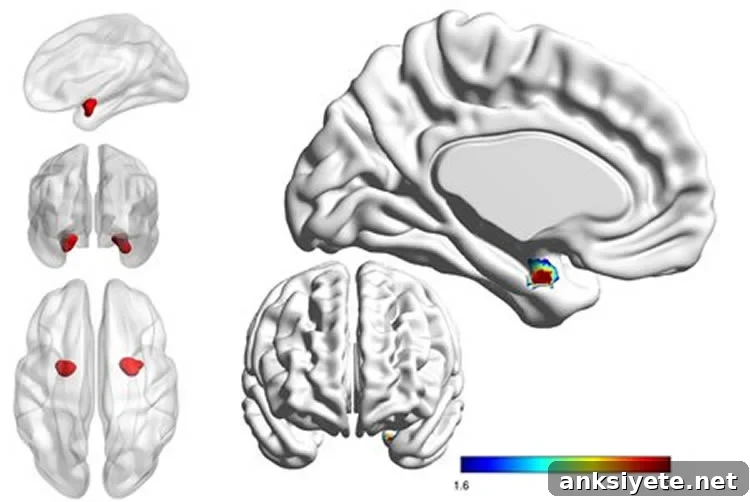
Summary: Advanced neuroimaging shows that people with bipolar depression display reduced left amygdala activity and weaker connectivity with other brain regions compared with those who have unipolar major depression—findings that could improve diagnostic accuracy.
Source: Westmead Institute
Neuroimaging study identifies amygdala activity and connectivity differences that may help distinguish bipolar disorder from major depression
Researchers using high-resolution MRI have identified differences in how the amygdala—an emotion-processing hub deep in the brain—responds to facial expressions in people with bipolar disorder versus those with unipolar major depressive disorder. The study measured amygdala activation and its functional connections while participants processed facial expressions of anger, fear, sadness, disgust and happiness, both above and below conscious awareness.
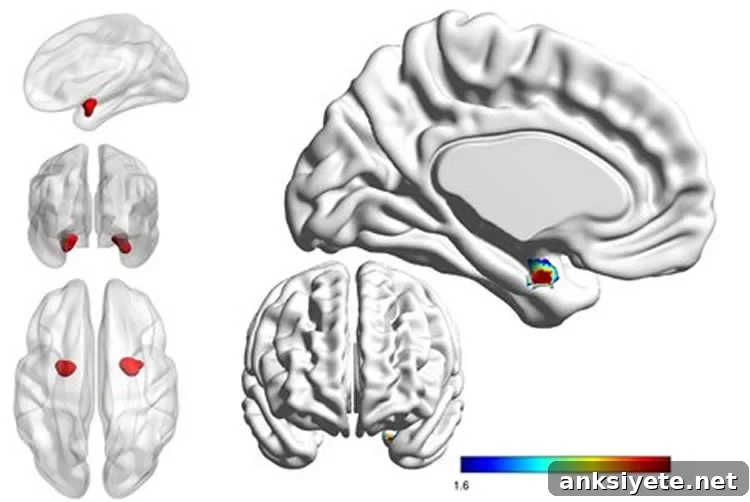
The study found that individuals with bipolar disorder showed consistently lower activation in the left amygdala and fewer functional connections between the amygdala and other emotion-related brain regions compared with people diagnosed with major depressive disorder. These neural patterns were present even when participants were asymptomatic, suggesting the differences may be trait-like rather than solely tied to current mood state.
Using these imaging measures, the research team achieved approximately 80% accuracy in distinguishing bipolar disorder from unipolar depression. Lead investigator Dr. Mayuresh Korgaonkar from the Westmead Institute for Medical Research and the University of Sydney said the findings point toward a potential objective biomarker that could improve diagnostic certainty.
“Distinguishing bipolar disorder from major depressive disorder is a major clinical challenge because these conditions share many symptoms, especially when bipolar disorder first presents during its depressive phase,” Dr. Korgaonkar explained. “An objective neural marker could reduce misdiagnosis, guide appropriate treatment earlier, and improve long-term social and economic outcomes for patients.”
Misdiagnosis is common: roughly 60% of people who ultimately receive a bipolar disorder diagnosis are first diagnosed with major depressive disorder, and it can take many years—sometimes up to a decade—for clinicians to correct that initial misdiagnosis. Because treatment strategies differ substantially between bipolar disorder and unipolar depression, early and accurate differentiation is critical for effective care.
Emotion recognition and processing are central features affected in both disorders. By focusing on amygdala reactivity to emotional faces and the amygdala’s connectivity with regions such as the insula, hippocampus and medial orbitofrontal cortex, the researchers were able to map distinct neural signatures associated with bipolar versus unipolar conditions.
Key study observations included lower left amygdala activation in bipolar participants during conscious (supraliminal) and unconscious (subliminal) processing of threatening, sad and neutral faces, and during subliminal processing of happy faces. Bipolar participants also exhibited reduced amygdala connectivity with the insula and hippocampus for threat-related processing and with medial orbitofrontal regions for happy faces. Conversely, they showed increased amygdala–insula connectivity for sad-face processing compared with unipolar patients. Both clinical groups differed significantly from healthy controls on multiple activation and connectivity measures.
Dr. Korgaonkar and colleagues are continuing this work in a larger phase 2 study to further validate and refine these neural markers. If replicated in larger and more diverse samples, amygdala activation and connectivity patterns could become valuable tools for early diagnosis, risk identification and individualized treatment planning for mood disorders.
Funding: This study was supported by the National Health and Medical Research Council (NHMRC).
The research was led by the Westmead Institute for Medical Research and the University of Sydney, conducted in collaboration with clinical and research teams from Westmead Hospital, Royal North Shore Hospital and Stanford University.
Amygdala activation and connectivity to emotional processing distinguishes asymptomatic patients with bipolar disorders and unipolar depression
Background: Neural markers such as amygdala reactivity may help differentiate bipolar and unipolar depressive disorders independent of current mood. While previous work found amygdala reactivity differences in depressed states, it remains unclear whether these differences persist during remission. This study examined amygdala activation and connectivity in remitted bipolar (BP) and unipolar major depressive disorder (MDD) participants compared with healthy controls.
Methods: Seventy-three participants (23 BP, 25 MDD matched for age, gender, number of depressive episodes and severity; and 25 healthy controls) completed fMRI tasks involving supra- and subliminal presentation of threat, sad, happy and neutral faces. Analyses compared groups on amygdala activation and connectivity during emotional face processing.
Results: BP participants showed lower left amygdala activation than MDD participants during supraliminal and subliminal processing of threat, sad and neutral faces, and for subliminal happy faces. BP participants also showed reduced amygdala connectivity to the insula and hippocampus for threat, and to medial orbitofrontal regions for happy faces, alongside increased amygdala–insula connectivity for sad-face processing. Both clinical groups differed from controls on multiple activation and connectivity measures.
Conclusion: Amygdala activation and connectivity during facial emotion processing distinguish remitted BP and MDD patients regardless of emotional valence or awareness. These findings support the potential of amygdala-based neural markers as trait indicators to differentiate bipolar and unipolar depressive disorders.