
Genes associated with autism and schizophrenia are active only during the earliest stages of brain development, a study in mice led by researchers at the University of Oxford reports.
These findings strengthen the view that autism and schizophrenia are neurodevelopmental disorders—conditions that originate during the formative stages of brain growth. The study tracked gene expression in the mouse brain from embryonic day 15 through adulthood and is published in Proceedings of the National Academy of Sciences.
The research was carried out by a team from the University of Oxford in collaboration with King’s College London and Imperial College London, and was supported by the Medical Research Council and the Wellcome Trust.
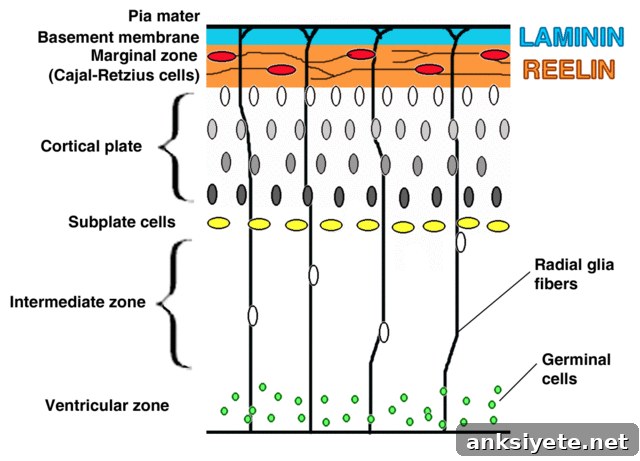
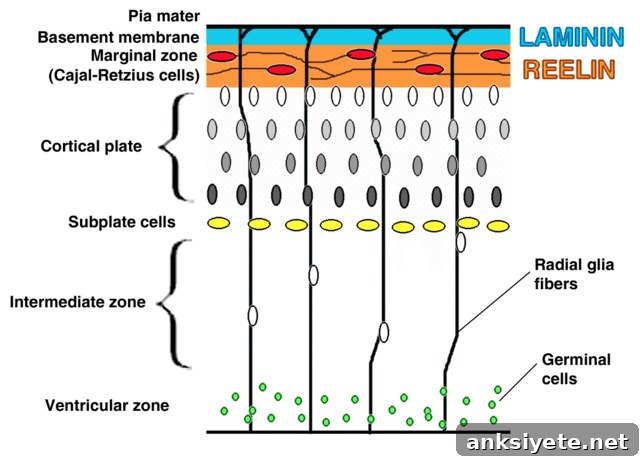
Focusing on the subplate, a transient layer in the developing brain where the earliest neurons form, the researchers found that many genes linked to autism and schizophrenia are expressed specifically in this region and only during restricted developmental windows. Subplate neurons act as an early scaffold for network formation, guiding the initial connections that later shape cortical circuitry.
“The subplate provides the scaffolding required for a brain to grow, so it is important to study when investigating brain development,” says Professor Zoltán Molnár, senior author of the paper. “Examining adult brains is like looking at the pyramids today — you see the finished structure. Studying the developing brain reveals the temporary framework used to construct it.”
Dr Anna Hoerder-Suabedissen, who led the study at Oxford, explains that many autism susceptibility genes are detectable only in the subplate and only at particular developmental stages. “Many of these genes are transiently expressed, making them hard to detect in later-stage tissue using older methods,” she says.
The team mapped gene activity in fine detail using advanced molecular techniques that allow profiling from small numbers of cells. These methods enabled precise dissection of subplate cell populations and revealed dynamic patterns of gene expression across development.
Subplate neurons were first described in the 1970s by Professors Ivica Kostović and Pasko Rakic. “I am excited to see genetic evidence supporting a potential role for the transient embryonic subplate zone in the origin of disorders such as autism and schizophrenia,” says Professor Rakic. “If such links are present in mice—where the subplate is relatively small—they may be even more pronounced in the human brain, where this structure is more developed.”
Professor David Edwards, Director of the Centre for the Developing Brain at King’s College London and co-author of the paper, adds: “Using these advanced techniques we have identified biochemical pathways that are important during a specific phase of cortical development. It has long been suspected that disruptions to cortical development—whether from genetic variation or environmental stressors such as prematurity—can have long-lasting effects and may contribute to conditions like ADHD, autism or other neurodevelopmental disorders. This study highlights genes that are active at this critical period in mice and shows that genes known to predispose to autism and schizophrenia are among them, reinforcing the importance of early brain development in these conditions.”
Professor Hugh Perry, chair of the Medical Research Council’s Neuroscience and Mental Health Board, commented: “Pinpointing shared genetic factors for neurodevelopmental conditions allows scientists to better understand why normal brain development sometimes goes awry. The Medical Research Council’s support for a broad neuroscience and mental health research portfolio helps address the complex relationships between mental and physical health and wellbeing.”
Notes about this schizophrenia research
Contact: University of Oxford press office
Source: University of Oxford press release
Image source: The corticogenesis image is in the public domain, credited to CopperKettle via Wikimedia Commons.
Original research: Hoerder-Suabedissen A., Oeschger F.M., Krishnan M.L., Belgard T.G., Wang W.Z., Lee S., Webber C., Petretto E., Edwards A.D., Molnár Z. “Expression profiling of mouse subplate reveals a dynamic gene network and disease association with autism and schizophrenia.” Proceedings of the National Academy of Sciences. Published ahead of print February 11, 2013; doi: 10.1073/pnas.1218510110.