
Summary: A new study reveals that LRRK proteins are essential for the survival of dopamine neurons in the brain, a finding that could influence the development of treatments for Parkinson’s disease.
Source: NIH/NINDS.
A new study published in the journal Neuron clarifies a normal role for LRRK proteins and highlights their importance for dopamine neuron survival. The research, supported by the National Institute of Neurological Disorders and Stroke (NINDS) at the National Institutes of Health, identifies key cellular pathways affected when LRRK function is lost and points to implications for therapeutic strategies in Parkinson’s disease.
Mutations in the LRRK2 gene are the most common known genetic cause of late-onset Parkinson’s disease, but until now the normal functions of LRRK2 — and how its dysfunction leads to neurodegeneration — have been incompletely understood. In this study, researchers used mouse models to investigate the roles of LRRK2 and its closely related protein, LRRK1. The team found that the combined loss of LRRK1 and LRRK2 leads to progressive, age-dependent degeneration of dopamine-producing neurons, the same neuron population most vulnerable in Parkinson’s disease.
In humans, a single mutated LRRK2 allele can be sufficient to produce Parkinson’s symptoms and characteristic brain pathology over time. In mice, however, deleting LRRK2 alone typically does not trigger dopamine neuron death, likely because LRRK1 can compensate during the mouse’s relatively short lifespan. To test the hypothesis that LRRK1 masks the effects of LRRK2 loss in rodents, the researchers engineered mice lacking both LRRK1 and LRRK2 and followed them as they aged.
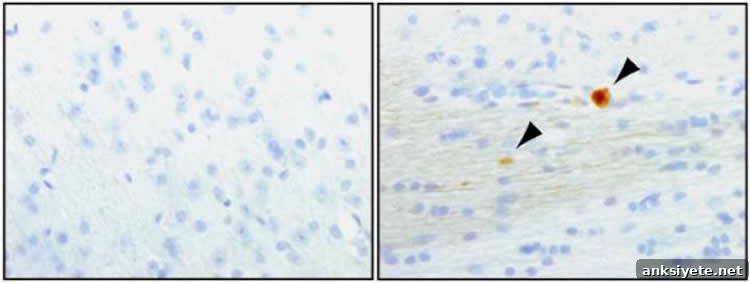
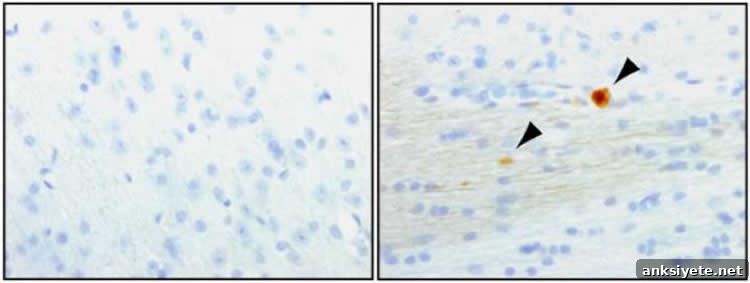
Beginning around 15 months of age, mice missing both LRRK1 and LRRK2 showed clear loss of dopamine-containing neurons in brain regions associated with Parkinson’s disease. Detailed analysis of the affected cells revealed hallmark signs of Parkinson’s pathology, including accumulation of the protein α-synuclein and defects in the autophagy-lysosomal pathway — a primary cellular mechanism for degrading and recycling damaged proteins and organelles. The study also documented increased markers of apoptosis, the programmed cell death pathway, in the same neuronal populations.
“Our findings show that LRRK is critical for the survival of the populations of neurons affected by Parkinson’s disease,” said senior author Jie Shen, Ph.D. The results indicate that LRRK proteins play an essential role in maintaining neuronal health during aging and in preserving the autophagy-lysosomal pathway that cells use to clear toxic or damaged components.
Although the combined deletion of LRRK1 and LRRK2 selectively affected dopaminergic and some other brainstem neurons, it did not alter overall brain size or cell counts in large regions such as the cerebral cortex and cerebellum. The double-knockout mice did, however, display reduced body weight and a reduced lifespan of about 15 to 16 months, which limited the researchers’ ability to study long-term behavioral and motor effects or to follow very late-stage disease progression in these animals.
Most disease-linked LRRK2 mutations are believed to increase the protein’s activity, and many therapeutic efforts have therefore focused on developing drugs that inhibit LRRK2. The new findings raise an important caution: complete loss of LRRK function caused degeneration of dopamine neurons in mice, suggesting that strong, nonselective inhibition of LRRK activity might carry risk for the very neurons clinicians aim to protect. These data emphasize the need to balance modulation of LRRK2 activity with preservation of essential LRRK functions, and to consider strategies that target harmful mutation-specific effects without eliminating normal protein activity.
To further refine the understanding of LRRK function in disease-relevant cells, the researchers are now developing conditional mouse models in which LRRK1 and LRRK2 are removed only from dopamine-producing neurons. Those targeted deletions should allow longer-term behavioral studies and a clearer view of how LRRK loss directly affects movement and other Parkinson’s-related outcomes while avoiding systemic effects that shorten lifespan.
Funding: Supported by the National Institute of Neurological Disorders and Stroke (NINDS), grants NS071251 and NS094733.
Source: NIH/NINDS. Publisher: NeuroscienceNews.com. Image source: Shen lab (credited by NeuroscienceNews.com).
Original research: Emilie Giaime, Youren Tong, Lisa K. Wagner, Yang Yuan, Guodong Huang, and Jie Shen. “Age-Dependent Dopaminergic Neurodegeneration and Impairment of the Autophagy-Lysosomal Pathway in LRRK-Deficient Mice.” Published in Neuron, online October 19, 2017. doi:10.1016/j.neuron.2017.09.036
Title: Age-Dependent Dopaminergic Neurodegeneration and Impairment of the Autophagy-Lysosomal Pathway in LRRK-Deficient Mice
Highlights:
• Loss of LRRK causes age-dependent loss of dopaminergic neurons in the substantia nigra pars compacta (SNpc).
• Loss of LRRK leads to increased apoptosis in the SNpc with age.
• Loss of LRRK results in age-dependent impairment of the autophagy-lysosomal pathway in affected neurons.
• Loss of LRRK does not produce neurodegeneration in the cerebral cortex or cerebellum.
Summary:
LRRK2 mutations are the most common genetic contributors to Parkinson’s disease, yet the normal physiological role of LRRK2 has been unclear. This study demonstrates that inactivation of LRRK2 together with its homolog LRRK1 causes selective, age-dependent neurodegeneration and reduced survival in mice. Dopaminergic neurons in the SNpc and noradrenergic neurons in the locus coeruleus degenerate with increased apoptosis, while the cerebral cortex and cerebellum remain largely unaffected. Neurodegeneration is accompanied by accumulation of α-synuclein and by impairment of autophagy-lysosomal function. Electron microscopy revealed an age-dependent accumulation of autophagic vacuoles in the SNpc of LRRK-deficient mice that precedes overt dopamine neuron loss, supporting a role for LRRK proteins in autophagy regulation and in the long-term survival of dopamine neurons in the aging brain.
The study supports re-evaluation of therapeutic strategies that fully inhibit LRRK activity and encourages approaches that preserve normal LRRK function while counteracting disease-causing mutation effects. Researchers continue to develop cell-type–specific models to better understand behavioral consequences and treatment implications for Parkinson’s disease and related neurodegenerative disorders.