
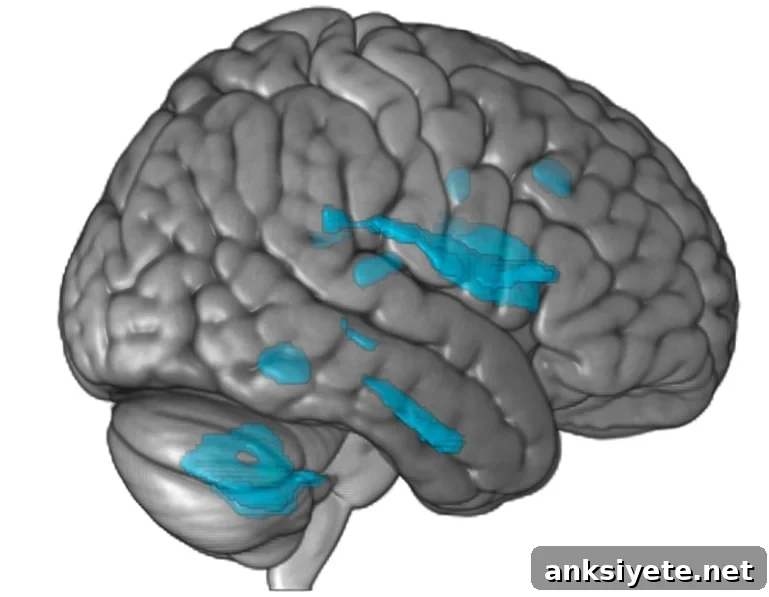
Summary: New research shows that listening to and practicing music can slow cognitive decline in older adults by stimulating increases in grey matter in key brain regions.
Source: University of Geneva
Normal aging often brings gradual cognitive decline. But can targeted activities help preserve mental abilities?
Researchers from the University of Geneva (UNIGE), HES‑SO Geneva and EPFL studied whether music practice and active musical listening could influence brain aging. Their findings indicate that both playing music and attentive listening over a sustained period promote brain plasticity in healthy older adults and help preserve aspects of working memory by increasing grey matter volume in several regions.
The team followed more than 100 retired participants with no significant prior musical training. Over six months, participants took part in either piano lessons or structured active listening and music-awareness classes. The results point to promising, accessible strategies to support healthy cognitive aging and are reported in NeuroImage: Reports.
Across the lifespan the brain continually adapts: neural connections and brain morphology shift in response to learning, experience and injury recovery. However, natural aging reduces that plasticity and is accompanied by loss of grey matter—known as brain atrophy—which contributes to declines in cognitive functions. Working memory, the mental system that temporarily holds and manipulates information needed for tasks such as remembering a short list or translating a sentence, is particularly vulnerable to aging.
This randomized study examined whether musical interventions can boost brain plasticity and protect auditory working memory in older adults. The team recruited 132 healthy retirees aged 62 to 78 who had not received music lessons for more than six months at any point in their lives, ensuring the participants’ brains did not already carry lasting traces of musical training.
Design: active music-making versus active listening
Participants were randomly assigned to one of two six-month programs. The experimental group received piano instruction, including hands-on practice and exercises, while the active control group took music-awareness classes that emphasized instrument recognition and analysis of musical features across genres. Both groups attended one-hour weekly sessions and were asked to practice or complete homework about half an hour per day.
Shared benefits across interventions
After six months, neuroimaging revealed shared, positive effects for both interventions. When combining results from both groups, researchers observed increases in grey matter volume in four brain areas involved in higher-level cognition, including cerebellar regions implicated in working memory. On average, participants improved by about 6% on measures of working memory, and this gain correlated directly with increased cerebellar plasticity, indicating a meaningful link between structural brain change and cognitive benefit.
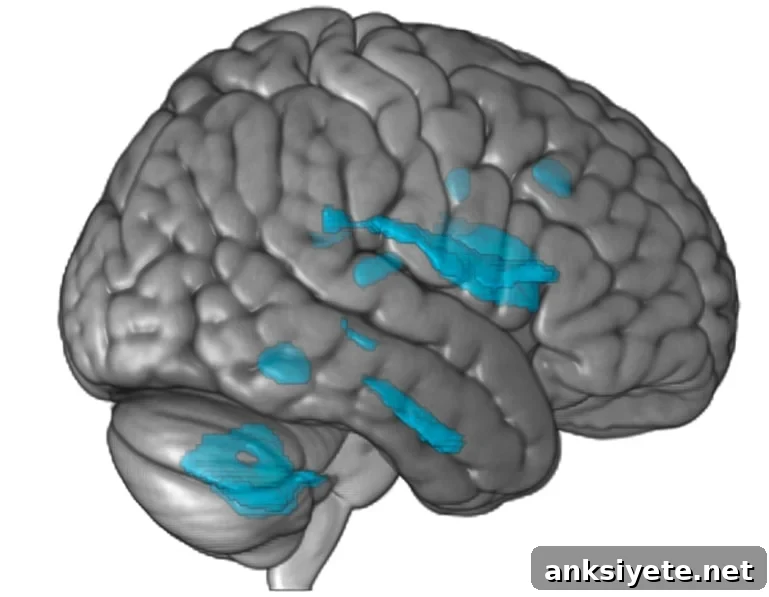
The study also identified practical factors that enhanced outcomes: better sleep quality, greater attendance at lessons, and higher daily practice time were each associated with larger improvements in working memory and greater grey matter changes. These findings underscore that lifestyle and engagement levels influence the effectiveness of cognitive interventions.
At the same time, the researchers detected a difference between the two groups in the right primary auditory cortex, a key region for sound processing. In the piano group this region’s grey matter volume remained stable over the six months, while it decreased in the active listening group. This suggests that hands-on musical practice may better preserve auditory cortex structure than listening alone.
Despite these encouraging, region-specific gains, a broader pattern of age-related atrophy was present across participants’ brains. As the authors note, musical activities do not reverse global brain aging; instead, they appear to protect and reinforce specific neural circuits associated with auditory processing and working memory.
Overall, the study supports the view that music-making and structured listening foster brain plasticity and build cognitive reserve in older adults. Because these interventions are enjoyable, accessible and social, the authors argue they should be prioritized in public health strategies aimed at promoting healthy aging.
The research team plans next to evaluate whether similar music-based programs could benefit people with mild cognitive impairment, an intermediate stage between typical aging and dementia, to determine whether these interventions have clinical potential beyond healthy aging.
About this cognition and music research news
Author: Antoine Guenot
Source: University of Geneva
Contact: Antoine Guenot – University of Geneva
Image: The image is credited to UNIGE – Damien Marie
Original Research: Open access. “Music interventions in 132 healthy older adults enhance cerebellar grey matter and auditory working memory, despite general brain atrophy” by Damien Marie et al., NeuroImage: Reports.
Abstract
Music interventions in 132 healthy older adults enhance cerebellar grey matter and auditory working memory, despite general brain atrophy
Normal aging is associated with brain atrophy and cognitive decline, with working memory among the functions most affected. Music training has emerged as a promising area in brain-plasticity research, with potential transfer effects to cognitive domains such as auditory working memory. This longitudinal voxel-based morphometry study assessed the effects of six-month music interventions on grey matter volume and auditory working memory in 132 healthy older adults.
The randomized controlled trial compared piano practice (experimental) with musical culture and active listening (control). When combining both groups, whole-brain analyses revealed significant grey matter increases in the caudate nucleus, Rolandic operculum and inferior cerebellum, and no overall group differences. Cerebellar grey matter increases, training intensity and sleep quality were positively associated with improvements in tonal working memory, and Digit Span Backward performance also improved.
Region-of-interest analyses showed a group-specific effect in the right primary auditory cortex: grey matter decreased in the musical listening group but remained stable in the piano group. Nonetheless, a pervasive six-month whole-brain atrophy pattern consistent with aging was also observed. The authors conclude that educational and group-based music interventions for seniors could be an important policy priority to foster brain plasticity and cognitive reserve in healthy aging.