
Summary: Researchers have identified a specific molecular marker that drives a chronic, underrecognized vascular condition in the brain and have shown a potential route for therapy in animal models.
Source: Yale
Researchers led by Yale pathology professor Wang Min have identified a key marker that contributes to cerebral cavernous malformations, a chronic vascular disorder of the brain.
Cerebral cavernous malformations (CCMs) are clusters of abnormally formed capillaries in the brain’s white matter that can lead to seizures, headaches, hemorrhage and, in severe cases, death. There is currently no approved medical therapy that effectively prevents lesion formation or progression. Using a validated animal model, the Yale team pinpointed the growth factor angiopoietin-2 (ANGPT2) as a critical mediator of CCM progression and demonstrated that blocking ANGPT2 can prevent the development of these malformations in the model.
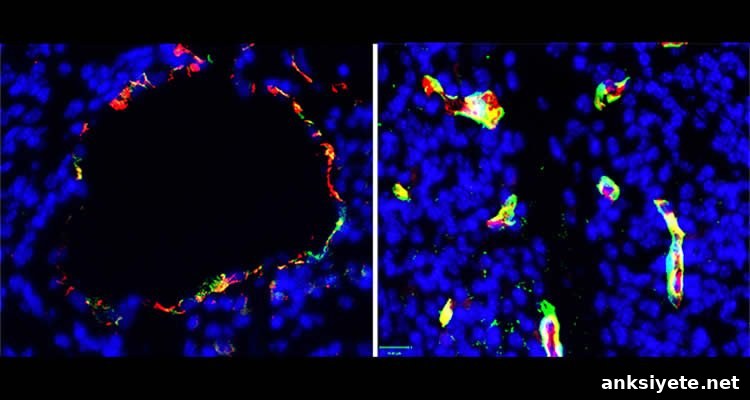
The investigators found that loss of the PDCD10 gene (also known as CCM3) in brain endothelial cells causes excessive exocytosis and secretion of ANGPT2. Elevated ANGPT2 destabilizes endothelial junctions, promotes abnormal vessel dilation and encourages dissociation between endothelial cells and pericytes — all features that contribute to the formation and growth of cavernous vascular lesions. By neutralizing ANGPT2 with a specific antibody, the researchers were able to blunt lesion formation and correct several vascular defects in affected tissues.
Reporting and image source: Ziba Kashef, Yale. Image adapted from the Yale press release.
Study highlights:
- Loss-of-function in CCM genes (KRIT1/CCM1, CCM2, PDCD10/CCM3) underlies cerebral cavernous malformations in patients and in animal models.
- PDCD10 (CCM3) deficiency in endothelial cells increases exocytosis of ANGPT2 through a pathway involving UNC13 family proteins and VAMP3.
- Excessive ANGPT2 secretion destabilizes endothelial junctions, enlarges vessel lumens, and causes pericyte dissociation—pathological steps that promote CCM lesion formation.
- Genetic reduction of UNC13B or pharmacologic neutralization of ANGPT2 restores vascular stability and reduces lesion formation in the brain and retina of affected models.
These results connect a defined molecular mechanism—enhanced endothelial exocytosis of ANGPT2 due to CCM3 deficiency—with the progression of cerebral cavernous malformation disease. The findings identify ANGPT2 as both a biomarker of pathological endothelial behavior in CCM and a promising therapeutic target. Importantly, the study demonstrates that targeting ANGPT2 by antibody blockade can normalize vascular defects in preclinical models, offering a potential strategy for therapy development.
The primary research article, titled “Endothelial exocytosis of angiopoietin-2 resulting from CCM3 deficiency contributes to cerebral cavernous malformation,” was published in Nature Medicine (online August 22, 2016). The authors include Huanjiao Jenny Zhou, Lingfeng Qin, Haifeng Zhang, Wenwen Tang, Weidong Ji, Yun He, Xiaoling Liang, Zongren Wang, Qianying Yuan, Alexander Vortmeyer, Derek Toomre, Germaine Fuh, Minghong Yan, Martin S. Kluger, Dianqing Wu and Wang Min. The study details the mechanistic link between CCM3 loss, ANGPT2 secretion, and CCM pathology, and reports reversal of vascular defects through ANGPT2 neutralization or modulation of exocytic machinery.
The identification of ANGPT2 as a driver of vascular instability in CCM provides several important avenues for future work. First, ANGPT2 can be evaluated as a biomarker for disease activity or progression in patients with CCM gene mutations. Second, therapies that neutralize ANGPT2 or that correct the upstream endothelial exocytic dysregulation associated with CCM3 loss may prevent lesion growth or reduce hemorrhagic risk. Finally, these findings highlight the broader importance of regulated endothelial secretion in maintaining cerebral microvascular integrity, suggesting potential relevance for other cerebrovascular disorders.
While the current results derive from animal and cellular models, they establish a clear, testable therapeutic hypothesis: inhibiting ANGPT2 activity can restore vascular stability and reduce or prevent cavernous malformation formation driven by CCM3 deficiency. Further preclinical safety and efficacy studies will be required before translating ANGPT2-directed treatments into human clinical trials.
Feel free to share this summary of the research. For the full experimental details and data, refer to the original Nature Medicine article and the Yale press materials.