
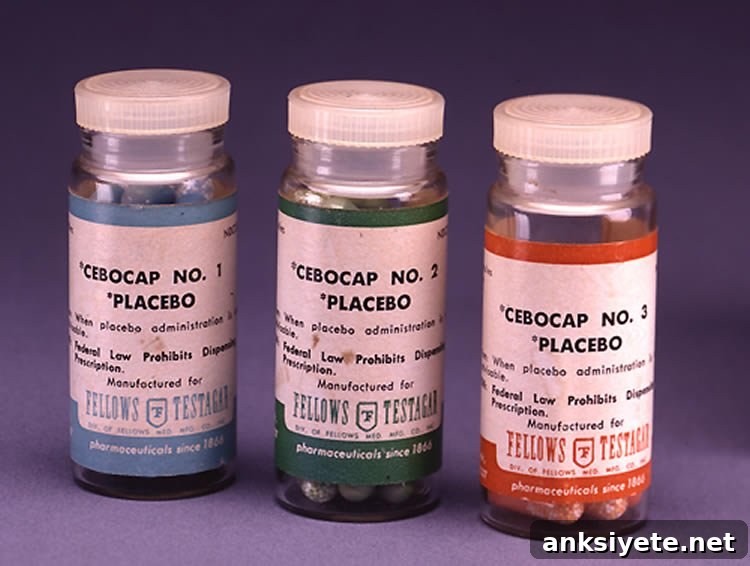
Scientists have demonstrated that neurons can be trained to respond to a placebo—that is, an inert treatment—just as they would to an active medication, according to a study published in the Journal of Physiology.
Researchers working with patients who have Parkinson’s disease (PD) showed that a neuron that initially did not respond to placebo (a placebo “non‑responder”) can be converted into a placebo “responder” through conditioning with apomorphine, a dopaminergic drug commonly used to treat Parkinson’s symptoms.
In the study, the team observed neuronal activity in the thalamus, a brain region implicated in motor control and known to be altered in Parkinson’s disease. When a saline placebo was given for the first time, it produced neither measurable clinical benefit nor changes in thalamic neurons. However, when patients received repeated administrations of apomorphine prior to receiving placebo, the subsequent placebo injection produced both increased neuronal activity in the thalamus and a measurable clinical improvement, specifically a reduction in arm muscle rigidity. The magnitude of both neuronal and clinical responses grew with the number of prior apomorphine exposures: one, two, three, and up to four days of apomorphine conditioning. After four consecutive apomorphine exposures, a single placebo injection triggered a response that matched the drug’s effect, and these conditioned effects persisted for up to 24 hours.
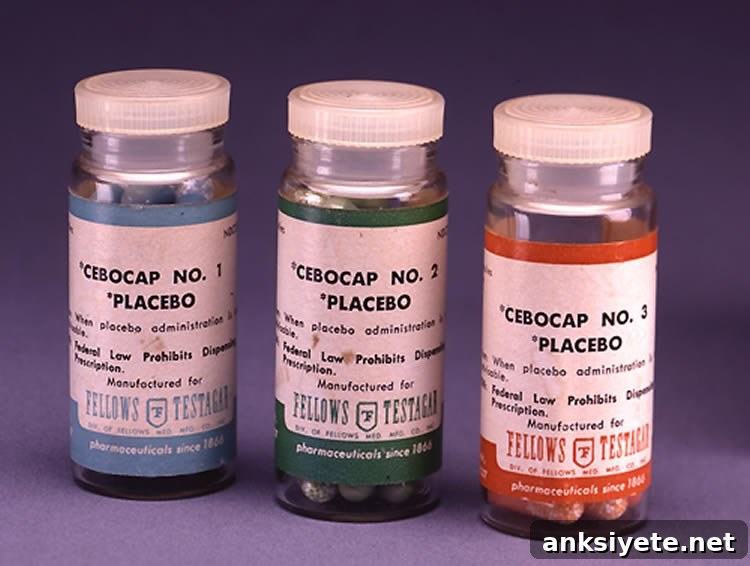
The experimental protocol involved administration of apomorphine one to four days before the surgical implantation of electrodes for deep brain stimulation (DBS), an established therapy for advanced Parkinson’s disease. During the DBS implantation procedure, the researchers substituted apomorphine with a saline placebo while recording activity from single neurons in the ventral anterior and anterior ventrolateral thalamus and simultaneously assessing arm rigidity. This design allowed direct comparison of neuronal and clinical responses to the active drug and to placebo after different conditioning regimens.
Lead author Fabrizio Benedetti, from the Department of Neuroscience at the University of Turin Medical School, described the significance of the findings: “These results show that neurons in the thalamus can be taught to respond to placebos, effectively converting placebo non‑responders into responders. Because this process relies on learning and memory for drug action, alternating active drug and placebo could reduce overall medication intake while preserving clinical benefit.” He noted that when a placebo was given after four prior apomorphine doses, the placebo response equaled the drug response and lasted up to 24 hours, and that a future challenge will be determining whether this conditioned effect can be extended beyond one day.
Source: Helga Groll, The Physiological Society
Image source: Elaine and Arthur Shapiro/NIH (public domain)
Original research: “Teaching neurons to respond to placebos” by Fabrizio Benedetti, Elisa Frisaldi, Elisa Carlino, Lucia Giudetti, Alan Pampallona, Maurizio Zibetti, Michele Lanotte, and Leonardo Lopiano. Journal of Physiology. Published online February 9, 2016. doi: 10.1113/JP271322
Abstract (summary)
Placebo effects engage specific brain mechanisms in a variety of conditions, including pain and motor disorders. In Parkinson’s disease, placebo treatments can trigger dopamine release in the striatum and alter neuronal activity in thalamic and subthalamic nuclei. This study shows that an initial placebo administration during electrode implantation for DBS produces no clinical or neuronal improvement in patients who have not been conditioned. However, repeated exposure to the anti‑Parkinson drug apomorphine before placebo administration progressively enhanced both clinical outcomes and thalamic neuronal activity. With each additional day of apomorphine (from one to four days), the magnitude of the conditioned placebo response increased. After four apomorphine exposures, placebo produced clinical responses comparable to the drug, along with persistent neuronal changes; these conditioned responses were reproducible at 24 hours after surgery but were not present at 48 hours. Overall, the data indicate that learning mechanisms are central to placebo responsiveness and that individuals who do not initially respond to placebo can be converted into responders, a finding with potential clinical implications for optimizing medication regimens in Parkinson’s disease.
This summary presents the study’s key methods and findings without adding new or speculative claims. The research highlights how conditioning with apomorphine can create a short‑term memory of drug action in thalamic neurons, producing clinically meaningful placebo responses in Parkinson’s disease.