
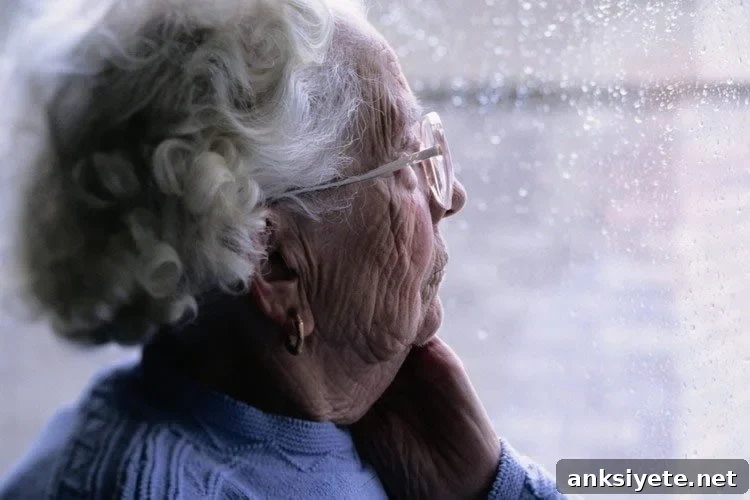
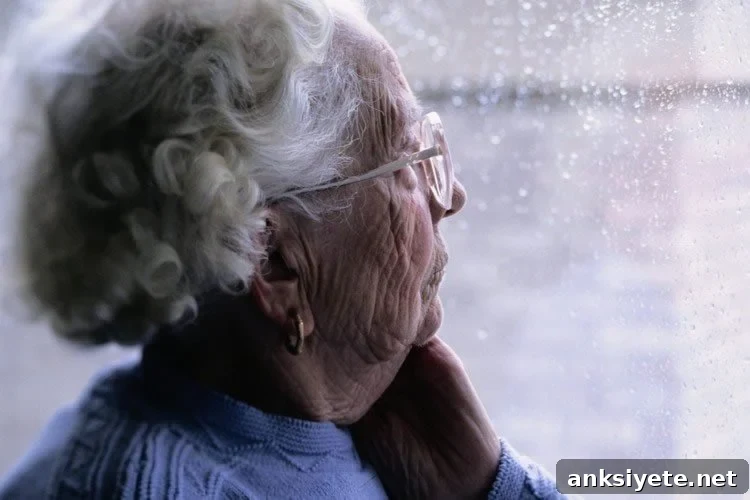
Summary: New research provides additional evidence that social loneliness raises the likelihood of developing dementia in older adults.
Source: Florida State University.
Loneliness Linked to 40% Higher Dementia Risk in Older Adults
A major study from the Florida State University College of Medicine, analyzing data from more than 12,000 people tracked for up to ten years, found that feelings of loneliness raise the risk of developing dementia by about 40 percent. The increased risk appears across gender, race, ethnicity and education levels, and it remains even after accounting for whether people have regular contact with friends and family.
Published in the Journal of Gerontology: Psychological Sciences, the study relied on the federally supported Health and Retirement Study, which follows Americans aged 50 and older and their spouses. Participants reported how lonely they felt and completed cognitive assessments every two years. Over the course of the follow-up, 1,104 participants developed dementia.
Those who reported greater loneliness were more likely to meet criteria for dementia during the decade-long observation. Loneliness often coincides with other dementia risk factors — such as diabetes, high blood pressure and depression — and with behaviors linked to cognitive decline, including physical inactivity and smoking. Even after adjusting for these clinical and behavioral risks, loneliness remained an independent predictor of dementia.
Subjective Loneliness Versus Objective Isolation
Lead author Angelina Sutin, an associate professor in the Department of Behavioral Sciences and Social Medicine, stressed the distinction between subjective loneliness and objective social isolation. The study measured the subjective experience — how people feel about their social connections — rather than simply counting contacts or living arrangements.
“Loneliness is the internal experience of not fitting in or belonging with the people around you,” Sutin explained. “Someone can live alone with limited social contact and feel satisfied, while another person surrounded by others may feel excluded and disconnected. It’s the personal, subjective sense of isolation that the study links to higher dementia risk.”
Sutin also warned against blaming individuals for feeling lonely. While friends or family might advise someone to “just make a friend,” changing feelings of loneliness is not always straightforward. The study highlights that loneliness is not solely a personal failing but a psychological state with real health consequences.
How Loneliness May Influence Brain Health
The researchers describe several plausible pathways through which loneliness could influence dementia risk. One physiological route is chronic inflammation: prolonged feelings of loneliness are associated with elevated inflammatory markers, and sustained inflammation can damage brain tissue over time. Behavior is another channel — people coping with loneliness may adopt harmful habits such as excessive alcohol use, smoking or a sedentary lifestyle, all of which increase dementia risk. Finally, loneliness often means fewer meaningful social interactions that stimulate thinking, memory, and emotional engagement; a lack of such cognitive stimulation may reduce the brain’s resilience to age-related changes.
Because loneliness signals unmet social needs, it also points to opportunities for intervention. “Loneliness is a modifiable risk factor,” Sutin noted. “Many people experience periods of loneliness and periods without it, which suggests that targeted interventions and support can reduce loneliness and potentially lower dementia risk.”
Study Details and Authors
The analysis included 12,030 participants from the Health and Retirement Study who provided measures of loneliness, social isolation, and clinical, behavioral, and genetic risk factors. Cognitive status was assessed at baseline and every two years for up to a decade using a modified Telephone Interview for Cognitive Status (TICSm); scores of 6 or lower were used to indicate dementia. Using Cox proportional hazards models, the researchers found that loneliness was associated with a 40 percent higher risk of developing dementia, even after accounting for social isolation and multiple risk factors. The association was consistent across gender, race, ethnicity, education level and genetic vulnerability.
Co-authors on the paper include Martina Luchetti and Antonio Terracciano from Florida State University, and Yannick Stephan from the University of Montpellier. The findings underscore the importance of psychological and social factors in cognitive aging and suggest that addressing loneliness could be a viable strategy for reducing dementia risk.
Abstract summary: This study tested whether subjective loneliness predicts dementia risk in a large, diverse sample and whether that association is independent of social isolation and other risk factors. Results show that loneliness increases dementia risk by roughly 40 percent and that this effect is robust across demographic groups and after controlling for clinical, behavioral and genetic risks. Loneliness is therefore a modifiable factor to consider in dementia prevention strategies.
Publisher: Organized by NeuroscienceNews.com. Image credit: Public domain image used by NeuroscienceNews.com.
The research highlights the role of subjective social experience in long-term cognitive health and supports interventions that reduce loneliness as part of broader dementia risk reduction efforts.