
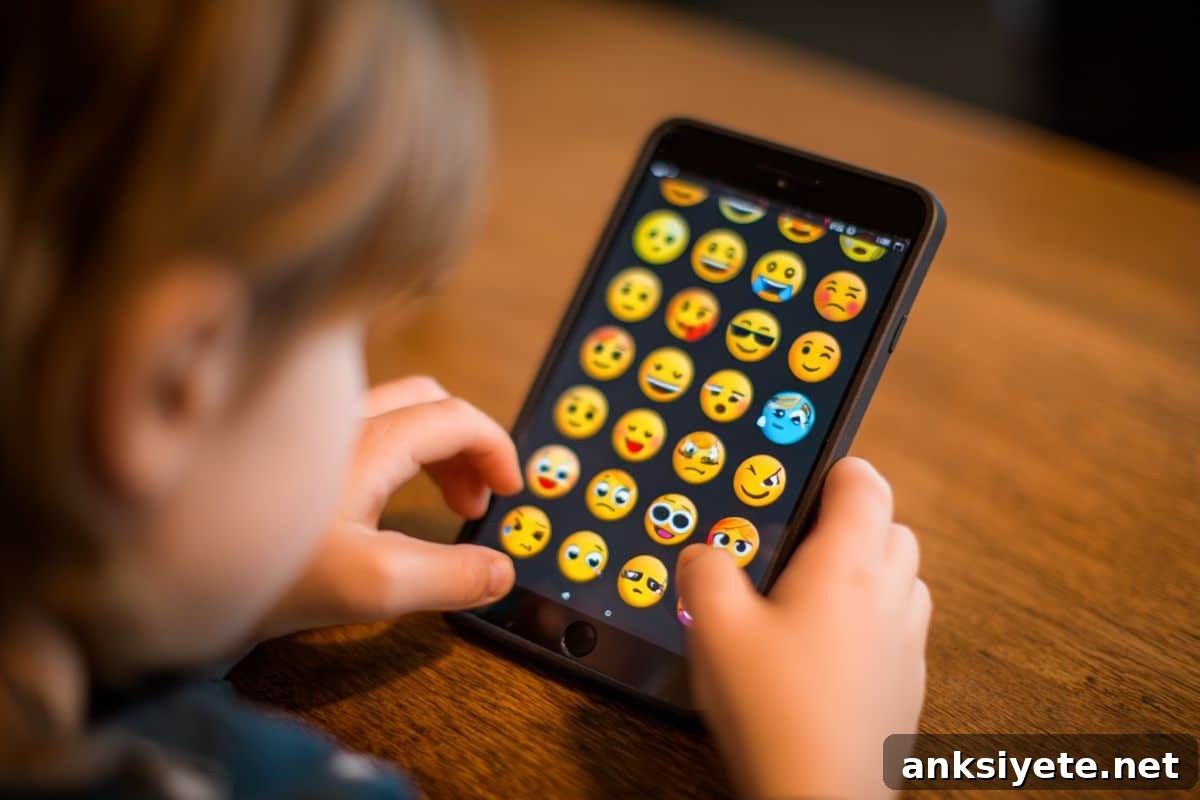
Summary: Researchers have introduced a concise, emoji-based screening tool designed to objectively measure social development in preschool children. The new digital diagnostic framework uses nine quick questions to help early childhood educators assess children aged three to five and to identify developmental delays that can benefit from early intervention.
By replacing long, complex assessments with an intuitive visual scale, the project delivers a practical baseline for catching social skill difficulties early. That enables clinicians and teachers to act within the child’s most formative years, when interventions have the greatest impact.
Key Facts
- Importance of early screening: Early assessment of social skills and vocabulary is critical because these abilities strongly influence academic progress and behavior during childhood and adolescence.
- The 9-question matrix: Developed by Professor Hermundur Sigmundsson at NTNU’s Department of Psychology, the test gives kindergarten teachers nine focused items to quickly evaluate a child’s social skills in everyday settings.
- Emoji-based Likert scale: The evaluation uses a simple visual 1-to-5 emoji scale—1 = very sad face, 3 = neutral, 5 = very happy face—to make responses fast and intuitive for teachers.
- Strong inter-rater reliability: Independent evaluations by different teachers produced high agreement, with internal consistency measured at 0.89 using Cronbach’s alpha for the scale.
- Field validation: The scale was field-tested with 127 children in Iceland, ages three to five (mean age 3.8 years), showing consistent correlations across items and promising psychometric properties.
- Companion vocabulary measure: While the social skills scale is near clinical readiness, the team is also developing a companion early vocabulary test for toddlers aged 18 to 24 months.
Source: NTNU
“I wanted to develop tests for social skills and vocabulary aimed at preschool children,” says Professor Hermundur Sigmundsson at the Department of Psychology, Norwegian University of Science and Technology (NTNU). He explains that social skills and vocabulary are foundational for later learning and behavior, and that efficient early screening supports timely intervention when children need extra help.
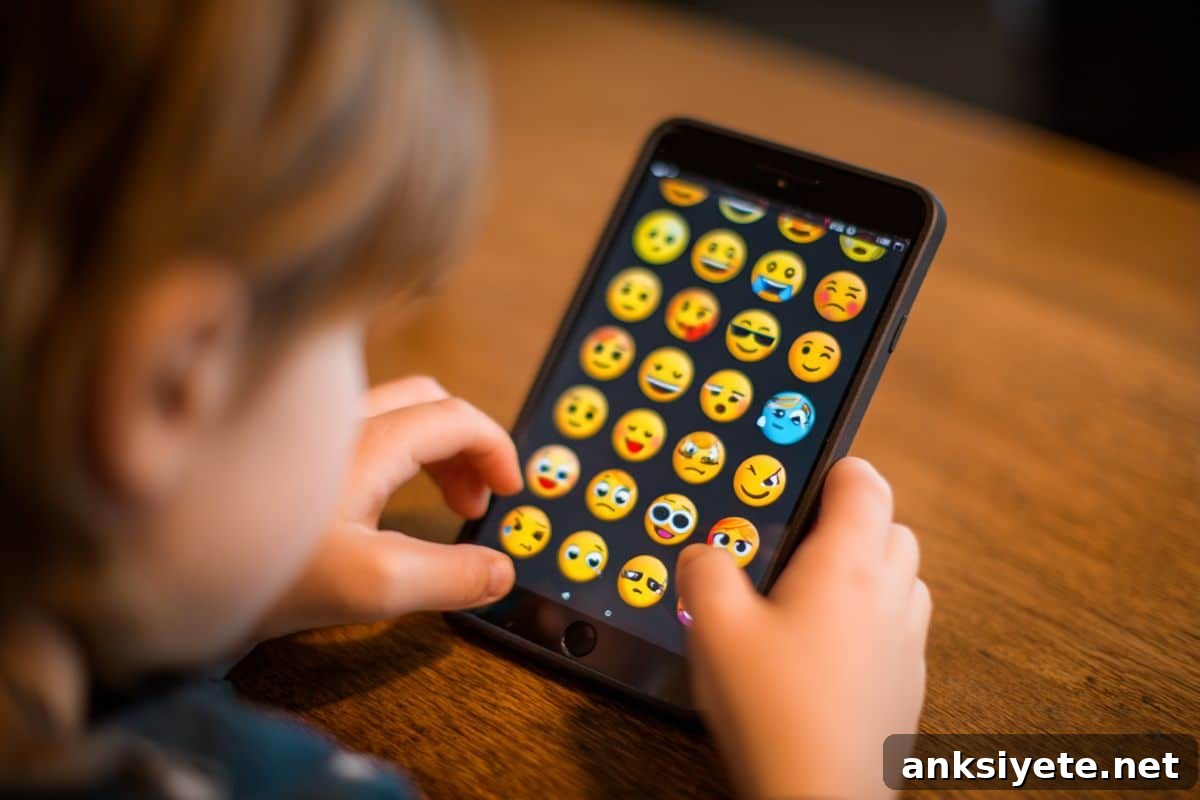
The social skills instrument is intended to be quick and practical for daily use by preschool staff. Teachers answer nine targeted questions about observable behaviors using the emoji scale. The aim was to verify whether the test is stable, reliable, and suitable for the intended age group. Initial results are encouraging and indicate the measure is well suited for children aged three to five.
Using emoji faces for the children’s test
The emoji-based Likert format was chosen to reduce ambiguity and speed up scoring. Visual icons remove complex wording and help teachers register observations consistently. In testing, every item correlated positively with the overall score, which supports the scale’s coherence as a unidimensional measure of social skill behaviors.
Appears to be reliable
To evaluate inter-rater reliability, ten children were independently assessed by two preschool teachers. Agreement between raters was strong: the standardized Cronbach’s alpha for the nine-item scale was 0.89, and the intraclass correlation coefficient (ICC) between raters for the subset was 0.88. These statistics indicate high internal consistency and good inter-rater reliability for the sample tested.
Professor Sigmundsson notes that the next step is broader testing on larger and more representative samples to confirm the tool’s generalizability and to develop normative data for varied populations.
Key Questions Answered:
A: Simplicity improves feasibility in busy preschool settings. Traditional instruments can be lengthy and open to subjective interpretation. Translating behaviors into a clear visual 1-to-5 scale reduces ambiguity, speeds data collection, and yields quantitative scores that teachers can use to monitor children over time.
A: Cronbach’s alpha measures how consistently items on the scale reflect the same underlying construct. A value of 0.89 is high, indicating the nine items reliably work together to capture social skill characteristics. Practically, it suggests different observers are likely to produce similar scores for the same child.
A: The initial trial produced stable, promising results, but the researchers plan larger and more diverse validation studies. After wider validation and norming, the tool could be adopted as a practical screening measure for preschool environments.
Editorial Notes:
- This article was edited by a Neuroscience News editor.
- The journal paper was reviewed in full by the editorial team.
- Additional context was added by the staff to clarify methodology and implications.
About this social neuroscience and neurodevelopment research news
Author: Nancy Bazilchuk
Source: NTNU
Contact: Nancy Bazilchuk – NTNU
Image: The image is credited to Neuroscience News
Original Research: Open access. “Social skills scale: aspects of reliability and validity of a new 9-item scale assessing social-skills” by Hermundur Sigmundsson. Frontiers in Education. DOI: 10.3389/feduc.2026.1769238
Abstract
Social skills scale: aspects of reliability and validity of a new 9-item scale assessing social-skills
This study evaluates the psychometric properties of a new, easy-to-administer social skills scale intended to be context-independent and suitable for preschool settings. The instrument was tested on 127 children aged 3–5 years (mean age = 3.83, SD = 0.72) in Iceland, with assessments completed by preschool teachers.
All items correlated positively with the total score, with item-total correlations ranging from 0.35 to 0.76. The standardized Cronbach’s alpha was 0.89, indicating high internal consistency. Inter-rater reliability was assessed on a subset of 10 children (mean age = 4.04, SD = 0.21), producing an ICC of 0.88. These initial findings support further development, norming on a larger and more representative sample, and additional validation work to confirm the scale’s utility across diverse early childhood settings.