
Direct Touch, Self-Control, and Food Pleasure: How Hands-on Sampling Changes Taste and Consumption
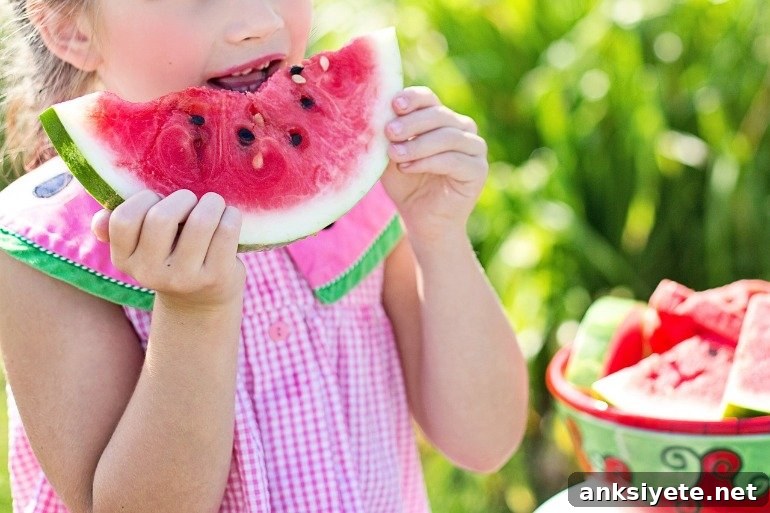
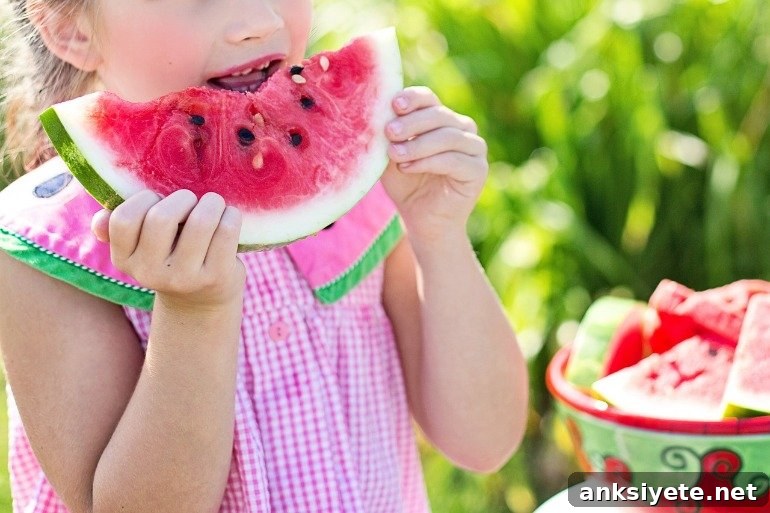
Summary: For people who actively regulate their eating, directly touching food with their hands triggers a stronger sensory response, making the food seem more appealing and increasing enjoyment.
Source: Stevens Institute of Technology
Minor changes to presentation can significantly alter how people perceive flavor and fullness. For example, strawberry mousse served in a white container can taste about 10% sweeter than the same mousse in a black container; coffee can taste nearly twice as intense when sipped from a white mug rather than a clear glass; and adding a small amount of weight to a yogurt container can make the contents feel roughly 25% more filling.
Building on research into the tactile and contextual cues that shape taste, Adriana Madzharov, a sensory marketing researcher and assistant professor at Stevens Institute of Technology, tested whether touching food directly affects how people evaluate and consume it. Her findings, published in the Journal of Retailing, show that direct hand contact—compared with using a utensil—makes food taste better and feel more satisfying for people who exercise self-control in their eating. Those same individuals also consumed larger amounts when they handled food with their hands.
Madzharov calls this a subtle but powerful effect: a small change in how a product is sampled can change consumer evaluations and behavior. The results have immediate implications for retailers and food-service providers who want to create more enjoyable sampling experiences in stores, at catering events, and in restaurants.
In the first experiment, 45 undergraduate students were asked to visually inspect and evaluate a cube of Muenster cheese and then hold it before tasting. Half the participants sampled the cheese with an appetizer pick (indirect touch) and half sampled it without a pick (direct touch). Before tasting, participants in the two groups reported no differences in expectation. After eating, however, participants who described themselves as exercising higher self-control around food—those who say they resist tempting foods and monitor portion size—rated the cheese as tastier and more appealing when they had touched it directly. This boost in hedonic evaluation did not appear among participants who reported lower levels of self-control.
“These two groups do not appear to process sensory information in the same way,” Madzharov said. Her interpretation is that for people who habitually regulate what and how much they eat, direct tactile contact intensifies sensory processing and increases the food’s appeal.
To test whether this effect holds when self-control is merely activated rather than chronically present, Madzharov ran a second experiment with 145 students. She randomly assigned participants to visualize one of two scenarios: either they imagined committing to healthier eating and greater self-control to reach long-term fitness goals, or they imagined allowing themselves to indulge more often to enjoy life’s pleasures. Every participant received a plastic cup containing four mini donuts; for half the cups the donuts were presented with appetizer picks, and for the other half they were pick-free.
Participants evaluated the mini donuts on sensory and hedonic qualities such as texture, freshness, overall quality, and perceived nutrition. They also reported how focused and mindful they felt while eating—measures intended to capture the intensity of the sensory experience. The results mirrored the first study: participants primed with self-control thinking rated food more positively when they touched it directly, and they reported a stronger sensory experience. This suggests that the effect is not limited to people with stable, long-term dieting habits but can be produced by temporarily activating self-control goals.
Previous research has established that tactile cues external to the food—such as the weight, material, and texture of containers and mugs—influence flavor perception and inferred quality. Madzharov’s research extends that literature by showing that direct tactile contact with the food itself is a proximal cue that can enhance hedonic responses and increase consumption for certain consumers. In retail and sampling settings, this insight could be used to design experiences that amplify enjoyment for customers who are motivated to regulate their eating.
Madzharov’s work also connects to her earlier findings that sensory cues like the scent of coffee—even decaffeinated—can influence behavior, such as boosting performance on cognitive tasks. Together, these studies highlight how subtle sensory inputs shape both perception and action.
About this sensory neuroscience research news
Source: Stevens Institute of Technology
Contact: Thania Benios – Stevens Institute of Technology
Image: The image is in the public domain
Original Research: Closed access. “Self-Control and Touch: When Does Direct Versus Indirect Touch Increase Hedonic Evaluations and Consumption of Food” by Adriana V. Madzharov. Journal of Retailing
Abstract
Self-Control and Touch: When Does Direct Versus Indirect Touch Increase Hedonic Evaluations and Consumption of Food
This paper reports four studies examining whether handling food directly with the hands changes hedonic evaluations and consumption volume. The studies show that consumers who exercise self-control over their eating experience enhanced sensory responses and higher hedonic ratings when they touch food directly. Crucially, direct touch also increases how much these consumers eat. These findings illuminate the role of touch as a proximal sensory factor that shapes food evaluation and consumption, with practical implications for in-store sampling, catering, food presentation, and restaurant service.