
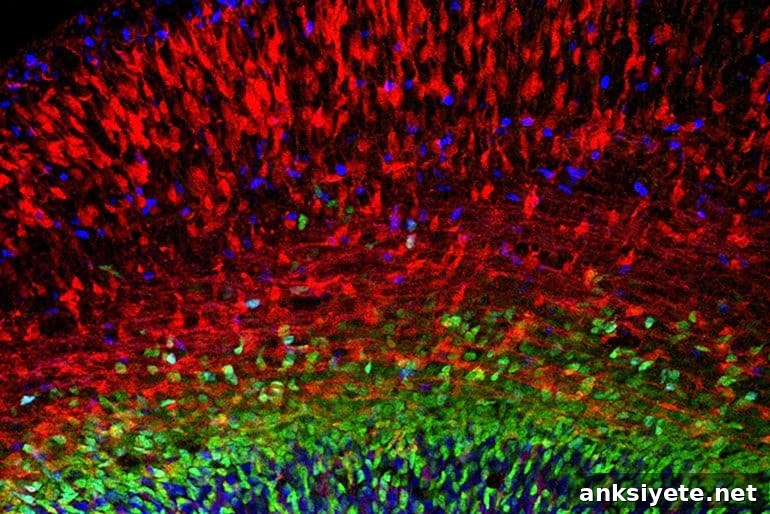
Summary: Researchers combined single-cell and spatial genomic technologies to assemble a high-resolution molecular atlas of the developing mouse cerebral cortex.
Source: Harvard
Teams at Harvard University and the Broad Institute of MIT and Harvard have produced the first comprehensive, single-cell-resolution atlas of a key region of the developing mouse brain. Focusing on the somatosensory cortex — the cortical area responsible for processing bodily sensation — the researchers applied multiple advanced genomic technologies to map how cells, gene expression, and regulatory programs change day by day during development.
By measuring gene activity and chromatin accessibility across individual cells and preserving spatial context in the tissue, the study clarifies how the cerebral cortex is assembled and provides a powerful resource for investigating neurodevelopmental disorders.
The study appears in the journal Nature.
“We have long aimed to understand mammalian cortical development because the cerebral cortex underlies higher cognition and has undergone major expansion during evolution,” said Paola Arlotta, co-senior author and Golub Family Professor of Stem Cell and Regenerative Biology at Harvard. “In this work we effectively looked at the cortex with a very fine lens, profiling nearly every cell type, one cell at a time, across each day of development. That allowed us to catalog gene expression and regulatory changes with unprecedented temporal resolution and to begin extracting the mechanisms that shape cortical construction.”
Co-senior author Aviv Regev noted the importance of integrating multiple dimensions of information. “To understand the developing brain, we must know which cell types are present, where they are located, and what stage of maturation they have reached. Identifying the molecular drivers of these processes helps reveal what can go wrong in disease.”
The group selected the somatosensory cortex as a representative region because it contains examples of all major cortical cell classes. For each day of cortical development they collected data using three complementary single-cell modalities:
- Single-cell RNA sequencing (scRNA-seq) to profile gene expression in individual cells.
- Spatial transcriptomics to map where specific genes are active within the tissue architecture.
- Single-cell ATAC-seq to measure chromatin accessibility and identify regulatory elements controlling gene activity.
“Combining these technologies allowed us to observe multiple modes of gene regulation and to infer which genes are likely to direct neuronal differentiation,” said Daniela Di Bella, a postdoctoral fellow in the Arlotta lab and co-first author of the study. The integrated dataset lets researchers distinguish whether lineage decisions are specified early in progenitors or arise later during neuronal maturation.
One key finding is that neuronal diversity emerges primarily during neuron maturation rather than being fully predetermined in stem cells. The team also used the atlas to trace how specific genetic mutations disrupt particular developmental steps and which cell populations are affected, pinpointing the cellular origins of lineage-specific abnormalities seen in mutant mice.
“We created an unusually complete molecular atlas of the developing somatosensory cortex and are continuing to explore the dataset for new insights,” said co-first author Ehsan Habibi. “Our aim is for these data to serve as a community resource that informs studies of normal cortical development and disease.”
Arlotta emphasized the broader shift enabled by these technologies. “Historically, developmental neurobiology examined one cell type or a few genes at a time. The brain develops as an ensemble: hundreds of cell types progress concurrently, with dynamic gene programs guiding their assembly. Having a near-complete ‘recipe’ of the genes each cell class uses as it develops gives us an unprecedented, mechanistic view of cortical construction.”
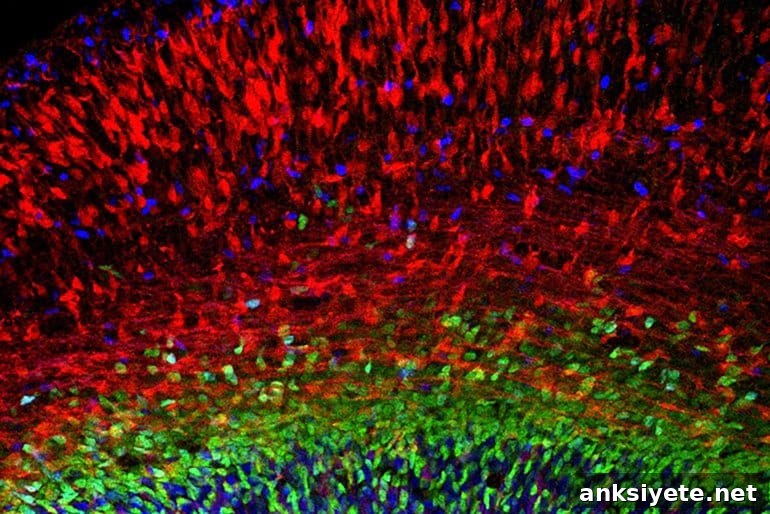
Regev added that recent advances in single-cell and spatial transcriptomics, together with modern machine learning for large-scale data analysis, made the project possible. “These tools let us reconstruct development like a movie: mapping where cells are born, how they change over time, and linking those dynamics to the regulatory programs that drive them. That richer view may ultimately help us better understand and treat brain disorders.”
“It is a compelling movie,” Arlotta said. “It’s a view of cortical development I have wanted to capture for much of my career.”
About this neurodevelopment research news
Source: Harvard
Contact: Jessica Lau – Harvard
Image: The image is credited to Arlotta laboratory, Harvard University
Original Research: Closed access. “Molecular logic of cellular diversification in the mouse cerebral cortex” by Daniela J. Di Bella, Ehsan Habibi, Robert R. Stickels, Gabriele Scalia, Juliana Brown, Payman Yadollahpour, Sung Min Yang, Catherine Abbate, Tommasso Biancalani, Evan Z. Macosko, Fei Chen, Aviv Regev & Paola Arlotta. Nature
Abstract
Molecular logic of cellular diversification in the mouse cerebral cortex
The mammalian cerebral cortex contains an exceptional diversity of cell types that arise during development through tightly timed molecular programs. Understanding the regulatory logic that establishes and organizes these cell classes has been difficult because many cell lineages undergo dynamic state transitions over extended developmental periods.
This study generates a comprehensive atlas of the developing mouse neocortex by combining single-cell RNA sequencing and single-cell assays of chromatin accessibility. The authors sampled the neocortex daily throughout embryonic corticogenesis and into early postnatal stages, and complemented sequencing with a spatial transcriptomics time course.
Using computational reconstruction of developmental trajectories, the team inferred spatial organization, gene regulatory programs that accompany lineage bifurcations, and differentiation pathways across diverse cortical cell classes. They demonstrate how the atlas can identify the origins of lineage-specific developmental defects observed in mutant mice, providing a global view of regulatory mechanisms that govern cellular diversification in the neocortex.