
University of Miami researchers develop a method to visualize protein interactions in a living organism’s brain.
How proteins coordinate inside the brain remains one of neuroscience’s central puzzles. The human brain contains more than a trillion neurons, each packed with millions of proteins that carry out signaling, structural and metabolic roles. Understanding when and where individual proteins meet and interact is essential to reveal how neural circuits form, function and change during development or disease.
Researchers at the University of Miami have now developed a live-imaging approach that directly visualizes intact protein interactions inside the brain of a living animal. Using fluorescence lifetime imaging microscopy together with Förster resonance energy transfer (FRET), the team was able to detect molecular signaling events in neurons without disrupting cells with chemical or physical treatments.
“Our ultimate goal is to create the systematic survey of protein interactions in the brain,” says Akira Chiba, professor of biology in the College of Arts and Sciences at the University of Miami and lead investigator on the project. “Now that the genome project is complete, the next step is to understand what the proteins coded by our genes do in our body.”
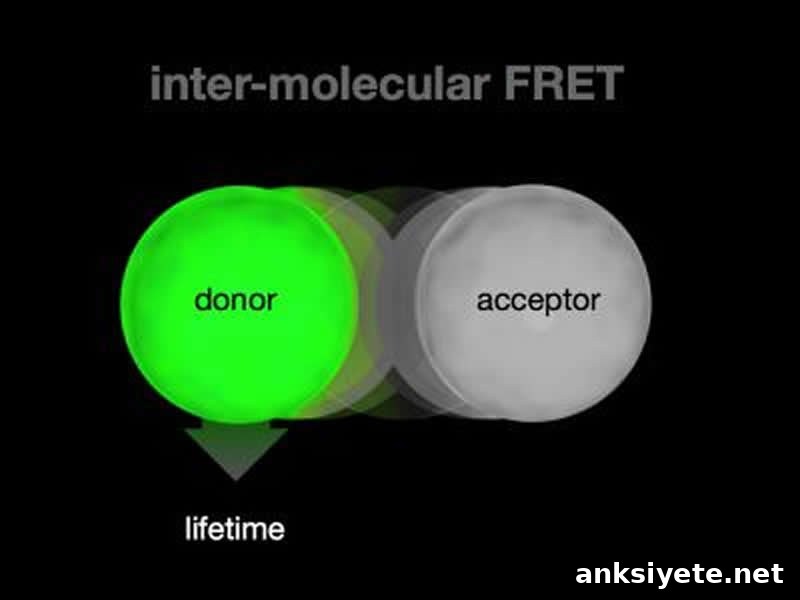
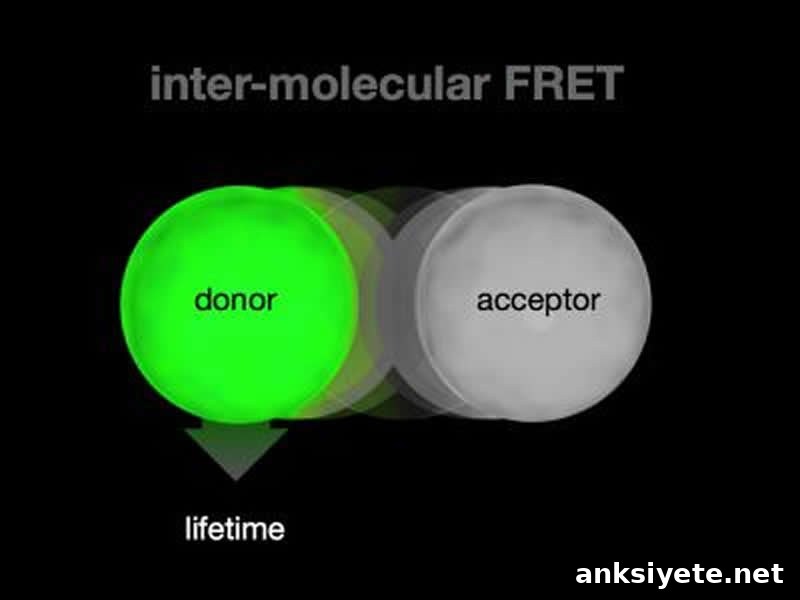
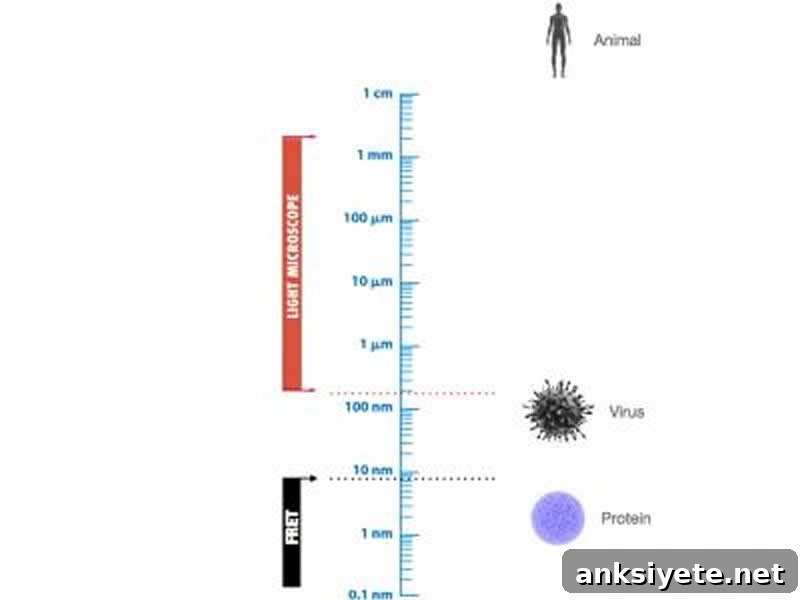
To demonstrate the method, the team used embryos of the fruit fly Drosophila melanogaster. Embryos offer a compact, largely transparent nervous system that is especially well suited for in vivo fluorescence imaging. The approach uses fluorescence lifetime imaging microscopy (FLIM) to detect changes in donor fluorophore lifetime caused by FRET, which indicates that two labeled proteins are within roughly eight nanometers of each other — close enough to be considered physically interacting.
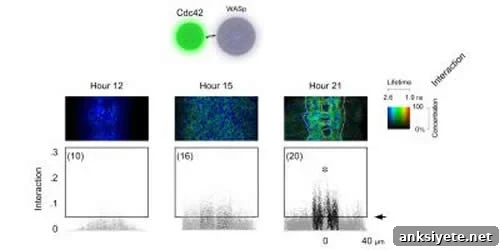
In the experiments, developing fly embryos expressed two fluorescently labeled proteins: the Rho GTPase Cdc42, tagged with a green fluorophore, and the regulatory protein WASp, tagged with a red fluorophore. Both proteins are conserved across species and have homologs in the human brain; they are implicated in cytoskeletal regulation and neuronal growth. Previous biochemical work showed Cdc42 and WASp can bind in vitro, but observing their interaction inside living brain tissue had not been achieved before.
Using the FLIM-FRET approach, the researchers detected FRET signals between Cdc42 and WASp specifically within neurons at times and locations that match the formation of new synapses. Because FRET shortens the donor fluorophore’s lifetime when a nearby acceptor is present, the team interpreted these lifetime changes as direct evidence of dynamic molecular signaling during synaptogenesis in the intact, developing nervous system.
“Previous studies have demonstrated that Cdc42 and WASp can directly bind to each other in a test-tube, but this is the first direct demonstration that these two proteins are interacting within the brain,” Chiba says. The live-imaging method therefore provides a way to monitor protein-protein interactions in situ, preserving cellular context and timing that are essential for understanding neural development.
Notes about this neuroscience and neuroimaging research
This study is part of a larger initiative called in situ Protein-Protein Interaction Networks (isPIN). The results were published in PLoS ONE in a paper titled “Imaging dynamic molecular signaling by the Cdc42 GTPase within the developing CNS.” Co-authors include Nima Sharifai, Hasitha Samarajeewa, Daichi Kamiyama, Tzyy-Chyn Deng, and Maria Boulina from the Department of Biology, College of Arts and Sciences, University of Miami; Daichi Kamiyama is now affiliated with the Department of Pharmaceutical Chemistry at the University of California, San Francisco.
While this project focused on normal neuronal development in Drosophila embryos, the live FLIM-FRET approach can be extended to study specific neuron classes, non-neuronal cells, and disease models, helping to bridge basic molecular biology with translational and clinical research.
Contact: Annette Gallagher — University of Miami
Source: University of Miami press release. Image credit: Akira Chiba/University of Miami.
Original research: “Imaging dynamic molecular signaling by the Cdc42 GTPase within the developing CNS,” PLoS ONE, published online February 19, 2014 (doi:10.1371/journal.pone.0088870).
Keywords: protein interactions, brain, live imaging, FLIM, FRET, Cdc42, WASp, synapse formation, Drosophila, neuroimaging, neuroscience.