
Summary: A UCL-led study indicates that amyloid beta deposits in the brain’s blood vessels may, in some cases, have been transmitted decades earlier by contaminated neurosurgical instruments.
Source: UCL.
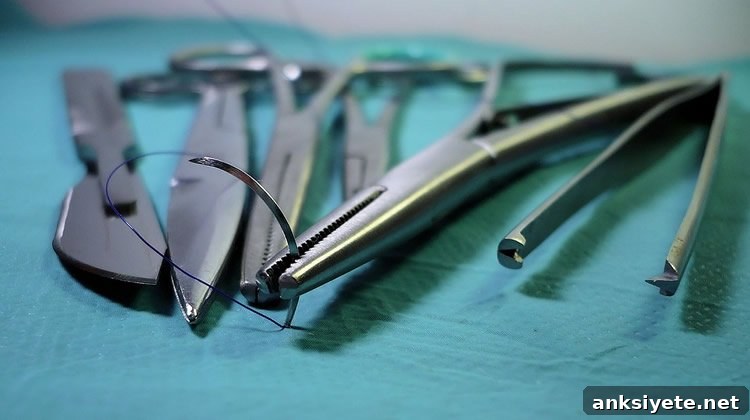
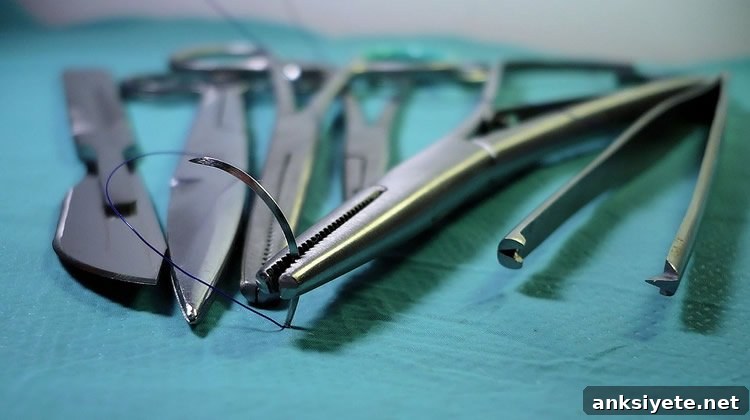
Amyloid beta protein deposits in brain blood vessels may have been transmitted via contaminated neurosurgical instruments, according to a new UCL-led analysis.
Published in Acta Neuropathologica, the study examined clinical and pathology records for a series of patients who developed severe cerebral amyloid angiopathy (CAA), a condition in which amyloid beta (Aβ) accumulates in the walls of cerebral blood vessels and can lead to brain hemorrhage.
The researchers identified four patients who suffered intracerebral hemorrhages caused by extensive Aβ deposition. In each case, the medical history showed these individuals had undergone neurosurgical procedures as children or teenagers two to three decades prior to their later presentation. None of the patients carried known genetic mutations that would normally explain early-onset Aβ pathology.
Because prion proteins are known to be transmissible through certain medical and surgical procedures, the authors investigated the possibility that Aβ pathology might likewise be transferred by contaminated instruments. Experimental studies in animals have shown that small amounts of abnormal Aβ can adhere to surgical steel and seed pathology in recipient brains. This new human study is the first to raise the possibility that similar transmission may have occurred in clinical settings.
To put their findings in context, the team compared the four cases with a control group drawn from the same pathology archives. Among 50 age-matched patients selected from the same repository, none showed Aβ pathology of the same type, and only three had records of childhood neurosurgery. The contrast between the groups supports the possibility of a link between earlier neurosurgical procedures and later CAA in the cases described, although it does not prove causation.
The researchers also reviewed the literature and located four additional published case reports that described related findings: individuals with CAA who had undergone neurosurgical interventions earlier in life. Earlier literature had sometimes hypothesized that head trauma explained those cases, but in the present series three of the four patients were women and only one had a history of head injury, making prior trauma an unlikely common cause.
Lead author Professor Sebastian Brandner (UCL Institute of Neurology) noted that while prion diseases demonstrate clear iatrogenic transmission through contaminated surgical material, evidence for Aβ transmission in humans has been limited. “Our findings provide additional evidence that Aβ pathology might be transferable under particular circumstances,” he said, emphasizing that the study did not find the other Alzheimer’s hallmark—extensive pathological tau protein—so the results do not indicate that Alzheimer’s disease itself is being transmitted.
First author Dr Zane Jaunmuktane (UCL Institute of Neurology) highlighted implications for current practice: “Neurosurgery is increasingly performed on older patients, and because Aβ accumulation becomes more common with age, there is a theoretical risk that pathological proteins could be carried between patients via inadequately sterilized instruments. Although such transmission would be rare, our data suggest sterilisation and safety protocols deserve continued evaluation and vigilance.”
The authors stress the limitations of their report. The study is small, retrospective, and observational, so it cannot establish causality. Alternative explanations remain plausible, and larger epidemiological and experimental studies are required to test the hypothesis more definitively. The research team is expanding the investigation by reviewing additional pathology archives across the UK.
Funding: The research team included investigators from UCL, UCLH, Centro Hospitalar Universitario do Porto, Centro Hospitalar de Lisboa Ocidental and the University of Leuven. Funding was provided by the National Institute for Health Research University College London Hospitals Biomedical Research Centre and the Queen Square Dementia Biomedical Research Unit.
Source: UCL.
Publisher: NeuroscienceNews.com.
Image source: Public domain.
Amyloid-β (Aβ) accumulates in the brain parenchyma in Alzheimer’s disease and in cerebral blood vessels causing CAA. Experimental work shows Aβ pathology can be transmissible in animals and has been transmitted historically to humans via contaminated biological materials during certain medical treatments. This study reports four patients who had neurosurgical procedures during childhood or adolescence and presented with severe CAA and intracerebral hemorrhage about three decades later, without identifiable genetic causes for early Aβ pathology. A literature review identified four additional similar cases. These observations raise the possibility that Aβ pathology can be transmitted through neurosurgical procedures, although further research is needed to confirm or refute this hypothesis.
The authors recommend further, larger-scale epidemiological studies and continued scrutiny of sterilisation standards in neurosurgical practice to better define any potential risk and to inform safety recommendations.