
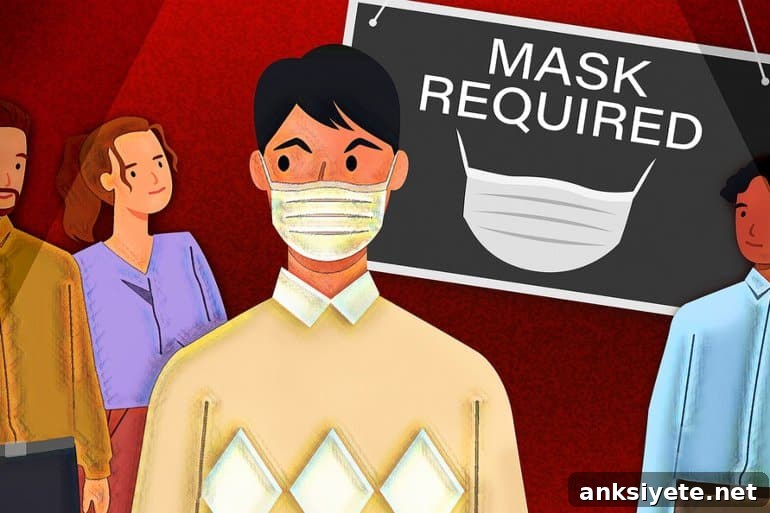
Summary: The COVID-19 pandemic led to a measurable rise in reported paranoia, with the strongest effects seen in U.S. states that imposed mask mandates but experienced low compliance. The Yale team found that higher paranoia was linked to greater acceptance of conspiracy theories, including anti-vaccine claims and QAnon narratives.
Source: Yale
New research from Yale shows that the early phases of the COVID-19 pandemic increased feelings of paranoia across the population, particularly in states that imposed mask mandates but where many people did not follow them. The findings, published July 27 in Nature Human Behavior, highlight how public health measures and their enforcement can shape public psychology.
The study links heightened paranoia not only to unpredictable circumstances, but also to a greater willingness to accept conspiracy theories related to masks, vaccines, and broader narratives such as QAnon.
“Our psychology is massively impacted by the state of the world around us,” said Phil Corlett, associate professor of psychology and the study’s senior author. “If a government sets rules, it matters that those rules are enforced and that people are supported when they comply. When rules are broken or enforcement is inconsistent, people can feel betrayed and begin to act erratically.”
Corlett and colleagues were already investigating how uncertainty contributes to paranoia before the pandemic began in early 2020. Their initial experiments used a simple card game to measure how volatile participants’ choices became when task rules suddenly changed. In those experiments, some people responded as if the deck were stacked against them, shifting their behavior frequently even after previously successful choices.
“We continued collecting data through lockdown and into reopening,” Corlett said. “It was one of those rare, serendipitous opportunities to study what happens when the world changes rapidly and unpredictably.”
Using repeated online surveys and the same behavioral tasks, the researchers documented increased levels of paranoia and more erratic choice patterns among the general public during the pandemic. They then examined how these changes varied by public health approach, comparing states that mandated masks with those that only recommended them. The team also took into account prior research on regional differences in attitudes toward rule-following.
Overall, paranoia and erratic choice behavior were higher in states that implemented mask mandates than in states with looser guidance. The strongest effects appeared in areas where mask-wearing rules were enforced inconsistently or widely ignored, especially in communities where people typically value rule-following. In short: when rules existed but many people did not follow them, feelings of paranoia rose.
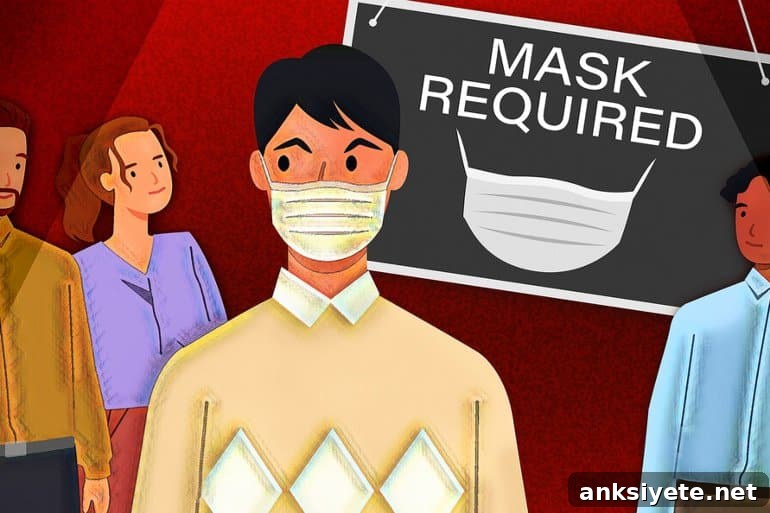
“Essentially, people became more paranoid when there was a rule in place but many others were not following it,” Corlett summarized.
The study also found a clear association between paranoia and belief in conspiratorial ideas. Participants who scored higher for paranoia were more likely to endorse claims that masks or vaccines were harmful or part of hidden agendas, and were more inclined to accept QAnon-related narratives. The authors note that such patterns are consistent with historical trends: major traumas and rapid social change often produce scapegoating and conspiracy beliefs, from medieval reactions to plague outbreaks to modern movements after terrorist events.
“In times of trauma and great change, sadly, we have a tendency to blame another group,” Corlett said.
About this psychology research news
Source: Yale
Contact: Bill Hathaway – Yale
Image: The image credited to Michael S. Helfenbein
Original Research: Closed access. “Paranoia and belief updating during the COVID-19 crisis” by Phil Corlett et al., Nature Human Behavior
Abstract
Paranoia and belief updating during the COVID-19 crisis
The COVID-19 pandemic made the world feel less predictable, and such uncertainty can cause people to view others as potential threats. This study demonstrates that the initial phase of the pandemic in 2020 increased individual paranoia and made belief updating more erratic in behavioral tasks. While proactive lockdown measures reduced some capriciousness in belief updating, state-mandated mask-wearing was associated with increased paranoia and more unstable behavior—particularly in states where adherence to mask-wearing was poor but cultural norms typically favor rule following.
Computational analyses of participant behavior indicated that individuals with higher paranoia expected the environment to be more unstable. Those higher in paranoia were also more likely to endorse conspiratorial claims about masks, vaccines, and QAnon-related ideas. These beliefs corresponded with erratic task behavior and altered prior expectations.
Taken together, the findings suggest that real-world uncertainty—especially when public rules are inconsistently followed—can increase paranoia and change how people update beliefs and make decisions in both laboratory tasks and everyday life.