
Discovery may help treat memory disorders resulting from stroke, Alzheimer’s and brain injury.
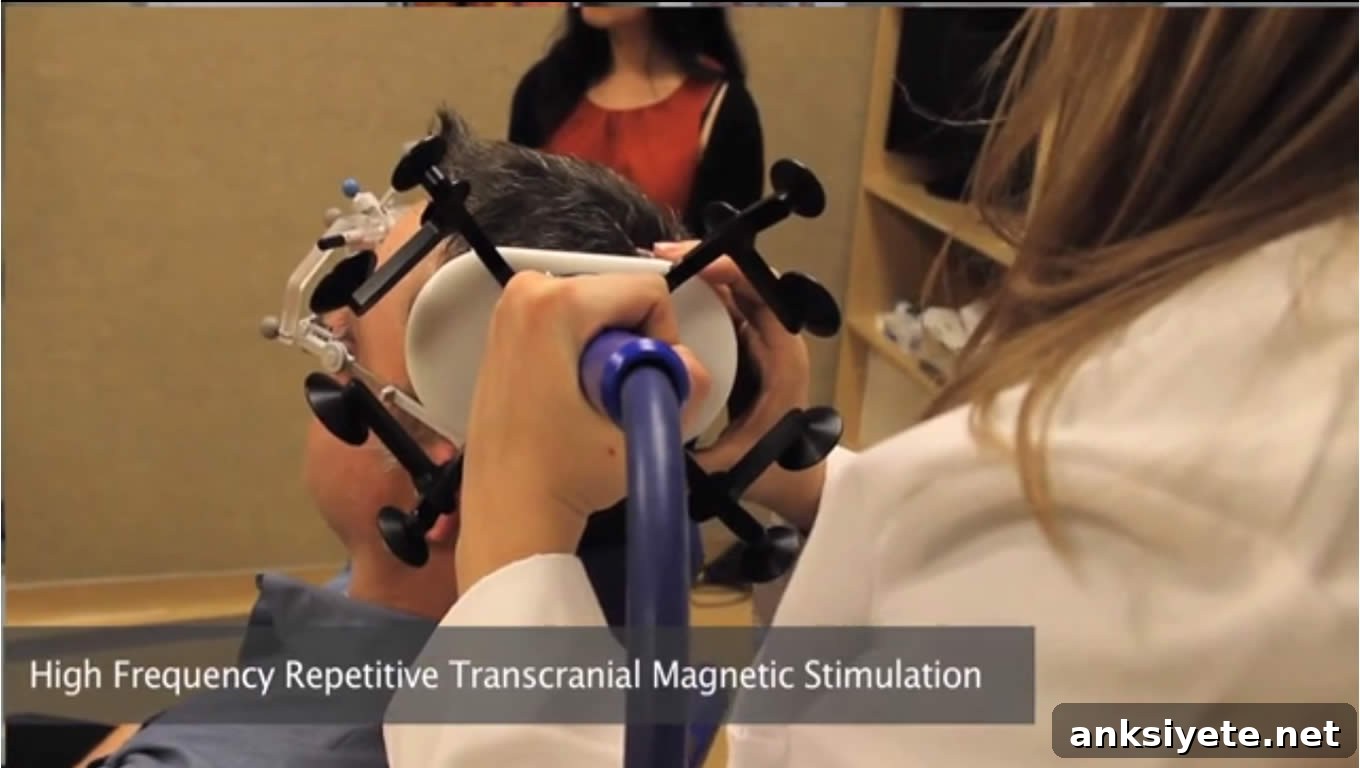
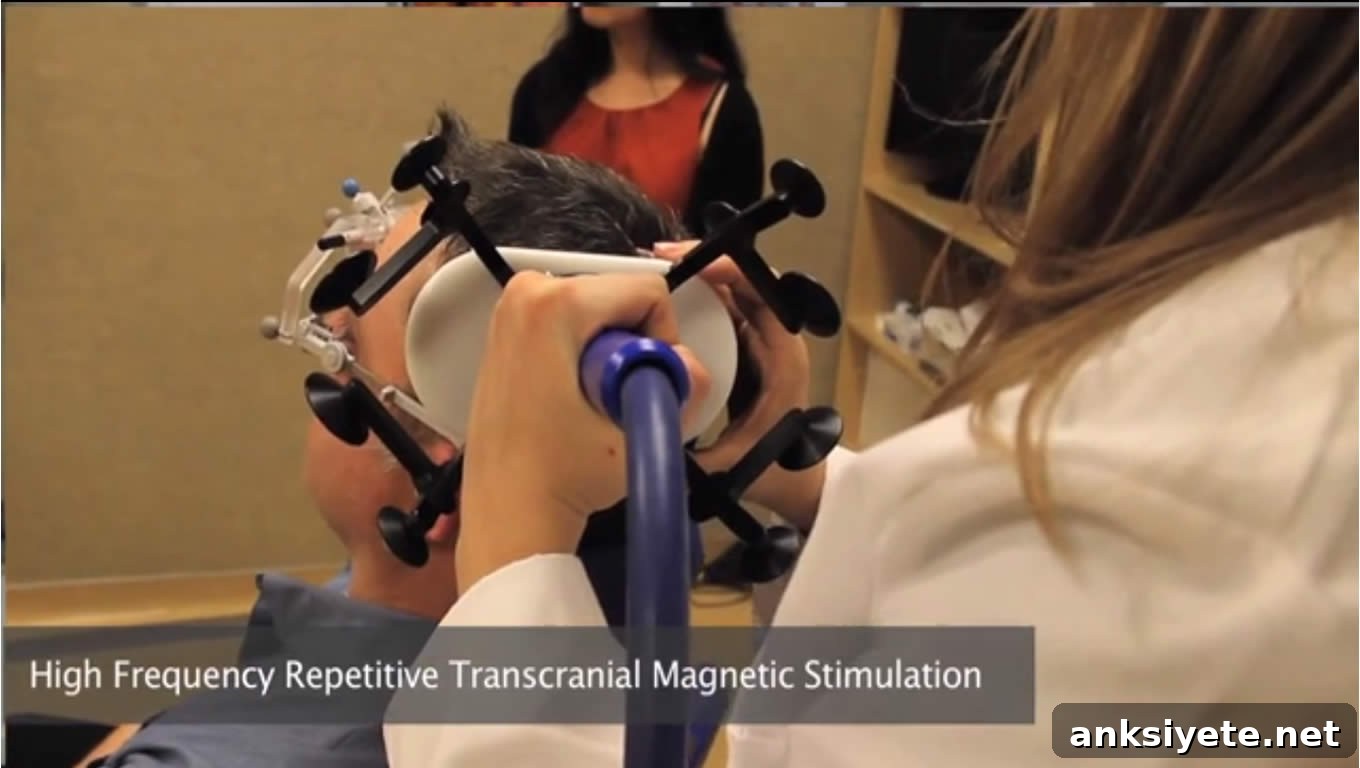
A Northwestern Medicine study finds that stimulating a specific brain region with noninvasive electrical pulses delivered by Transcranial Magnetic Stimulation (TMS) can improve memory. This targeted stimulation enhances the coordination of brain regions connected to the hippocampus and led to measurable gains in learning and recall.
The finding opens promising possibilities for treating memory impairments caused by stroke, early-stage Alzheimer’s disease, traumatic brain injury, cardiac arrest and the gradual memory decline associated with healthy aging.
“For the first time, we demonstrate that memory-related brain functions can be altered in adults without surgery or drugs,” said Joel Voss, assistant professor of medical social sciences at Northwestern University Feinberg School of Medicine and senior author of the study. “This noninvasive approach improves the ability to learn new information and has strong potential for treating memory disorders.”
The study was published August 29 in the journal Science.
The research is also the first to show that successful episodic memory depends on coordinated activity across multiple brain regions working together with a central memory structure, the hippocampus. The researchers compare the network to an orchestra: the stimulation effectively provides a more skilled conductor, improving synchrony among the regions involved in memory.
Because some psychiatric disorders, such as schizophrenia, involve disrupted synchrony between hippocampus-connected regions, this targeted TMS approach may have broader therapeutic implications beyond traditional memory disorders.
TMS Boosts Memory
Unlike earlier, short-lived uses of TMS that produced only transient changes in performance during stimulation, this study shows that repeated, targeted TMS can improve memory for events at least 24 hours after the last session. The improvement reflected better learning of new associations, indicating an enhancement in the brain’s ability to form and retain new memories.
Finding the Sweet Spot
The hippocampus itself lies too deep in the brain to be stimulated directly by TMS. To overcome this, researchers used each participant’s MRI scan and resting-state functional data to identify a superficial cortical site—typically within a centimeter of the skull surface—that showed strong functional connectivity with that person’s hippocampus. Stimulating this individually tailored cortical target reliably increased synchronization across the hippocampal network and produced measurable memory gains.
“I was astonished to see how specifically we could affect memory networks by stimulating a nearby cortical spot,” Voss said. MRI scans taken before and after stimulation showed stronger connectivity among the targeted network nodes and the hippocampus. The greater the increase in network synchrony induced by stimulation, the larger the improvement in participants’ learning performance.
How the Study Worked
Sixteen healthy adults aged 21 to 40 participated. Each volunteer received a high-resolution structural MRI and a resting-state scan to map his or her individual cortical-hippocampal network. Because these networks vary in precise location across people, the researchers tailored the stimulation target for each subject.
Participants completed a baseline memory test involving arbitrary associations between faces and words. After that, they received 20 minutes of active TMS daily for five consecutive days, with additional MRI scans and memory testing during the week. A follow-up memory test occurred at least 24 hours after the final stimulation. At least one week later, the experiment was repeated using a sham (placebo) version of the stimulation; half the participants received the sham condition first and the order was blinded.
Both groups improved their performance after active TMS. Notably, improvement required a few days of stimulation to appear—memory gains emerged after about three days of treatment and persisted beyond the stimulation sessions. The sham condition and separate control experiments did not produce the same improvements.
Jane Wang, first author and postdoctoral fellow in Voss’s lab, emphasized a practical advantage of TMS: its spatial specificity. “No medication can target these memory networks as precisely as TMS,” she said. Memory depends on complex, distributed networks rather than a single receptor target, so focal network-based stimulation can provide a level of specificity that pharmacology typically cannot match.
The Future
Voss and colleagues plan to extend this work to patients with early-stage memory loss to determine whether targeted TMS can restore or improve disrupted hippocampal network function in clinical populations. While the current study involved people with normal memory and modest room for improvement, individuals with damaged or weakened networks might experience more substantial benefits.
Voss cautioned that more research is required to establish the safety, efficacy and long-term effects of this approach in disorders such as Alzheimer’s disease. He described this study as an important first step toward network-targeted, noninvasive therapies for memory impairment.
The research was supported by grants P50-MH094263 from the National Institute of Mental Health and F32-NS083340 from the National Institute of Neurological Disorders and Stroke, both part of the National Institutes of Health.
Contact: Marla Paul – Northwestern University
Source: Northwestern University press release
Image Source: Image adapted from the Northwestern News Vimeo video
Video Source: “Electric Current to Brain Boosts Memory” — Northwestern News video
Original Research: Wang J.X., Rogers L.M., Gross E.Z., Ryals A.J., Dokucu M.E., Brandstatt K.L., Hermiller M.S., and Voss J.L., “Targeted enhancement of cortical-hippocampal brain networks and associative memory,” Science. Published online August 28, 2014. doi:10.1126/science.1252900