
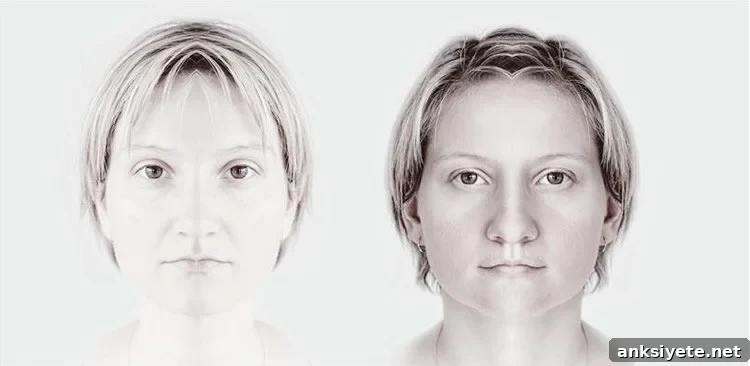
Although it may not always be the first concern for people living with facial hemiparalysis, the condition can significantly affect social communication: it not only prevents normal facial expression but also reduces the ability to perceive and interpret emotions on others’ faces.
A collaborative study involving the International School for Advanced Studies (SISSA) in Trieste, the University of Wisconsin–Madison, and Harvard Medical School found that this perceptual difficulty is likely linked to impaired facial mimicry, a subconscious mechanism that helps people understand others’ emotions.
Two key ideas underlie the study.
First, prior research shows that when we view someone else’s facial expression we tend to imitate it in a subtle, unconscious way — a process called facial mimicry. This automatic imitation is thought to support emotion recognition by recreating the observed facial muscle patterns in our own faces.
Second, facial expressions are not perfectly symmetrical. Dynamic expressions tend to become more pronounced and start earlier on one side of the face than the other. This asymmetry appears to affect how authentic an expression seems: for example, expressions that begin on the left side of the face are often judged as more genuine.
The researchers reasoned that if facial mimicry helps us understand emotions and mimicry is tied to the anatomy of one side of the face, then individuals who cannot move one half of their face (because of unilateral facial paralysis) might struggle to correctly perceive others’ emotions. Sebastian Korb, a SISSA research fellow and the paper’s first author, tested this idea with patients who had either right- or left-sided facial hemiparesis.
In the experiments, 57 patients viewed computer-generated three-dimensional avatar faces that dynamically displayed expressions of happiness or anger. Using avatars allowed precise control over the timing and asymmetry of each expression, so the team could present expressions that began earlier on the left or the right side of the face.
Previous literature indicates that expressions emerging from the left side tend to be seen as more authentic than those beginning on the right. According to embodied cognition theory, perceivers understand emotions better when they reproduce the observed muscle contractions in their own bodies — here, through facial mimicry. If mimicry depends on the same side of the face that produces the expression, then paralysis on that side could degrade recognition.
The study’s results support this logic but reveal an important lateral difference. Patients with right-sided paralysis performed similarly to healthy controls: both groups judged expressions that began on the left as more authentic, and they identified those expressions more quickly. In contrast, patients with left-sided paralysis showed a more complex pattern. For anger, their responses were not markedly different, but for happiness they tended to judge expressions that started on the left as less authentic, and they took longer to recognize them.
These findings indicate that facial imitation is at least partly lateralized and that mimicry follows the anatomical side of the observed expression rather than mirroring it. In other words, when we see an expression that starts on the left side of another person’s face, we naturally mimic it with the left side of our own face rather than with the right as if viewing a mirror image.
The study extends our understanding of how the structure and dynamics of facial expressions affect social perception. It also highlights that people with unilateral facial paralysis, particularly left-sided hemiparesis, may face additional social and cognitive challenges beyond the inability to produce typical expressions. These challenges can include reduced ability to interpret others’ emotions — a core component of empathy and an essential skill for social interaction.
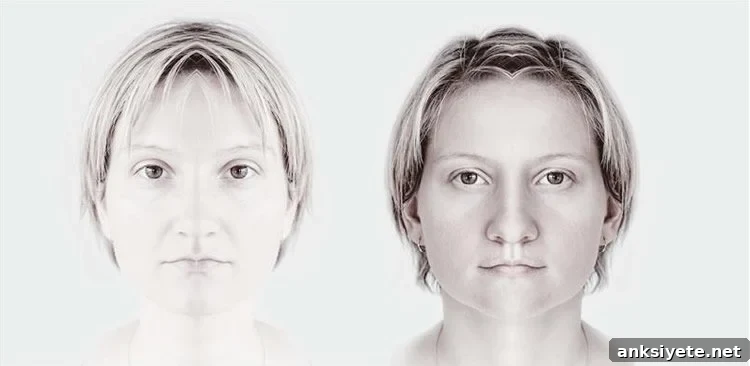
Source: SISSA (International School for Advanced Studies)
Image credit: David Blackwell.
Original research: Asymmetry of Facial Mimicry and Emotion Perception in Patients With Unilateral Facial Paralysis by Sebastian Korb, PhD; Adrienne Wood, MS; Caroline A. Banks, MD; Dasha Agoulnik; Tessa A. Hadlock, MD; and Paula M. Niedenthal, PhD. Published in JAMA Facial Plastic Surgery, online February 18, 2016. doi:10.1001/jamafacial.2015.2347
Abstract
Asymmetry of Facial Mimicry and Emotion Perception in Patients With Unilateral Facial Paralysis
Importance: The capacity of patients with unilateral facial paralysis to recognize and judge facial expressions has not been thoroughly investigated, despite its relevance to social functioning.
Objective: To assess how left- or right-sided facial paralysis affects recognition and judgment of dynamic facial expressions and to evaluate whether facial mimicry shows anatomical asymmetry.
Design, setting, and participants: Patients with mild unilateral facial paralysis were recruited from a university facial plastic surgery clinic and completed two computer-based tasks that presented short videos of dynamic facial expressions. Side of paralysis (left or right) served as a between-participant factor. Facial function and symmetry were quantified using the eFACE facial function scale.
Exposures: Across two tasks, participants viewed brief video clips in which expressions of happiness and anger unfolded either earlier on one side of the face or morphed from one expression to another. Participants indicated the timing or side of change and rated the expressions’ authenticity.
Main outcomes and measures: Response type, reaction time, and accuracy were recorded and analyzed.
Results: The study included 57 participants (36 women, 21 men), ages 20 to 76 (mean age 50.2 years) with mild unilateral facial paralysis. Patients with right-sided paralysis detected expression onsets on the left side faster (by approximately 150 milliseconds) and with fewer errors than those with left paralysis, supporting the notion of anatomical asymmetry in facial mimicry. Patients with left-sided paralysis showed more variable and atypical responses, with effects that differed by emotion.
Conclusions and relevance: The results are consistent with an anatomical asymmetry of facial mimicry and suggest that left hemiparalysis may place patients at greater risk for difficulties in emotion recognition and related psychosocial consequences.