
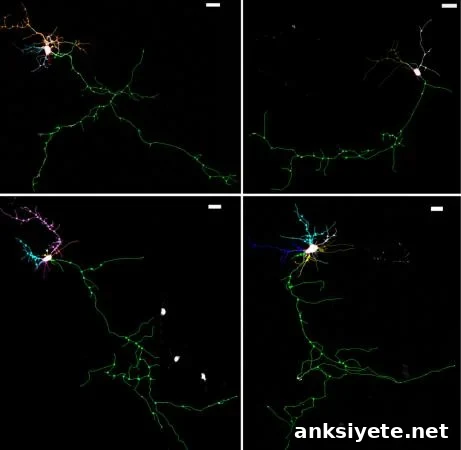
In a new study published in Neuron, researchers at Brown University report that mutation of a gene linked to some forms of autism in humans disrupts the normal growth and connectivity of neurons in mice, and they demonstrate laboratory methods to restore proper neuronal growth.
Brown University scientists have traced a genetic deficit tied to autism to specific cellular and molecular effects that prevent neurons from developing the complex branching needed for healthy brain circuits. Published online September 12, 2013 in Neuron, the study identifies how loss of the NHE6 protein alters endosomal function, reduces TrkB receptor signaling, and leads to impaired axon and dendrite branching in mice. The team also shows that compensating for these molecular disturbances can restore neuronal growth in cultured cells.
The research centers on the SLC9A6 gene, which encodes the NHE6 protein. Mutations in this gene cause Christianson syndrome, a rare and severe autism-related condition. In addition, reduced expression of NHE6 has been observed in broader autism spectrum disorder populations, suggesting the protein’s function may be relevant to a subset of autism cases.
NHE6 normally helps regulate pH inside endosomes — membrane-bound compartments that traffic and process proteins within cells. Proper endosomal pH is essential for protecting signaling receptors from premature degradation. When NHE6 is missing or dysfunctional, endosomes become overly acidic. The Brown team measured endosomal pH in neurons from normal mice and in mice lacking functional NHE6 and found markedly increased acidity in the mutants.
Heightened endosomal acidity in NHE6-deficient neurons was associated with greater degradation of TrkB, the receptor for brain-derived neurotrophic factor (BDNF). BDNF–TrkB signaling is a key driver of axonal and dendritic growth and branching. With reduced TrkB levels and weaker signaling, the mutant mice showed clear reductions in neuronal branching and in the number and maturity of synapses — the connections that allow neurons to communicate. Electrophysiological and circuit-level assessments conducted with co-author Julie Kauer confirmed functional deficits that matched the anatomical changes.
“Many neurodevelopmental disorders, including autism, involve disrupted communication between brain regions and defective wiring of neuronal networks,” said Eric Morrow, senior author of the study and an assistant professor of biology at Brown. The team links this breakdown in neural communication to the endosomal and signaling consequences of NHE6 loss.
Searching for a rescue
After defining the chain of events — from loss of NHE6 to increased endosomal acidity, enhanced proteolysis of TrkB, and impaired neuronal branching — the researchers tested whether they could reverse these effects. They reasoned that acidic endosomes might activate proteases that degrade TrkB. Treating mutant neurons with the protease inhibitor leupeptin restored TrkB levels and signaling to near-normal amounts, supporting the hypothesis that increased proteolysis underlies the receptor loss.
The team also explored whether boosting BDNF signaling could bypass reduced TrkB levels. Supplementing NHE6-deficient neurons with exogenous BDNF enhanced axon and dendrite growth and branching, producing a morphology closer to that of healthy neurons. “BDNF signaling is attenuated in the mutant mice, but it is not completely blocked,” Morrow noted. “By increasing signaling, we can rescue neuronal growth.”
These findings point to two potential strategies for restoring neural development in the context of NHE6 deficiency: limiting receptor degradation or enhancing neurotrophic signaling. While drugs that increase or mimic BDNF activity already exist, many additional studies would be needed before those approaches could be evaluated as treatments for Christianson syndrome or related forms of autism. The authors stress that this mechanism likely accounts for part, but not all, of the neurological phenotype associated with NHE6 mutation.
Notably, autism is heterogeneous: some forms of the condition may involve reduced neural branching while others show excessive branching. Clinicians currently lack precise biomarkers to determine whether a given patient has too little or too much neuronal branching. Nevertheless, this study identifies NHE6, endosomal pH regulation, TrkB stability, and BDNF signaling as a biologically plausible pathway that contributes to impaired neural branching in at least a subset of autism-related disorders.
Notes about this neurology and autism research
Lead authors on the paper included Qing Ouyang and Sofia Lizarraga, with additional contributions from Michael Schmidt, Unikora Yang (Brown medical student), Jingyi Gong (senior undergraduate), Debra Ellisor, Julie A. Kauer, and Eric M. Morrow. Funding was provided by the Simons Foundation and the Nancy Lurie Marks Foundation, and the research made use of Brown’s Leduc Bioimaging Facility.
Contact: David Orenstein – Brown University
Source: Brown University press release
Image Source: Image credited to the Morrow lab and adapted from the Brown University press release.
Original Research: Ouyang Q., Lizarraga S.B., Schmidt M., Yang U., Gong J., Ellisor D., Kauer J.A., and Morrow E.M. “Christianson Syndrome Protein NHE6 Modulates TrkB Endosomal Signaling Required for Neuronal Circuit Development.” Neuron. Published online September 12, 2013. doi:10.1016/j.neuron.2013.07.043