
Summary: A new study finds that older adults who begin dialysis for advanced kidney disease face a substantially higher risk of dementia, including Alzheimer’s disease.
Source: Johns Hopkins University.
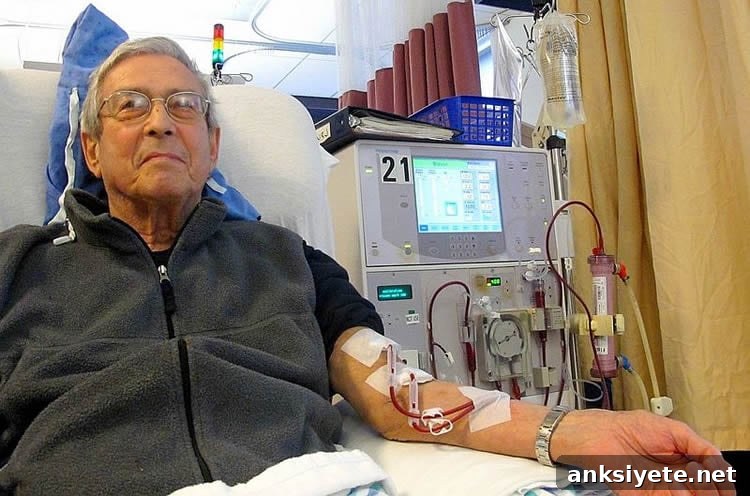
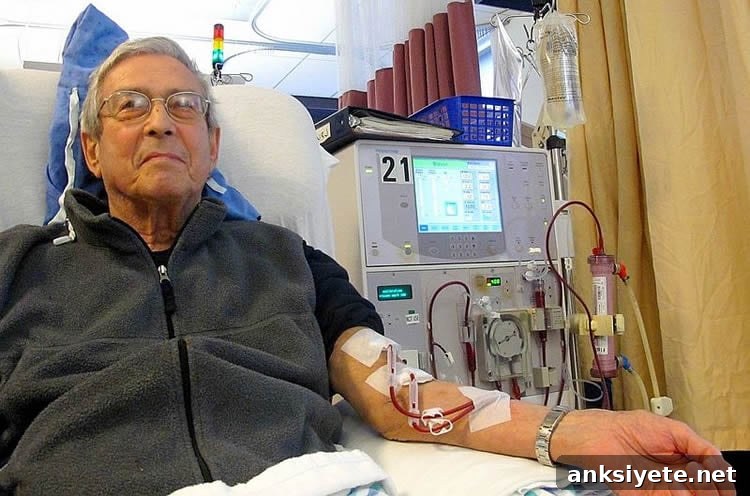
Older adults with end-stage kidney disease who start dialysis face a markedly increased risk of being diagnosed with dementia, including Alzheimer’s disease, according to research led by investigators at the Johns Hopkins Bloomberg School of Public Health.
Published Aug. 9 in the Clinical Journal of the American Society for Nephrology, the study shows that older patients treated with hemodialysis have a much higher incidence of dementia than community-dwelling older adults.
“The dementia burden in this group appears to be considerably greater than what we observe in healthy older adults living in the community,” says study lead author Mara McAdams-DeMarco, assistant professor of epidemiology at the Bloomberg School. The findings indicate a need for closer cognitive monitoring and efforts to prevent or slow decline among older patients receiving dialysis.
Cognitive decline and dementia are common with aging, but several studies over the past two decades have linked worsening kidney function to faster deterioration in cognitive abilities. Research in dialysis populations has documented pronounced declines in executive functions—such as attention, impulse control, and working memory—suggesting that the cognitive impact of kidney failure may be significant.
The biological pathways connecting kidney dysfunction to brain decline are not fully understood, but reduced cerebral blood flow and vascular problems associated with kidney disease are leading suspects.
To quantify dementia risk after dialysis initiation, the researchers analyzed national registry data from the US Renal Data System linked to Medicare. The cohort included 356,668 patients aged 66 and older who started hemodialysis between 2001 and 2013.
The analysis estimated the cumulative risk of receiving a dementia diagnosis after beginning dialysis. For women in the cohort, the estimated risk of a dementia diagnosis was 4.6 percent within one year, 16 percent within five years, and 22 percent within ten years. For men, the corresponding risks were slightly lower: 3.7 percent at one year, 13 percent at five years, and 19 percent at ten years.
Alzheimer’s disease accounted for a meaningful share of those diagnoses. The one-year risk of an Alzheimer’s disease diagnosis was 0.6 percent for women and 0.4 percent for men.
Although the study did not directly compare dialysis patients to healthy peers in the same dataset, the observed rates are substantially higher than expected for community-dwelling older adults. For example, prior population research has reported a 10-year dementia incidence of about 1.0–1.5 percent among 65-year-olds and roughly 7.5 percent among 75-year-olds. By contrast, this study found a 10-year dementia risk of 19 percent for patients aged 66–70 at dialysis initiation and 28 percent for those aged 76–80.
The pattern is similar for Alzheimer’s disease: 4.3 percent of dialysis patients aged 66–70 were diagnosed with Alzheimer’s disease within ten years of starting dialysis, compared with a much lower 10-year incidence reported for community samples of the same age.
In addition to increased dementia incidence, the study found that older dialysis patients with a dementia diagnosis had about twice the risk of death at any point during follow-up compared with those without a dementia diagnosis.
McAdams-DeMarco and colleagues caution that the documented rates may underestimate the true burden. “Other studies suggest only roughly half of people with dementia receive a clinical diagnosis, so our numbers may reflect a lower bound,” she says.
The authors recommend more detailed studies to better define how frequently dementia occurs in older patients with end-stage kidney disease and to identify effective strategies for detection and prevention. Because dialysis patients typically meet healthcare providers multiple times per week, brief cognitive screening during routine care could be feasible and may help identify those at risk earlier.
Plans are already underway for larger clinical trials to test interventions aimed at preserving cognitive function in this vulnerable population, McAdams-DeMarco says.
Funding: This work was supported by grants from the National Institutes of Health (R01AG042504, K24DK101828, R01AG055781, R01DK114074, K01AG043501, K01AG050699).
Source: Barbara Benham, Johns Hopkins University.
Publisher: Organized by NeuroscienceNews.com.
Image credit: Anna Frodesiak. Image licensed under a public domain dedication.
McAdams-DeMarco M., Daubresse M., Bae S., Gross A., Carlson M., & Segev D. (2018). Dementia, Alzheimer’s Disease, and Mortality after Hemodialysis Initiation. Clinical Journal of the American Society of Nephrology. Published August 2018.
Abstract
Dementia, Alzheimer’s Disease, and Mortality after Hemodialysis Initiation
Background and objectives
Older patients with end-stage kidney disease (ESKD) often experience rapid declines in executive function after beginning hemodialysis; such impairments may lead to elevated rates of dementia and Alzheimer’s disease. This study estimated the incidence, risk factors, and outcomes associated with dementia and Alzheimer’s disease diagnoses among older patients initiating hemodialysis.
Design, setting, participants, & measurements
The analysis included 356,668 patients aged 66 or older who began hemodialysis from January 1, 2001, to December 31, 2013, using national registry data linked to Medicare. Researchers estimated cumulative incidence of diagnosed dementia and Alzheimer’s disease and evaluated associated factors using competing risks models that accounted for death, modality change, and kidney transplant. Subsequent mortality risk was assessed with Cox proportional hazards models.
Results
Accounting for competing risks, the 1- and 5-year risks of diagnosed dementia were 4.6% and 16% for women and 3.7% and 13% for men, respectively. Corresponding Alzheimer’s disease risks were 0.6% and 2.6% for women and 0.4% and 2.0% for men. Strong independent risk factors included age ≥86 years, black race, female sex, and institutionalization. A dementia diagnosis was associated with a 2.14-fold higher risk of subsequent mortality (95% CI, 2.07–2.22); an Alzheimer’s diagnosis was associated with a 2.01-fold higher mortality risk (95% CI, 1.89–2.15).
Conclusions
Older patients initiating hemodialysis face substantial risk for dementia and Alzheimer’s disease diagnoses, and these diagnoses are associated with approximately double the risk of mortality.