
The Ancient Art of Ikebana Inspires Bioprinting of Brain Organoids for Personalized Cancer Research
Summary: Researchers adapted principles from the traditional Japanese art of flower arranging to develop a bioprinting method that creates miniature brain organoids, offering a more realistic platform for studying glioblastoma and testing personalized treatment strategies.
Source: University of British Columbia
From Ikebana to Bioprinting: A New Way to Model Brain Tumours
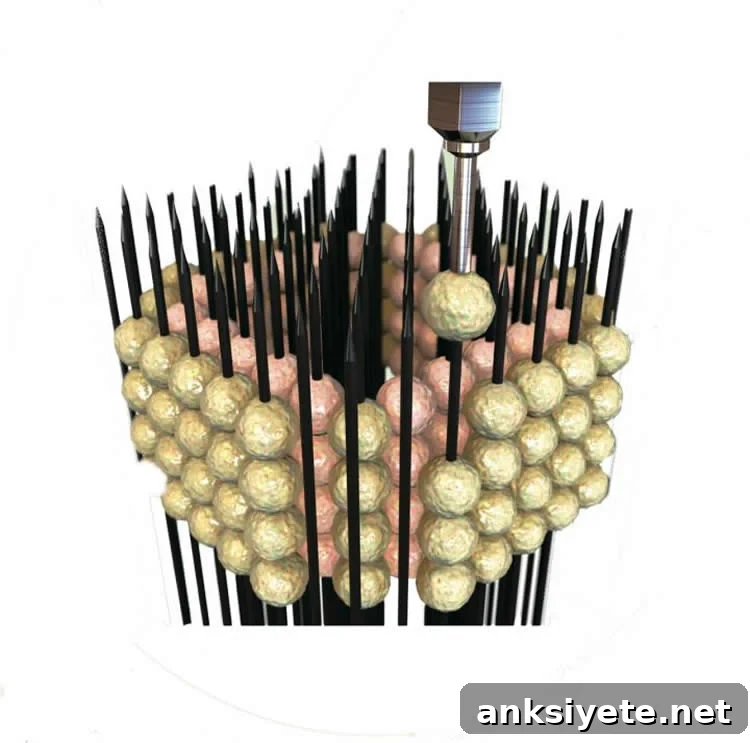
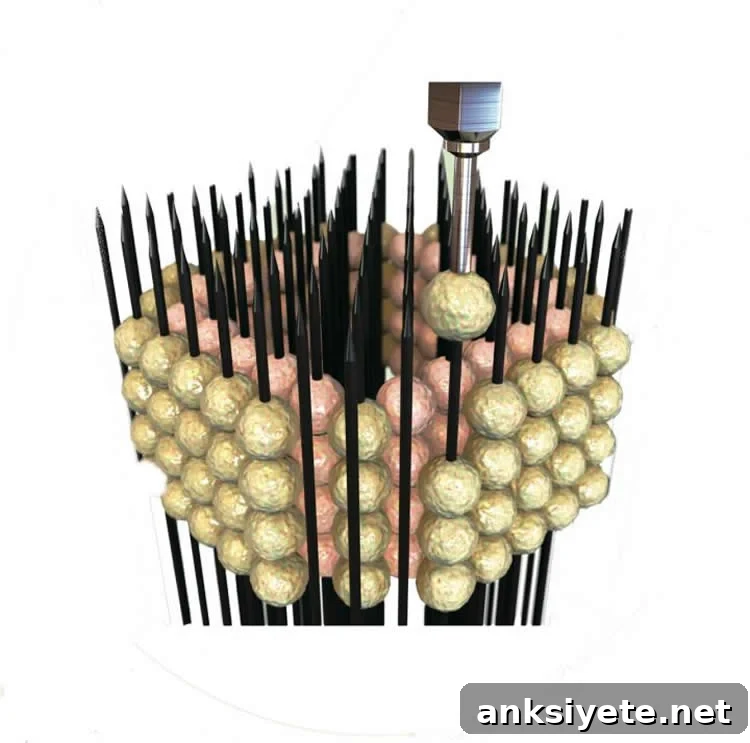
Researchers have developed an innovative technique for assembling three-dimensional clusters of human brain cells—known as brain organoids—by drawing inspiration from ikebana, the centuries-old Japanese art of flower arranging. This method uses a microneedle-based bioprinting approach to position small spheres of neural stem cells so they grow into realistic, self-organizing tissue structures. Although these organoids do not perform the functions of a living brain, they recreate essential aspects of brain tissue architecture, offering a more accurate platform for studying how aggressive brain tumours develop and invade surrounding tissue.
How the Microneedle Bioprinting Method Works
The bioprinting technique was developed in collaboration with a Japanese biotechnology company that adapted the ikebana principle of arranging stems on a needle-studded plate. Instead of flowers, researchers place tiny spherical aggregates of human neural stem cells onto a plate fitted with microneedles. As the stem cells multiply and differentiate, they merge and self-assemble into larger spheroidal structures called organoids, typically two to three millimetres in diameter. The small size allows oxygen and nutrients to diffuse into the tissue without blood vessels, enabling short-term viability and experimental manipulation.
Because the cells are allowed to adhere to one another rather than to a flat plastic surface, they activate gene programs and cellular behaviors that more closely resemble those seen in natural three-dimensional brain tissue. “The cells make their own environment,” notes Christian Naus, Canada Research Chair in Gap Junctions and Neurological Disorders, who helped conceive the project. “We’re not doing anything except printing them, and then they self-assemble.”
Modeling Glioblastoma Invasion in a Brain-like Context
Using this microneedle-based organoid platform, the research team implanted glioma cells into the center of the lab-grown brain tissue. Glioblastoma, an especially aggressive form of brain cancer, typically originates deep in the brain and spreads into adjacent tissue, making complete surgical removal difficult. In these organoids, researchers observed tumour cells invading surrounding normal cells, demonstrating that the model captures key aspects of tumour behavior within a brain-like microenvironment rather than in a flat, two-dimensional dish.
Standard treatment for glioblastoma often includes surgery followed by radiation and chemotherapy, yet tumours commonly recur because invasive malignant cells escape the primary mass and infiltrate the brain. From the time of diagnosis, average survival is approximately one year. A model that better reproduces tumour invasion into neural tissue could therefore be valuable for understanding recurrence and testing therapies aimed at preventing or slowing spread.
Toward Personalized Treatment Testing
One of the most promising applications of this approach is the potential to create personalized organoids using a patient’s own cells. By combining a patient’s healthy neural cells and cancerous cells in the same organoid platform, researchers could grow a customized mini-brain with a glioma at its core. This would allow laboratory testing of many different drug compounds or combinations directly on tissue that closely mimics the patient’s tumour environment.
Christian Naus and colleagues envision screening hundreds of chemical combinations on a patient-specific organoid to identify treatments that most effectively halt tumour growth and invasion in that individual’s cells. While further development and validation are required before clinical use, this strategy points toward a future where personalized in vitro models help guide therapy selection for patients with aggressive brain cancers.
Research Context and Credits
This work was presented at a major neuroscience conference and was developed through a collaboration between academic researchers and a biotechnology company specializing in bioprinting. Image credit for the microneedle technology and illustrative material is attributed to Cyfuse. The initial report originated from the University of British Columbia.