
 Connecting with others is more than just a pleasure; it is a fundamental human need.
For an estimated 1 in 160 children worldwide who are on the autism spectrum, social and communication skills that support connection and collaboration may be harder to develop (World Health Organization, 2021).
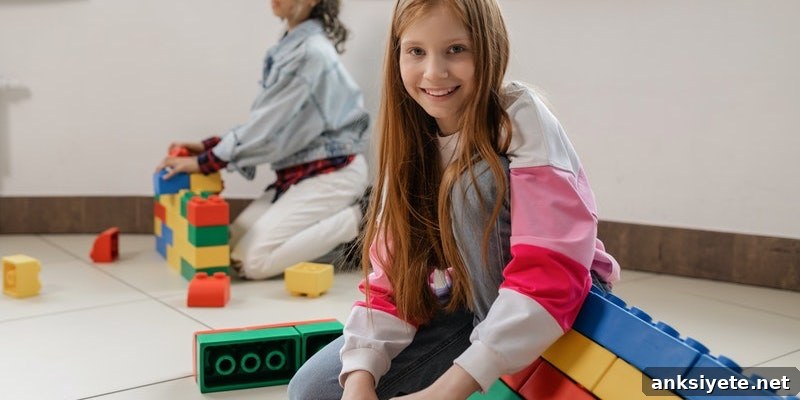
Lego Therapy is an evidence-informed approach designed to help children with autism spectrum disorder (ASD) and other communication challenges develop language, social interaction, and cooperative skills through structured play with Lego bricks.
Once viewed primarily as a toy, Lego has been adapted into therapeutic formats for children and has even attracted adult fans seeking relaxation and mindfulness through focused construction.
This Article Contains:
- What Is Lego Therapy & What Is It Used For?
- 5 Benefits & Research Findings
- How to Do Lego Therapy: Rules & Roles Explained
- 5 Activities, Games, & Ideas for Your Sessions
- Useful Assessment Sheets and Worksheets
- Training in Lego Therapy: Courses & Online Options
- Popular Books on the Topic
- Helpful Resources
- A Take-Home Message
- References
What Is Lego Therapy & What Is It Used For?
Lego Therapy is described as
“a child-led and peer-based intervention that builds upon the child’s interests in construction play to promote a willingness to collaborate and interact.”
Songara, 2019, p. 2
The therapeutic use of Lego was identified by psychologist Daniel LeGoff (2004) after observing socially withdrawn children cooperating while playing with bricks. From that observation, structured interventions were developed to harness the motivational power of construction play to teach social and communication skills.
Lego Therapy is commonly used with children to teach skills such as:
- Turn-taking
- Sharing
- Active listening
- Conversational skills
- Teamwork
- Shared attention
- Problem-solving
Lego Therapy for autism
Although Lego-based interventions have been adapted for various populations, they were originally developed to support children with ASD. Research suggests these children often have strong interests in predictable systems and patterns, which makes Lego an effective medium for engagement (Baron-Cohen, 2008).
The predictable, rule-based nature of Lego construction—bricks that fit together consistently—provides a structured environment where children can practice communication, cooperation, and role-based interaction with reduced uncertainty. The clearly defined roles used in many Lego Therapy formats further support systematic skill development.
Can Lego Therapy be used with adults?
Lego Therapy was designed primarily for children aged roughly 6–16, but adults increasingly use construction kits for relaxation, focus, and mindful engagement. Detailed kits aimed at adult builders encourage sustained attention and a calming, hands-on experience that may help reduce stress. While this adult use is not a formal therapeutic protocol, many adults report benefits for concentration and relaxation.
Using Lego interventions for anxiety
Lego-based interventions have also been associated with reductions in anxiety among children with ASD. LeGoff’s early work showed that children with social anxiety, depression, or adjustment difficulties often benefited from participating in Lego groups; some even returned in helper roles once initial difficulties improved (LeGoff, 2004).
Potential mechanisms include the structured nature of the task, clearly defined roles that lower ambiguity, and focused, hands-on activity that fosters calm and attention.
5 Benefits & Research Findings
 Research to date has identified several social and behavioral benefits associated with Lego Therapy for children:
- Reduction in maladaptive behaviors such as tantrums, avoidance of responsibility, and some aggressive behaviors (Owens, Granader, Humphrey, & Baron-Cohen, 2008).
- Lowered anxiety for preschool-aged children in stressful contexts, such as hospitalization settings (Solihat, 2020).
- Improved social confidence and independence in primary-aged children with social communication difficulties (Boyne, 2014).
- Greater willingness to initiate social interactions, for example by asking peers questions (Barakova et al., 2015).
- Parent reports of children making new friendships through participation in Lego Therapy groups (Evans, Sanders, & Knight, 2014).
How to Do Lego Therapy: Rules & Roles Explained
Typical Lego Therapy sessions are short and structured: sessions often last around 30 minutes and usually occur weekly. Groups commonly include three children, each taking one of three distinct roles during the session:
- Engineer — Follows a plan and describes the construction and the bricks required.
- Supplier — Finds the bricks described by the Engineer and supplies them to the Builder.
- Builder — Assembles the model using the Engineer’s verbal instructions.
Clear role assignments help children practice verbal and nonverbal communication within a patterned and predictable interaction. Rotating roles gives every child the chance to practice planning, requesting, explaining, and following directions—skills that translate to everyday social communication (LeGoff, Krauss, & Levin, 2010).
5 Activities, Games, & Ideas for Your Sessions
 Lego can be used both in groups and one-on-one sessions. Below are practical activities therapists and parents can try.
One-on-one ideas
- Self-expression and symbolism
Invite a child to build a structure that represents an area of their life (e.g., home, school). Then add miniature figures or natural items to symbolize feelings, experiences, or people. Discuss the symbolism to encourage expression and emotional vocabulary. - Creative problem-solving
Use Lego to practice divergent and convergent thinking. Prompt the child to brainstorm many ways to build or solve a design challenge, then work together to troubleshoot and stabilize a structure. - Beat the Clock
A self-regulation game where the child earns and loses tokens for focused behavior while building. Tokens can be exchanged for small rewards, promoting sustained attention and impulse control.
Group activities
- Family play therapy
Invite family members to build models based on a shared prompt (e.g., daily routines or holiday traditions). Each person tells a story about their model while others ask questions to promote perspective-taking and communication. - Building a shared model
Have each group member build a model and mark the most important component with a colored brick. Members take turns explaining their choices, then combine components into one shared model to create group rules, shared goals, or a family narrative.
Useful Assessment Sheets and Worksheets
Pair Lego Therapy with targeted worksheets to reinforce learning from sessions. Examples include:
- Worksheets that help children explore conflicting feelings and perspectives—useful after symbolic builds showing different emotions.
- Reward coupon templates to recognize positive behavior and focus achieved during games like Beat the Clock.
- Self-control spotting sheets that encourage children to identify behaviors that reflect self-regulation and those that do not—useful for linking session practice to everyday situations.
Training in Lego Therapy: Courses & Online Options
Several organizations offer training for therapists, teachers, and parents interested in delivering Lego-based interventions. Typical programs include online modules, video demonstrations, printable resources, and certificates upon completion. Training helps practitioners learn session structure, role management, behavior support strategies, and methods for evaluating outcomes.
Popular Books on the Topic
The following books are widely used by practitioners and parents seeking practical guidance on running Lego-based groups and using bricks to develop language and social skills:
- LEGO-Based Therapy — Daniel LeGoff: A practical guide to establishing and running Lego clubs for children with social or communication difficulties.
- Thera-Build With LEGO — Alyson Thomsen: A clinician-friendly manual with case examples and therapy ideas.
- How LEGO-Based Therapy for Autism Works — Daniel LeGoff: Combines clinical insights and case studies to explain the method’s foundations and practice.
- Building Language Using LEGO Bricks — Dawn Ralph & Jacqui Rochester: A hands-on manual focused on language development using paired-child Lego activities.
Helpful Resources
Complement Lego Therapy with broader play-therapy and child-therapy techniques to build emotional, behavioral, and communication skills. Consider resources covering play therapy methods, child counseling techniques and worksheets, and school-based occupational therapy activities that target fine-motor, cognitive, and social-emotional development.
A Take-Home Message
Play is a powerful avenue for learning. When a child’s interests are harnessed—such as a love of building—the opportunity to practice communication, problem-solving, and cooperation becomes more engaging and effective. Lego Therapy offers a structured, motivating way to teach these skills.
Lego is one of many tools available to parents and professionals working with children. If you are inspired to explore this approach further, consider formal training or integrating Lego-based activities into an existing therapy plan to support social and communication development.
References
- Barakova, E. I., Bajracharya, P., Willemsen, M., Lourens, T., & Huskens, B. (2015). Long-term LEGO therapy with humanoid robot for children with ASD. Expert Systems, 32(6), 698–709.
- Baron-Cohen, S. (2008). Autism, hypersystemizing, and truth. Quarterly Journal of Experimental Psychology, 61(1), 64–75.
- Bhattarai, A. (2020). Lego sets its sights on a growing market: stressed-out adults. The Washington Post.
- Bodrova, E., & Leong, D. J. (2003). Building language and literacy through play. Early Childhood Today, 18(2), 34–42.
- Boyne, S. E. (2014). An evaluation of the ‘LEGO® Therapy’ intervention used to support children with social communication difficulties in their mainstream classroom (Doctoral dissertation).
- Evans, C., Sanders, D., & Knight, R. (2014). Lego therapy club for children with high functioning autism and Asperger’s syndrome. Clinical Psychology Forum, 262, 18–21.
- Kaduson, H. (1997). Beat the clock technique. In H. G. Kaduson & C. E. Schaefer (Eds.), 101 Favorite play therapy techniques (pp. 139–141).
- LeGoff, D. B. (2004). Use of LEGO© as a therapeutic medium for improving social competence. Journal of Autism and Developmental Disorders, 34(5), 557–571.
- LeGoff, D. B. (2014). LEGO-based therapy: How to build social competence through Lego clubs for children with autism and related conditions. Jessica Kingsley.
- LeGoff, D. B., Krauss, G. W., & Levin, S. A. (2010). LEGO-based play therapy for autistic spectrum children. In A. A. Drewes & C. E. Schaefer (Eds.), School-based play therapy (pp. 221–235).
- Owens, G., Granader, Y., Humphrey, A., & Baron-Cohen, S. (2008). LEGO® therapy and the social use of language programme: An evaluation of two social skills interventions for children with high functioning autism and Asperger syndrome. Journal of Autism and Developmental Disorders, 38(10), 1944–1957.
- Peabody, M. A. (2021). Block play. In H. G. Kaduson & C. E. Schaefer (Eds.), Play therapy with children: Modalities for change (pp. 39–53).
- Ralph, D., & Rochester, J. (2016). Building language using LEGO bricks. Jessica Kingsley.
- Solihat, L. L. (2020). Therapy playing Lego as a method of anxiety reduction. Jurnal Berita Ilmu Keperawatan, 13(2), 122–125.
- Songara, J. (2019). How effective is the ‘Lego® Therapy’ intervention to support children aged 5–16 with an autistic spectrum disorder with their social communication difficulties in school?
- Thomsen, A. (2018). Thera-Build with LEGO: A playful therapeutic approach for promoting emotional well-being in children. Jessica Kingsley.
- World Health Organization. (2021). Autism spectrum disorders (Fact sheet).