
Glymphatic System: How the Brain Clears Waste and Why It Matters for Alzheimer’s
Researchers at the University of Rochester Medical Center describe a recently characterized brain waste-clearance pathway—the glymphatic system—as a promising target for treating neurological disorders such as Alzheimer’s disease. They suggest that impaired clearance of cellular waste may contribute to the development of these conditions.
“Nearly all neurodegenerative diseases are linked to the buildup of cellular waste products,” said Maiken Nedergaard, M.D., D.M.Sc., co-director of the URMC Center for Translational Neuromedicine and the author of the perspective. “Understanding and learning to modulate the brain’s waste-removal system could lead to new therapeutic approaches.”
The brain is shielded by a complex protective network that regulates which molecules enter and exit—commonly referred to as the blood-brain barrier. Although descriptions of this barrier date back to the late 1800s, only recently have researchers begun to reveal the dynamic mechanisms that manage fluid and molecular traffic within the brain. The glymphatic system, first reported by URMC scientists and colleagues in 2012–2013, is a key component of that discovery.
Unlike most of the body, the brain lacks a conventional lymphatic system. For many years scientists debated how the brain clears metabolic byproducts and excess proteins. Some hypothesized that brain cells simply recycled these materials, while others suspected an undiscovered clearance mechanism. The breakthrough came with two-photon microscopy, an imaging technique that enables direct, high-resolution visualization within living brain tissue. Using this method in mice—whose brain structure and processes closely resemble those of humans—researchers observed a coordinated, large-scale plumbing system that actively flushes waste from the brain.
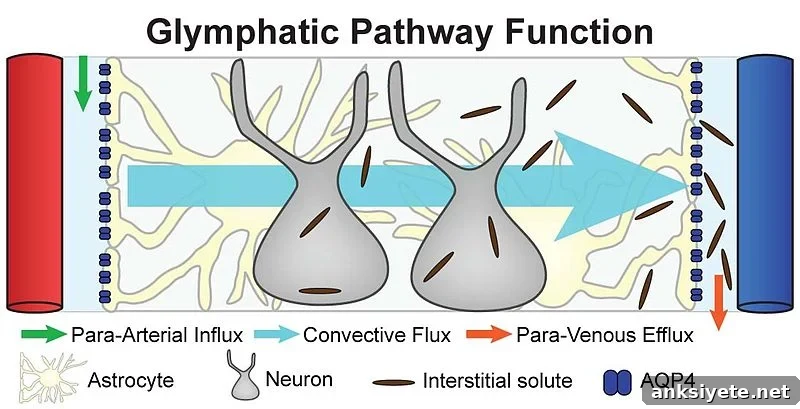
The glymphatic pathway is driven by the flow of cerebrospinal fluid (CSF). CSF enters the brain along pathways that run parallel to arteries, forming a concentric “pipe within a pipe” arrangement: blood flows through the inner channel while CSF flows in the outer channel. Astrocytes, a type of glial support cell, line these conduits and regulate the movement of CSF into and through brain tissue. The term “glymphatic” was created by combining “glia” and “lymphatic” to reflect the role of glial cells in a lymphatic-like clearance process.
As CSF moves through the brain, it creates a convective flow that rapidly sweeps away soluble proteins, metabolites, and other waste products. This fluid then exchanges with channels that run alongside veins, carrying the waste out of the brain and down the spinal column. From there the material is transferred into peripheral lymphatic pathways and eventually processed by the liver.
Understanding how the glymphatic system functions—and how it may fail—has major implications for neurological disease. A hallmark of Alzheimer’s disease is the progressive accumulation of the protein beta-amyloid, which aggregates into plaques visible on imaging scans. If glymphatic clearance of beta-amyloid and similar waste products is inefficient or slows with age, these proteins can build up, potentially contributing to neurodegeneration.
Research now focuses on whether key components of the glymphatic system, such as astrocytes and the CSF flow dynamics they regulate, can be targeted to enhance clearance. If interventions can increase glymphatic efficiency, they may reduce the accumulation of toxic proteins and alter the progression of diseases like Alzheimer’s.
“The idea that neurodegenerative conditions like Alzheimer’s could stem, in part, from a decline in glymphatic clearance as we age offers a new framework for understanding these disorders,” Nedergaard said. “It also opens up a fresh set of therapeutic targets aimed at improving the brain’s ability to remove waste.”
Notes about this neurodegeneration and Alzheimer’s disease research
Contact: Mark Michaud – University of Rochester Medical Center
Source: University of Rochester Medical Center press release
Image Source: The glymphatic system schematic is credited to Jeffrey J. Iliff and is in the public domain.
Original Research: Abstract for “Garbage Truck of the Brain” by Maiken Nedergaard published in Science. Published online June 28, 2013. DOI: 10.1126/science.1240514