
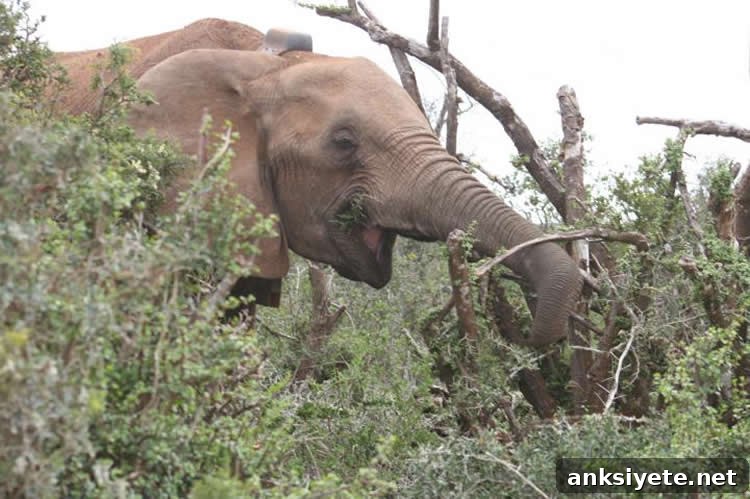
Summary: A new study finds that matriarch African elephants in the wild sleep an average of only two hours per day.
Source: University of the Witwatersrand
Sleep remains one of biology’s greatest mysteries. Like eating, reproducing and avoiding danger, sleep is a fundamental biological need shared across the animal kingdom. Yet its precise function is still debated. Animals vary widely in how and how much they sleep: some species, such as certain birds and marine mammals, sleep with one hemisphere of the brain at a time, while others use short or long sleep cycles depending on body size, ecology and predation risk.
“While there are many hypotheses regarding the function of sleep, the ultimate purpose of sleep is yet to be discovered,” says Prof. Paul R. Manger from the School of Anatomical Sciences at the University of the Witwatersrand. The consequences of severe sleep deprivation are well documented in humans, and even short-term lack of sleep can impair brain function; in extreme cases, prolonged insomnia leads to fatal outcomes in rare human disorders.
Previous observations in captivity suggested elephants sleep around four hours per day and may sleep either standing or lying down. But until recently, detailed, continuous measurements of sleep in wild elephants were lacking. To address this gap, researchers from the University of the Witwatersrand—alongside partners from Elephants Without Borders (Botswana) and the University of California, Los Angeles—deployed small implanted activity loggers and GPS collars with gyroscopes to monitor sleep and activity in free-ranging elephants in Chobe National Park, Botswana.
The researchers focused on two matriarchs and used a simple but effective method: trunk activity was tracked with a subcutaneous actiwatch implanted in the trunk, while a GPS collar with an integrated gyroscope recorded location, posture and when the animal lay down. The team assumed that if the trunk remained motionless for five minutes or more, the elephant was likely asleep—a reasonable proxy given the trunk’s constant use for feeding, social interaction and environmental exploration.
The main finding, published in PLOS ONE, is striking: the two matriarchs averaged only about two hours of sleep per day, considerably less than the typical sleep duration recorded for most other mammals. Most sleep occurred during the early pre-dawn hours, generally between 02:00 and 06:00. Environmental conditions—particularly ambient temperature and humidity—were better predictors of when the elephants fell asleep and when they woke than sunlight alone, suggesting that factors other than sunrise and sunset strongly influence sleep timing in wild elephants.
The data also show that wild elephants can sleep both standing and recumbent. However, recumbent sleep (when an elephant lies down) happened only every three or four days and typically lasted about an hour. Because REM sleep—associated with dreaming and implicated in memory consolidation—commonly occurs during recumbent sleep in many species, these findings imply that elephants may experience REM sleep only intermittently, rather than every day. This challenges simple assumptions about the necessity of daily REM for long-term memory formation, since elephants retain well-documented long-term memories despite limited recumbent sleep.
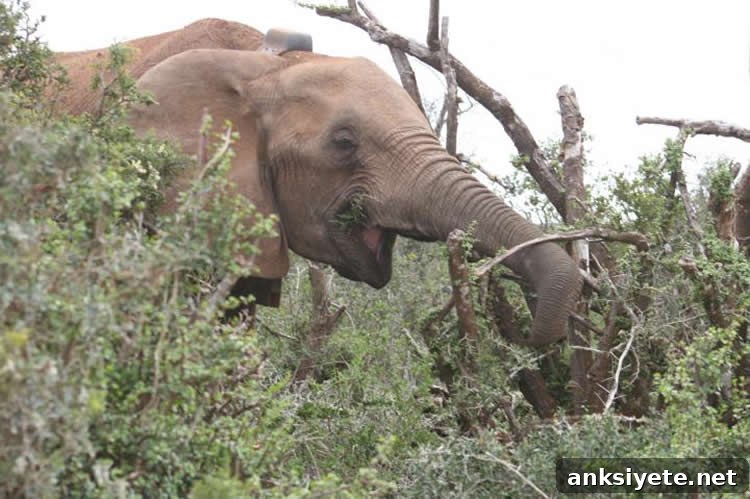
The team also observed that disturbances—such as potential predator presence, poaching activity, or encounters with a musth male—can cause elephants to forgo sleep entirely for extended periods. On several occasions, the tracked matriarchs went without sleep for up to 46–48 hours and traveled as far as ~30 km in about 10 hours to move the herd away from perceived danger. After such episodes there was no evidence of a compensatory increase in sleep (no clear rebound), indicating a remarkable flexibility in sleep requirements when survival demands it.
Understanding sleep in wild animals has practical and scientific value. From a conservation and management perspective, knowing when and how animals rest helps inform protection strategies and minimize human disturbance. From a comparative biology standpoint, studying diverse sleep architectures—especially extreme cases like elephants—can reveal how sleep functions across species and what ecological and physiological factors shape sleep patterns. Insights from elephants may ultimately shed light on human sleep as well.
Source: Schalk Mouton – University of the Witwatersrand
Image credit: Wits University
Original research: Gravett N., Bhagwandin A., Sutcliffe R., Landen K., Chase M. J., Lyamin O. I., Siegel J. M., & Manger P. R. (2017). “Inactivity/sleep in two wild free-roaming African elephant matriarchs – Does large body size make elephants the shortest mammalian sleepers?” PLOS ONE. Published online March 1, 2017. doi:10.1371/journal.pone.0171903
The study monitored two free-roaming African elephant matriarchs in their natural habitat using a trunk-implanted actiwatch, a GPS collar with gyroscope, and a portable weather station. The elephants were polyphasic sleepers with an average daily sleep duration of approximately 2 hours, mostly between 02:00 and 06:00, representing the shortest daily sleep time recorded for any mammal to date. Both standing and recumbent sleep were observed; recumbent sleep occurred only once every three to four days and typically lasted about an hour, suggesting limited daily opportunity for REM sleep. On multiple occasions the elephants remained awake for up to 46 hours and covered large distances, likely in response to disturbance, and they did not show a clear sleep rebound afterward. Environmental variables—especially ambient temperature and relative humidity—were reliable predictors of sleep onset and offset. Sleep site selection varied nightly, and the level of daytime activity did not predict the amount of subsequent sleep. The findings highlight similarities and differences with elephant sleep in captivity and identify ecological and physiological factors that shape elephant sleep architecture.
These results expand our understanding of mammalian sleep by documenting extremely short daily sleep in wild African elephants and linking sleep timing to environmental conditions. The work emphasizes the adaptability of sleep patterns in response to ecological pressures and contributes valuable data for both conservation planning and comparative sleep science.