
Summary: In mice, opioid withdrawal disrupts serotonin signaling to the nucleus accumbens, causing pronounced reductions in sociability and increased social avoidance.
Source: Stanford
Opioid withdrawal is not only physically painful but also sharply reduces social motivation, a change that undermines recovery by driving isolation at precisely the time when social support is most needed.
“Self-isolation can lead people in recovery to drop out of treatment, clash with loved ones, and lose access to support networks that help sustain abstinence,” says Stanford psychiatry professor Keith Humphreys, Ph.D., an expert in addiction treatment and public policy.
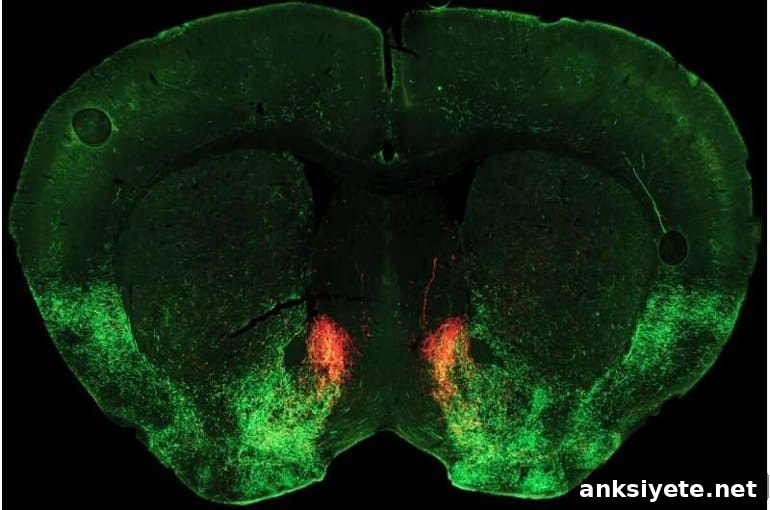
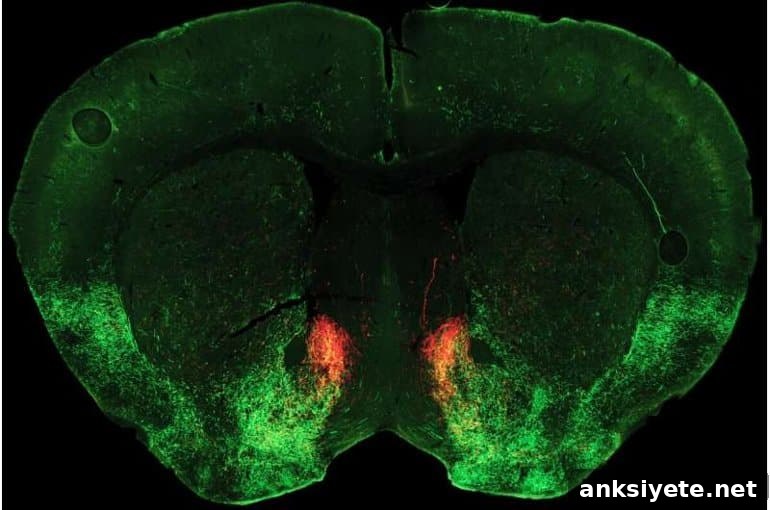
New research from the laboratory of Stanford neuroscientist Robert Malenka, M.D., Ph.D., identifies a specific molecular pathway linking opioid withdrawal to social aversion in mice. The study shows how withdrawal interrupts serotonin release in the nucleus accumbens, a brain region central to motivation and reward, and how that interruption produces severe sociability deficits.
Under normal conditions, serotonin release in the nucleus accumbens supports social interaction. Malenka explains that this neuromodulator helps switch sociability on during friendly encounters and social engagement. The new experiments reveal how opioid withdrawal prevents that switch from operating.
To study this, researchers used a mouse model of opioid dependence and withdrawal. Mice received escalating doses of morphine until dependence developed; the drug was then stopped abruptly to induce withdrawal. The team assessed sociability using a simple behavioral test measuring how much time a mouse chooses to spend with a social partner.
“During protracted withdrawal, every mouse in the study showed marked deficits in sociability,” says Malenka, the Nancy Pritzker Professor of Psychiatry and Behavioral Sciences and deputy director of the Wu Tsai Neurosciences Institute.
Previous work from Malenka’s group had already linked serotonin in the nucleus accumbens to social behaviors. Those studies showed that lowering serotonin in this region produced social deficits in models of autism, while boosting serotonin produced strong pro-social effects similar to those seen with MDMA. Building on that foundation, the new study asked whether opioid withdrawal might similarly reduce serotonin release and thereby cause social avoidance.
A key insight came from postdoctoral scholar Matthew Pomrenze: kappa opioid receptors (KORs), a receptor subtype associated with stress and depression, are known to suppress serotonin release. Detailed experiments revealed that during withdrawal, the neuropeptide dynorphin is released in the nucleus accumbens where it activates KORs and blocks serotonin release. That blockade prevents the normal serotonin surge that accompanies social interaction, producing the observed social deficits.
The team then tested whether blocking KORs could restore sociability. They gave withdrawn mice aticaprant, a KOR antagonist that is already under clinical investigation for certain forms of depression. Treatment with aticaprant fully reversed the social avoidance in the withdrawn mice, restoring normal social behavior in the laboratory tests.
If a similar mechanism operates in humans, KOR blockade during withdrawal could help people remain connected to social supports—family, peers, clinicians and recovery programs—making it easier to complete detoxification and engage in long-term treatment. “Withdrawal is often the moment when someone might accept help or be linked to effective treatments,” says Humphreys. “If they are withdrawing and avoiding all social contact, those life-saving interventions can’t occur.”
Malenka cautions that developing addiction medications is challenging and that translating findings from mice to people requires careful clinical research. Pharmaceutical interest in addiction treatments can be limited, so the goal of this preclinical work is to provide a clear mechanism and strong rationale for clinical trials.
The pathway described—dynorphin release activating KORs in the nucleus accumbens to suppress serotonin during withdrawal—provides a concrete target for further study. Having a mechanistic understanding gives clinical researchers a focused hypothesis to test in human trials and may accelerate efforts to reduce social isolation during withdrawal and improve recovery outcomes.
About this opioid withdrawal and social neuroscience research news
Author: Gordy Slack
Source: Stanford
Contact: Gordy Slack – Stanford
Image: The image is credited to Matthew Pomrenze, Malenka Lab
Original Research: Closed access.
“Modulation of 5-HT release by dynorphin mediates social deficits during opioid withdrawal” by Matthew B. Pomrenze et al., Neuron (2022).
Abstract
Modulation of 5-HT release by dynorphin mediates social deficits during opioid withdrawal
Highlights
- Protracted opioid withdrawal produces pronounced social interaction deficits in mice.
- Kappa opioid receptor activation in the nucleus accumbens medial shell is necessary for withdrawal-related social deficits.
- Dynorphin-expressing neurons in the dorsal raphe promote these social deficits during withdrawal.
- KOR activation reduces serotonin (5-HT) release in the nucleus accumbens during withdrawal, mediating the social deficits.
Summary
Social isolation during opioid withdrawal is a major factor driving relapse and complicating recovery. This study demonstrates that sociability deficits in mice undergoing protracted opioid withdrawal depend on dynorphin-driven activation of kappa opioid receptors, which block the serotonin signals in the nucleus accumbens that normally support social interaction. Blocking KORs—using a clinically relevant antagonist—restores serotonin release and reverses social avoidance in mice, identifying a neuromodulatory mechanism that could inform future clinical research aimed at reducing isolation during withdrawal and improving addiction treatment outcomes.