
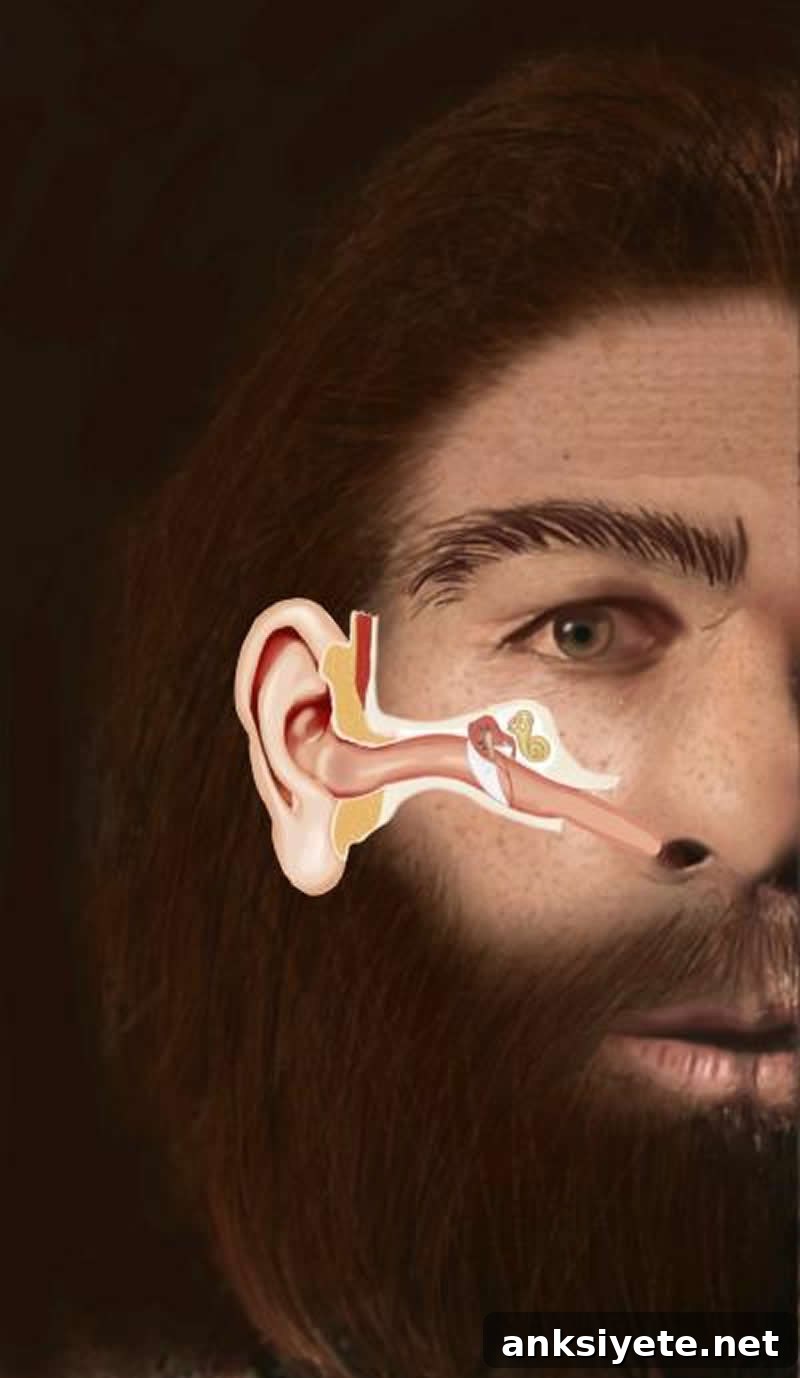
Summary: The first anatomical reconstruction of the Neanderthal cartilaginous Eustachian tube (CET) shows a tubal morphology similar to that of human infants, and suggests Neanderthals may have been highly susceptible to chronic otitis media (middle ear infections). Lifelong ear disease and its complications could have reduced Neanderthal fitness and competitiveness, potentially contributing to their decline and eventual extinction.
Source: Suny Downstate Health Science University
What wiped out the Neanderthals while Homo sapiens survived? Anthropologists have debated this question for decades: was it a disease that only affected Neanderthals, a sudden environmental catastrophe, or a gradual biological disadvantage? A new interdisciplinary study offers a different, less dramatic explanation grounded in anatomy and disease susceptibility.
Published in the journal The Anatomical Record, the study titled “Reconstructing the Neanderthal Eustachian Tube: New Insights on Disease Susceptibility, Fitness Cost, and Extinction” presents the first anatomical reconstruction of the Neanderthal cartilaginous Eustachian tube (CET). The research team, composed of physical anthropologists and head and neck anatomists, argues that Neanderthal tubal anatomy likely predisposed them to frequent and chronic middle ear infections.
In modern human infants, the Eustachian tube has a relatively horizontal orientation and a flat angle, which makes it easier for bacteria and fluid to accumulate and for otitis media to develop. As children grow, the tube elongates and tilts, improving drainage and greatly reducing infection risk by about age five or six. By reconstructing the CET in Neanderthal crania and comparing these forms to a modern human growth series, the researchers discovered that adult Neanderthals retained a similarly horizontal, infant-like CET and choanal orientation.
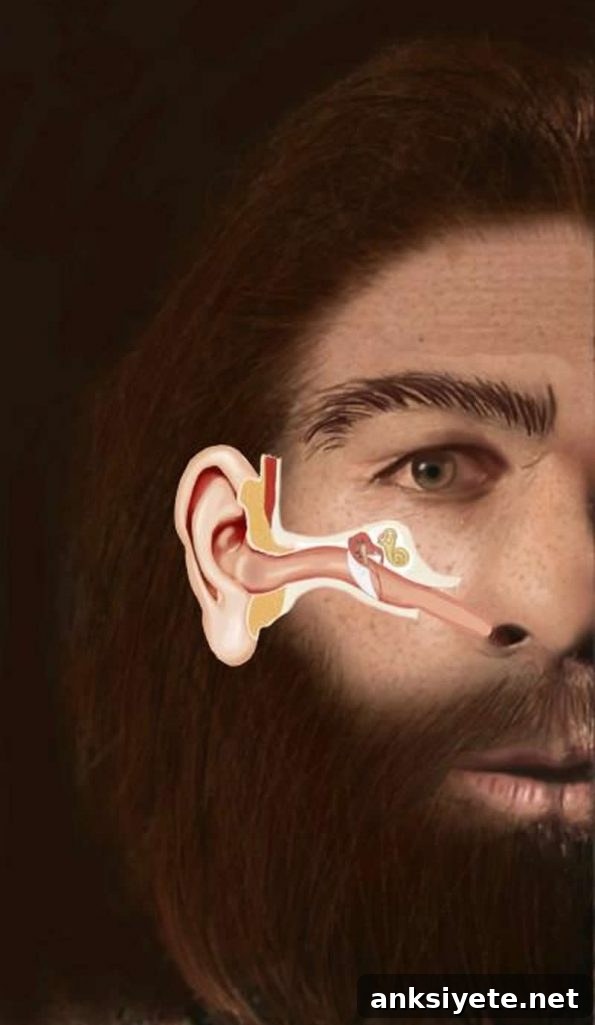
Co-investigator Samuel Márquez, PhD, Associate Professor at Downstate Health Sciences University, notes the significance of the comparison: “When we reconstructed the Eustachian tubes of Neanderthals for the first time, we found they resemble the infant human condition. In infants, a flat and horizontal tube invites persistent otitis media. The same anatomical orientation in adult Neanderthals implies lifelong susceptibility to middle ear disease.”
Otitis media in infants and young children is common but usually transient in the antibiotic era and in populations with access to modern medical care. However, if the anatomical predisposition persisted into adulthood, Neanderthals would have faced chronic or recurrent ear infections with more severe long-term consequences, such as hearing loss, recurrent respiratory infections, pneumonia, and even meningitis. Those health burdens would not only increase mortality risks, but could also impair daily functioning, social communication, hunting, and competitive ability.
“It’s not only the risk of acute death from an infection,” Márquez added. “A population burdened by chronic illness would have reduced fitness and resilience. That could make Neanderthals less able to compete with Homo sapiens for food, territory, and mates.”
Richard Rosenfeld, MD, MPH, MBA, Distinguished Professor and Chair of Otolaryngology at SUNY Downstate, emphasizes the methodological advance: “Reconstructing the cartilaginous Eustachian tube is the strength of this study. That previously unexamined soft-tissue anatomy allows us to infer middle ear function and disease susceptibility in Neanderthals in new ways.”
Paleoanthropologist Ian Tattersall, PhD, Curator Emeritus, notes the broader implication: “This study adds another intriguing detail to the Neanderthal story. It highlights how close relatives can differ in functional anatomy in ways that influence survival and population trajectories.”
Source:
Suny Downstate Health Science University
Media contacts:
John Gillespie – Suny Downstate Health Science University
Image credit:
SUNY Downstate Health Sciences University
Original research (open access):
“Reconstructing the Neanderthal Eustachian Tube: New Insights on Disease Susceptibility, Fitness Cost, and Extinction.” Authors: Anthony Santino Pagano, PhD; Samuel Márquez, PhD; Jeffrey T. Laitman, PhD. Published in The Anatomical Record.
Abstract (summary):
The Neanderthal cartilaginous Eustachian tube (CET), a critical part of the upper respiratory tract linking the middle ear and postnasal airway, has been reconstructed for the first time. The Eustachian tube, which includes both bony and cartilaginous portions, plays a central role in middle ear aeration and pressure regulation. The reconstructed Neanderthal CET reveals adult morphology that is tall and narrow in the nasopharyngeal region and retains the horizontally oriented CET characteristic of human infants. Since horizontal CET orientation in modern humans is strongly associated with elevated incidence of otitis media in infancy and early childhood, the persistence of this orientation in Neanderthal adults implies a lifelong vulnerability to middle ear disease. Chronic or recurring otitis media can lead to hearing impairment and secondary complications such as meningitis and pneumonia, increasing disease burden and reducing fitness. These anatomical and health-related factors could have lessened Neanderthal competitive capacity relative to contemporaneous modern humans, potentially contributing to their rapid extinction.