
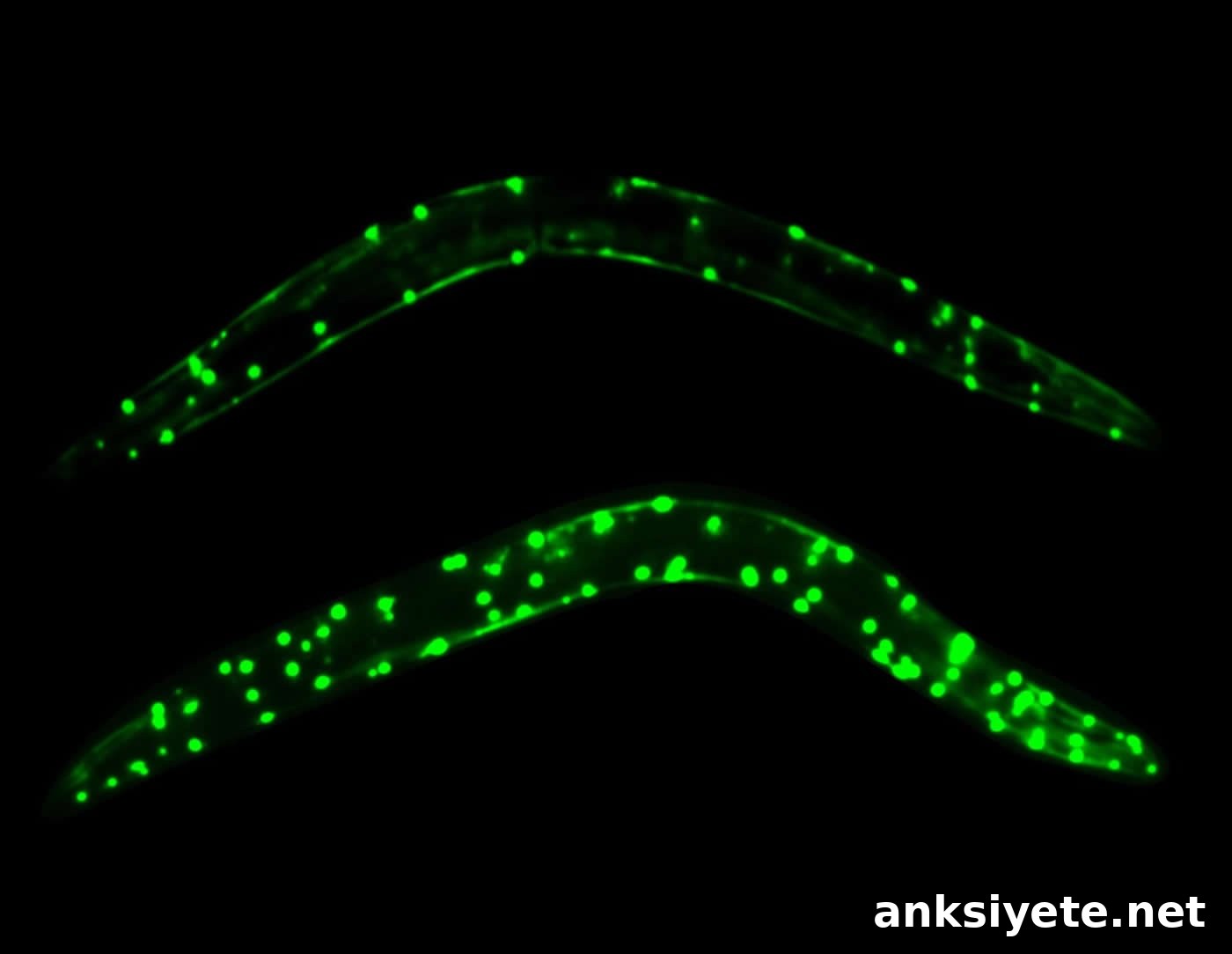
Summary: New research shows that autophagy coordinates with sensory neurons and nutrient signals to influence lifespan.
Source: Florida Atlantic University.
New study offers insight into mechanisms that extend lifespan
Reducing caloric intake without causing malnutrition—commonly called dietary or caloric restriction—has been shown to extend lifespan across more than 20 animal species, including primates. The mechanisms behind this effect remain incompletely understood. In a paper published in PLOS Genetics, neuroscientists at Florida Atlantic University report that lifespan is shaped not only by how much animals eat but also by sensory cues such as the smell of food, and by cellular recycling processes known as autophagy.
Using the nematode Caenorhabditis elegans as a model, the researchers reveal how autophagy, the cellular process that clears damaged proteins and organelles, works together with nutrient absorption in the gastrointestinal (GI) tract and olfactory food detection to regulate aging under dietary restriction. Their findings identify autophagy as a crucial mediator of a neuroendocrine signaling pathway that integrates sensory neuron activity and nutrient status to control longevity.
“Autophagy acts in both the nervous system and the intestine to coordinate signals between the GI tract and the brain,” said Kailiang Jia, Ph.D., corresponding author and associate professor of biological sciences in FAU’s Charles E. Schmidt College of Science and a member of FAU’s Brain Institute. “We investigated how communication between these tissues affects aging.”
The team, including first author Justin Minnerly, Ph.D., observed that autophagy in chemosensory (olfactory) neurons is especially important for the lifespan benefits associated with dietary restriction. When animals on restricted diets are able to smell food, the beneficial effects on longevity are diminished—an observation consistent with earlier studies in fruit flies. This suggests that olfactory cues modulate neuroendocrine signals and thereby influence metabolic pathways that determine lifespan.
“When people describe dieting, they often focus on calories, but sensory cues such as the aroma of food also alter brain and gut function,” Jia explained. “Our results imply that both the nutrients absorbed in the GI tract and the smell of food regulate autophagy, which in turn helps control aging.”
The study shows that ATG-18, a protein essential for autophagy, functions cell non-autonomously—that is, autophagy activity in one tissue influences other tissues—to maintain normal lifespan and to mediate longevity signals from dietary restriction and reduced insulin/IGF signaling. ATG-18 activity in food-sensing neurons alone is sufficient to influence these longevity pathways, and the signaling depends on neurotransmitter and neuropeptide release.
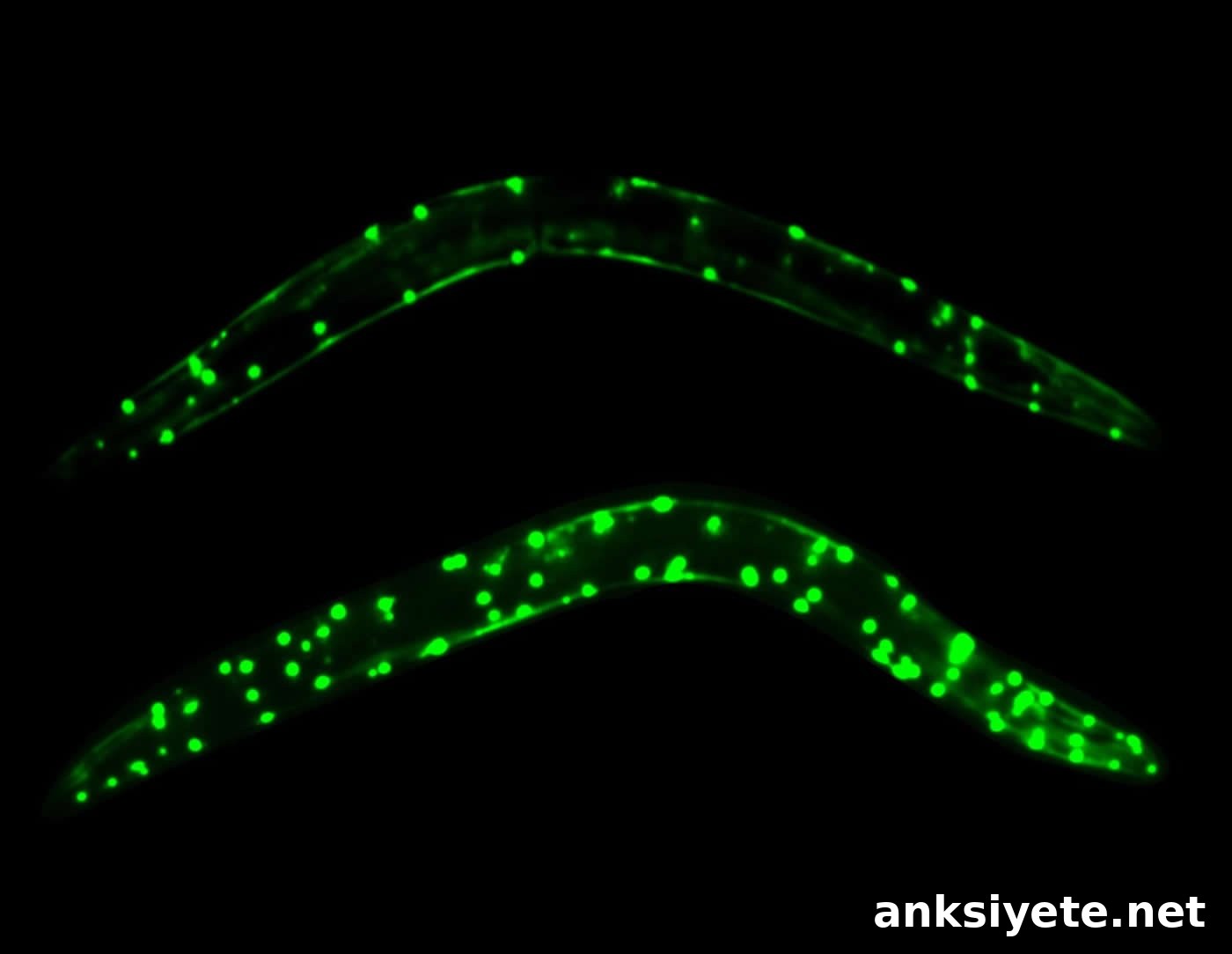
Autophagy is widely recognized as a central cellular process that helps maintain metabolic health and proteostasis. Many hypotheses exist to explain why caloric restriction extends lifespan, but a prevailing view is that reduced nutrient intake triggers metabolic and physiological adjustments that activate protective pathways, including autophagy. The new data tie autophagy directly to sensory perception and neuroendocrine regulation, showing that neuronal and intestinal autophagy coordinate to influence a downstream signaling cascade involving the DAF-16/FOXO transcription factor under reduced insulin/IGF signaling.
“Our work indicates that autophagy in olfactory neurons can detect food-related cues and then modulate neuronal signaling to impact aging,” Jia said. “For dietary restriction to extend lifespan, functional autophagy is required; without it, the life-extension effects are lost.”
Going forward, the FAU team plans to identify specific proteins that regulate the autophagy-dependent signaling they observed and to develop screening protocols to discover small molecules that modulate autophagy. Their long-term aim is to translate these insights into therapeutic strategies for age-related diseases such as obesity, cancer, and neurodegenerative disorders, where altering autophagy may have clinical benefit.
“We can observe autophagy activation in response to calorie restriction,” Jia added. “In disease contexts, reduced autophagy often accelerates pathology, while enhancing autophagy can be protective—so targeting these pathways could be a promising approach for multiple conditions.”
Funding: This study was supported by the National Institutes of Health (NIH) grant number 1R15HD080497-01 and by the Ellison Medical Foundation Aging Scholarship awarded to Kailiang Jia.
Source: Gisele Galoustian – Florida Atlantic University
Image source: Florida Atlantic University.
Original research: Minnerly J., Zhang J., Parker T., Kaul T., and Jia K. “The cell non-autonomous function of ATG-18 is essential for neuroendocrine regulation of Caenorhabditis elegans lifespan,” PLOS Genetics, published online May 30, 2017. doi:10.1371/journal.pgen.1006764
Florida Atlantic University (2017, August 2). It’s Not Just What You Eat, It’s What’s Eating You. NeuroscienceNews.
Abstract
The cell non-autonomous function of ATG-18 is essential for neuroendocrine regulation of Caenorhabditis elegans lifespan
Dietary restriction (DR) and reduced insulin/IGF signaling extend lifespan in Caenorhabditis elegans and other eukaryotes. Autophagy, an evolutionarily conserved lysosomal degradation pathway, is regulated by longevity signals such as DR and insulin/IGF signaling and promotes longevity across species. This study demonstrates that ATG-18 functions cell non-autonomously in neuronal and intestinal tissues to maintain wild-type lifespan and to mediate responses to DR and reduced insulin/IGF signaling. ATG-18 activity in chemosensory neurons that detect food is sufficient to convey the effects of these longevity pathways. ATG-18-dependent signaling requires neurotransmitter and neuropeptide release, and neuronal and intestinal ATG-18 act in parallel to regulate lifespan via neuropeptide-secreting neurons and the transcription factor DAF-16/FOXO in response to reduced insulin/IGF signaling.