
 People from all walks of life feel like an imposter at times.
As a medical doctor, I am familiar with that sensation: the belief that achievements were accidental and the fear of being exposed as a fraud at any moment.
It’s important to know this experience is widespread. A UK survey reported that roughly half of people struggle with impostor feelings (Josa, 2019).
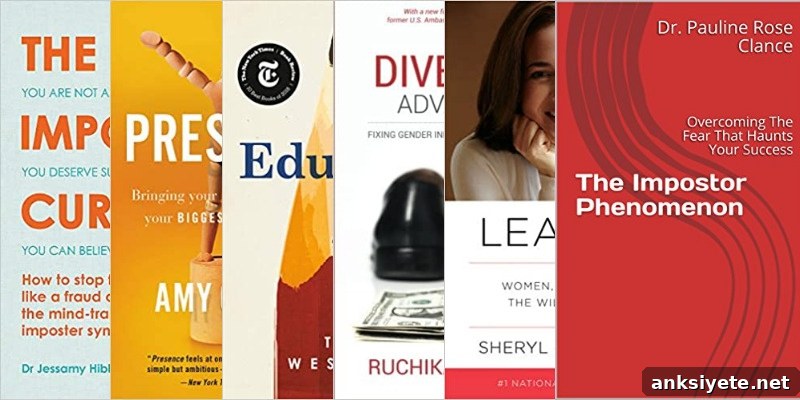
If you’re looking for insight—whether for yourself, a client, or a colleague—this article reviews ten books that explore impostor syndrome from different angles: theoretical, practical, and autobiographical. Each entry highlights what makes the book useful for understanding or overcoming impostor feelings.
This Article Contains:
- 1. The Impostor Phenomenon
- 2. The Secret Thoughts of Successful Women
- 3. Lean In: Women, Work and the Will to Lead
- 4. Presence: Bringing Your Boldest Self to Your Biggest Challenges
- 5. Feeling Good: The New Mood Therapy
- 6. The Gifts of Imperfection
- 7. The Practice: Shipping Creative Work
- 8. Educated: A Memoir
- 9. The Diversity Advantage
- 10. The Imposter Cure
- PositivePsychology.com’s Relevant Resources
- A Take-Home Message
- References
1. The Impostor Phenomenon: Overcoming the Fear That Haunts Your Success – Dr. Pauline Rose Clance
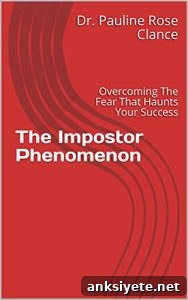
Impostor syndrome is best thought of as a social and psychological phenomenon rather than a distinct clinical diagnosis, which means definitions vary. Psychologists Pauline Rose Clance and Suzanne Imes originally described the experience as “a psychological experience of intellectual and professional fraudulence.”
Clance’s book, first published in the 1980s, remains a foundational text. It explains how impostor feelings develop, includes a self-assessment for identifying an impostor profile, and offers practical exercises to break cycles of self-doubt and negativity.
Clance introduces helpful frameworks such as the ‘ABC’ of perceived success—Ability, Breaks, and Courage—highlighting how those with impostor feelings tend to attribute success to luck or external factors rather than their own skills. The book also explores how impostor phenomenon appears in different roles, including students, parents, and professionals.
This work is a useful starting point for clinicians and readers who want to understand the roots of impostor feelings and begin practical work to reduce their impact.
2. The Secret Thoughts of Successful Women: Why Capable People Suffer From the Impostor Syndrome and How to Thrive in Spite of It – Dr. Valerie Young
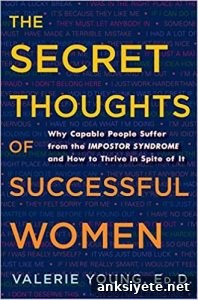
Valerie Young explores why highly capable people experience impostor feelings and offers a roadmap to thrive despite them. Drawing on her own experience and years of research, Young identifies seven contributing factors and classifies impostor experiences into five competence types.
These competence types—such as the Perfectionist—help readers identify how impostor feelings show up differently across personalities, backgrounds, and coping styles. Young provides reframing exercises and practical strategies tailored to each type, emphasizing that changing how we approach failure and risk is key to managing impostor feelings.
The book is highly actionable and helps readers reframe their inner critic while building sustainable behaviors for greater confidence.
3. Lean In: Women, Work and the Will to Lead – Sheryl Sandberg
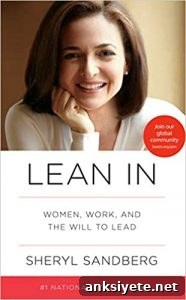
Sheryl Sandberg combines personal stories, research, and practical advice to address gender gaps at work and at home. A central theme is urging women to ‘lean in’—to claim space at the table, take on leadership, and pursue ambitious goals.
Sandberg candidly describes moments of self-doubt and impostor feelings, helping normalize the experience by showing that even highly visible leaders can feel like frauds. For many readers, this honest vulnerability provides reassurance that self-doubt does not equal incompetence.
“In order to continue to grow and challenge myself, I have to believe in my own abilities. I still face situations I fear are beyond my capabilities. I still have days when I feel like a fraud. But now I know how to take a deep breath and keep my hand up. I have learned to sit at the table.”
Sheryl Sandberg
4. Presence: Bringing Your Boldest Self to Your Biggest Challenges – Amy Cuddy
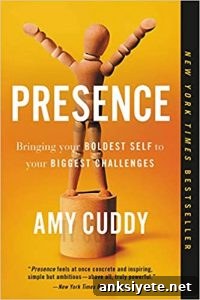
Amy Cuddy applies social psychology to confidence and impostor feelings, emphasizing the mind–body connection. Her work popularized the idea of “power posing” and how posture and nonverbal behavior can influence subjective feelings of authority.
Cuddy encourages normalizing impostor feelings and reframing them: given how common they are, the problem often lies in how we evaluate ourselves rather than in an objective lack of ability. The book offers practical exercises to build presence and reduce the intensity of self-doubt, focusing on habits and behavioral strategies that shift how we feel in high-stakes situations.
While some debate exists about the replicability of certain effects, many readers find the book’s techniques useful for increasing confidence in real-world moments.
5. Feeling Good: The New Mood Therapy – Dr. David D. Burns
David Burns translates cognitive-behavioral therapy into accessible techniques for reducing negative thinking and rumination—core elements that contribute to impostor feelings. His description of common cognitive distortions (thinking errors) helps readers spot and reframe beliefs that undermine self-confidence.
For people who discount their successes or automatically explain achievements away, Burns’s exercises—such as challenging “disqualifying the positive”—provide concrete steps toward building a healthier self-view and more resilient mood over time.
6. The Gifts of Imperfection: Let Go of Who You Think You’re Supposed to Be and Embrace Who You Are – Dr. Brené Brown
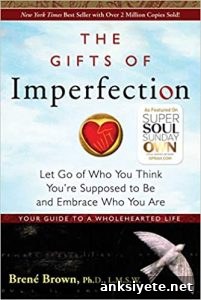
Brené Brown’s research on shame and vulnerability provides deep insight for anyone struggling with feelings of fraudulence. She highlights practices—courage, compassion, and connection—that dismantle shame and cultivate a sense of “enough.”
Brown encourages readers to own their stories, practice vulnerability with trusted people, and develop self-compassion. Each chapter concludes with clear takeaways and exercises designed to strengthen authenticity and reduce the isolation that often accompanies impostor feelings.
7. The Practice: Shipping Creative Work – Seth Godin
Seth Godin speaks directly to creative professionals and entrepreneurs who often confront impostor feelings: their output is subjective and feedback can be sparse. Godin emphasizes process over outcome and argues that consistent practice and small daily acts of creation reduce the power of self-doubt.
He reframes “faking it” as experimental action—acting as if you belong in order to discover what works—and suggests that discomfort can be a sign you’re doing meaningful work. This mindset can transform impostor feelings into fuel for persistent creative effort.
8. Educated: A Memoir – Tara Westover

Tara Westover’s memoir chronicles a remarkable journey from an isolated upbringing to academic success at top universities. Throughout her education and personal growth, she repeatedly felt out of place and feared being found out as a fraud.
Her story resonates with students, scholars, and anyone who has navigated environments where they felt they did not belong. Westover’s account offers hope and perspective for readers facing impostor feelings in academic or professional settings.
9. The Diversity Advantage: Fixing Gender Inequality in the Workplace – Ruchika Tulshyan
Ruchika Tulshyan shifts the discussion from individual coping strategies to cultural and structural causes of impostor feelings. Her work argues that biases—sexism, racism, classism—create environments where marginalized people are more likely to question their competence and achievements.
The book advocates for organizational inclusion strategies that reduce the conditions that foster impostor feelings, reminding leaders to fix workplaces rather than placing the burden solely on individuals.
10. The Imposter Cure: Escape the Mind-Trap of Imposter Syndrome – Dr. Jessamy Hibberd
Dr. Jessamy Hibberd offers a clinical and compassionate guide specifically targeted to impostor syndrome. She outlines a three-stage approach—understanding the theory, choosing to change, and applying practical strategies—and uses case studies and diagrams to make the psychology clear.
Highlights include tools for recognizing self-criticism, exercises tailored to different competence types, and guidance on navigating social media and comparison. Hibberd emphasizes that while there’s no overnight cure, steady practice and self-compassion can meaningfully reduce impostor-driven anxiety.
Download 3 Free Strengths Exercises (PDF)
These science-based exercises help identify and apply personal strengths. Use them with clients or for your own development.
PositivePsychology.com’s Relevant Resources
The site offers practical tools such as tests and worksheets to assess impostor syndrome and guide coaching or therapy sessions. A recommended strengths exercise pack includes activities to increase awareness and use of personal strengths—useful for clients struggling with self-doubt.
Red and Green Activities
Track activities across a week to see which energize you (strength-based) and which drain you (weakness-based). This practice builds insight into when you are operating from strengths and when you are not.
You at Your Best
Tell a story about a time you performed at your best. Reflect on the strengths and conditions that supported that success to reinforce authentic competence and reduce discounting of achievements.
Strength Regulation
Explore different levels of strength use—overuse, underuse, and optimal use—in order to fine-tune how you apply strengths in different situations.
These exercises are intended as practical complements to therapeutic work or personal development plans focused on reducing impostor feelings.
A Take-Home Message
Impostor syndrome appears across many stages of life and in diverse contexts. No single approach fits everyone, so it helps to draw on multiple perspectives: psychological theory, cognitive techniques, embodiment practices, narrative and memoir, creative process guidance, and structural critiques of workplaces.
Books that combine explanation with practical exercises—those that encourage reframing, gentle behavioral experiments, and skill-building—offer the most direct route to reducing impostor-driven fear. At the same time, recognizing when organizational or societal factors contribute to these feelings is crucial.
Above all, know that experiencing self-doubt does not invalidate your achievements. With deliberate work—reframing thinking patterns, building self-compassion, and leveraging strengths—people can reduce the intensity of impostor feelings and continue to pursue meaningful challenges.
We hope this guide helps you find resources that resonate and provide practical steps forward.
References
- Brown, B. (2010). The Gifts of Imperfection: Let Go of Who You Think You’re Supposed to Be and Embrace Who You Are. Hazelden Information & Educational Services.
- Burns, D. D. (1981). Feeling Good: The New Mood Therapy. Penguin Books.
- Clance, P. R., & Imes, S. (1978). The Impostor Phenomenon in High Achieving Women: Dynamics and Therapeutic Intervention. Psychology and Psychotherapy: Theory, Research and Practice, 15, 241–247.
- Clance, P. R. (1985). The Impostor Phenomenon: Overcoming the Fear That Haunts Your Success. Peachtree Publishers.
- Cuddy, A. (2015). Presence: Bringing Your Boldest Self to Your Biggest Challenges. Little, Brown and Company.
- Godin, S. (2020). The Practice: Shipping Creative Work. Penguin.
- Hibberd, J. (2019). The Imposter Cure: How to Stop Feeling Like a Fraud and Escape the Mind-Trap of Imposter Syndrome. Octopus Publishing Group.
- Josa, C. (2019). Surprising early result from the 2019 impostor syndrome study. Thrive Global.
- Ranehill, E., Dreber, A., Johannesson, M., Leiberg, S., Sul, S., & Weber, R. A. (2015). Assessing the robustness of power posing: No effect on hormones and risk tolerance in a large sample of men and women. Psychological Science, 26(5), 653–656.
- Sandberg, S. (2013). Lean In: Women, Work, and the Will to Lead. Alfred A. Knopf.
- Westover, T. (2018). Educated: A Memoir. Random House.
- Young, V. (2011). The Secret Thoughts of Successful Women: Why Capable People Suffer From the Impostor Syndrome and How to Thrive in Spite of It. Crown Business.