
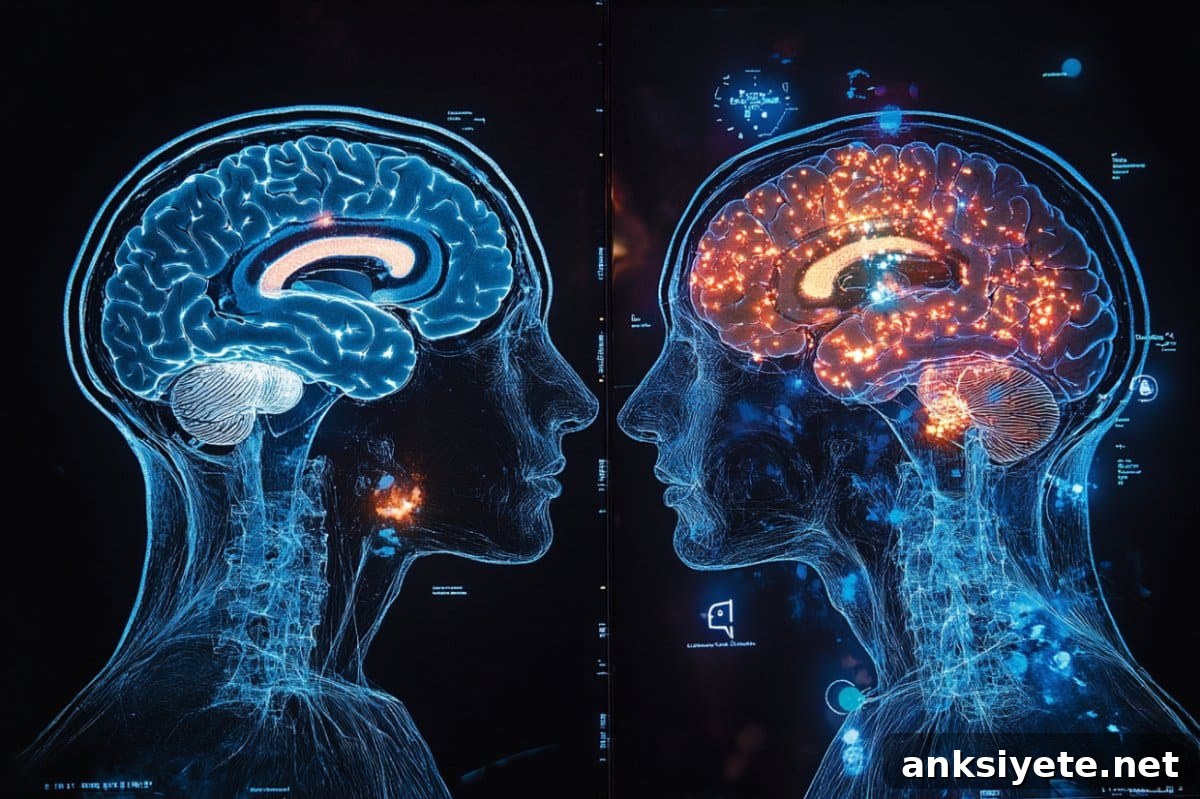
Summary: New research from the University at Buffalo finds that the insula — a central brain region — shows altered connectivity in people who struggle to understand speech in noisy environments. Resting-state MRI scans reveal that the left insula maintains stronger links with auditory and language-processing areas even when the brain is not actively listening, suggesting a durable reorganization of neural networks associated with hearing challenges.
Because insula changes have been linked to early stages of dementia, these results may help explain the well-documented relationship between hearing loss and cognitive decline. The study also uncovered an encouraging observation: experience in noisy settings appears to improve the brain’s ability to decode speech, implying that targeted exposure or training might reduce everyday listening difficulties.
Key Facts:
- Insula overactivity: Individuals with poorer speech-in-noise performance show stronger left insula connectivity at rest.
- Connection to cognitive decline: Baseline insula rewiring could contribute to links between hearing difficulties and dementia risk.
- Potential for training: Regular exposure to noisy environments may strengthen neural pathways for understanding speech.
Source: University at Buffalo
Difficulty understanding conversation in noisy places increases with age for many people.
Researchers at the University at Buffalo examined how brains differ in people who have trouble hearing speech amid background noise. Their work, published in the journal Brain and Language, used resting-state functional MRI to identify persistent differences in functional connectivity that appear even when no listening task is being performed.
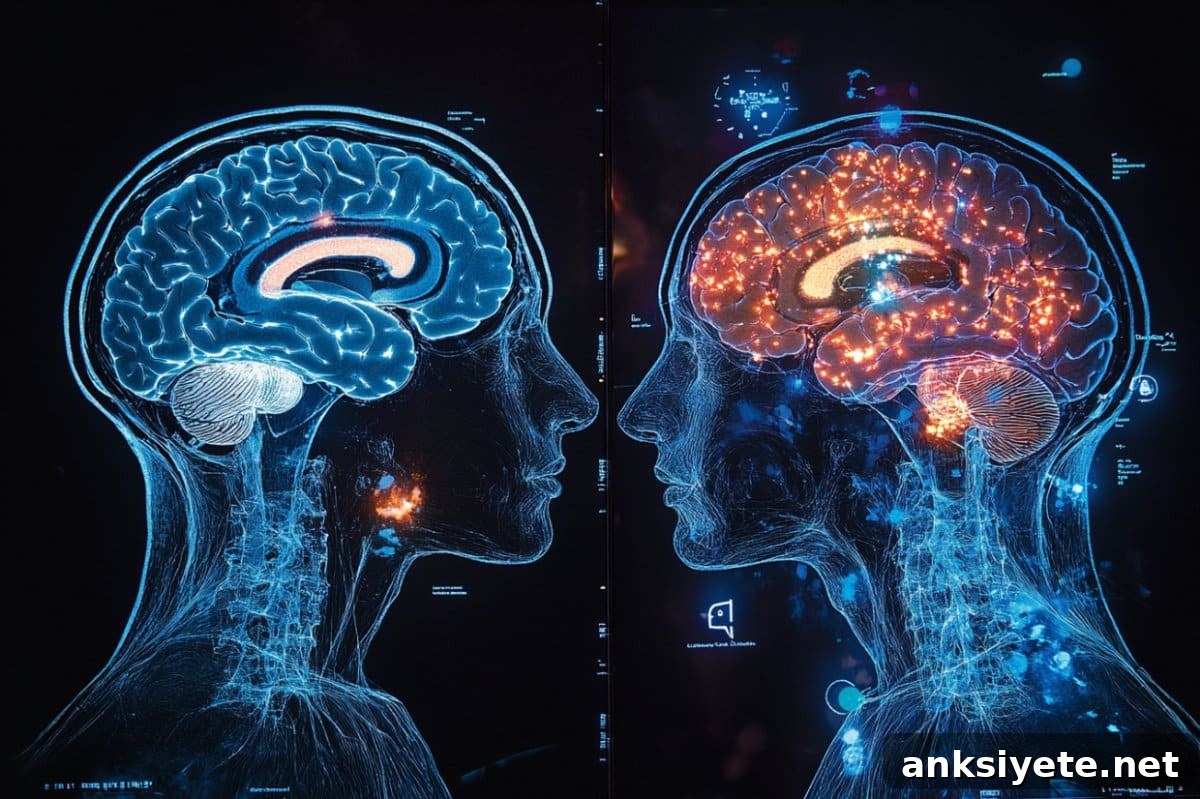
Previous studies have independently linked hearing impairment with dementia and insula abnormalities with cognitive decline. The insulae — one on each side of the brain — are complex hubs that integrate sensory signals with emotional and cognitive processes and interact closely with frontal brain regions responsible for higher-order thinking.
This investigation tested 40 adults ages 20 to 80. Participants completed hearing assessments that measured their ability to understand speech in noisy settings, then underwent resting-state MRI scans to map functional connectivity across brain regions when participants were not performing active listening tasks.
The brain at baseline
Unlike task-based imaging that highlights which areas activate during a specific challenge, resting-state MRI reveals which brain regions remain functionally linked at baseline. David S. Wack, PhD, the study’s first author and an associate professor of radiology at UB’s Jacobs School of Medicine and Biomedical Sciences, explains that resting-state scans show how networks communicate even in the absence of external stimulation.
The team found that people who struggled with speech-in-noise had stronger connectivity between the left insula and auditory regions. That pattern suggests a reconfigured network that persists beyond moments of active listening — the brain appears to be permanently reallocating processing resources to compensate for degraded input.
“The brain is always active,” Wack says. “When auditory input is unreliable, other brain areas are recruited to decode sound. We were surprised to see the insula showing increased engagement even when the brain was at rest and not being challenged by noisy speech.”
Because the insula has been associated with early dementia, these baseline connectivity changes may help explain why hearing loss and speech-in-noise difficulty are often correlated with later cognitive decline. Wack stresses that this does not imply hearing loss directly causes dementia, but that preserving the quality of incoming signals could reduce the need for compensatory brain reorganization.
An encouraging exception
One unexpected result came from a participant who had below-average pure-tone hearing sensitivity but excelled at the speech-in-noise task in one ear. That person worked in a noisy environment, suggesting that regular exposure to background noise may train the auditory system and related brain networks to better extract speech from competing sounds.
“This case hints that people don’t necessarily have to accept poor performance in noisy settings,” Wack says. “With practice or targeted training, the brain might become more effective at parsing speech amid noise.”
The authors plan to further investigate how hearing loss and cognitive decline are linked by examining shared neural networks at rest. By pinpointing brain connectivity changes associated with speech-in-noise problems, the research supports the idea that addressing hearing difficulties could help preserve cognitive function.
University at Buffalo co-authors include Ferdinand Schweser, PhD (Department of Neurology); Sarah F. Muldoon, PhD (Department of Mathematics, College of Arts and Sciences); and Robert S. Miletich, MD, PhD. Kathleen McNerney, PhD (SUNY Buffalo State) and collaborators from Boston University School of Medicine, the Institute of Science in Tokyo, and Canon Medical Systems also contributed. Imaging was performed at UB’s Center for Biomedical Imaging within the Clinical and Translational Science Institute.
Funding: Support for the study and resources came from Canon Medical Systems USA, the National Center for Advancing Translational Sciences (NIH, UL1TR001412), and a gift from William and Grace Mabie for the advancement of neuroscience.
About this auditory neuroscience research news
Author: Ellen Goldbaum
Source: University at Buffalo
Contact: Ellen Goldbaum – University at Buffalo
Image credit: Neuroscience News
Original Research: Open access. “Speech in noise listening correlates identified in resting state and DTI MRI images” by David S. Wack et al., Brain and Language. DOI available in the original publication.
Abstract
Speech in noise listening correlates identified in resting state and DTI MRI images
This study examines neural connectivity associated with understanding speech in noisy environments — a skill that commonly declines with age. We correlated participants’ speech-in-noise (SIN) performance with resting-state MRI connectivity measures and with Fractional Anisotropy (FA) values from the auditory portion of the corpus callosum, analyzing results both with and without age correction.
Poorer right-ear SIN performance was associated with stronger correlations between primary auditory cortex and language-processing regions. Participants with better QuickSIN scores showed stronger bilateral connectivity between primary auditory cortices, though that effect was attributable to age. Similarly, FA values appeared to be explained primarily by age rather than SIN performance. After correcting for age, the Ig2 region of the insula showed a significant correlation with right-ear SIN results.