
Summary: A new study explains how the brain preserves broadly useful memories while discarding incidental, less relevant details over time.
Source: eLife.
Researchers at the University of Toronto have identified neural mechanisms that explain why specific details of past experiences often fade while general, useful knowledge persists.
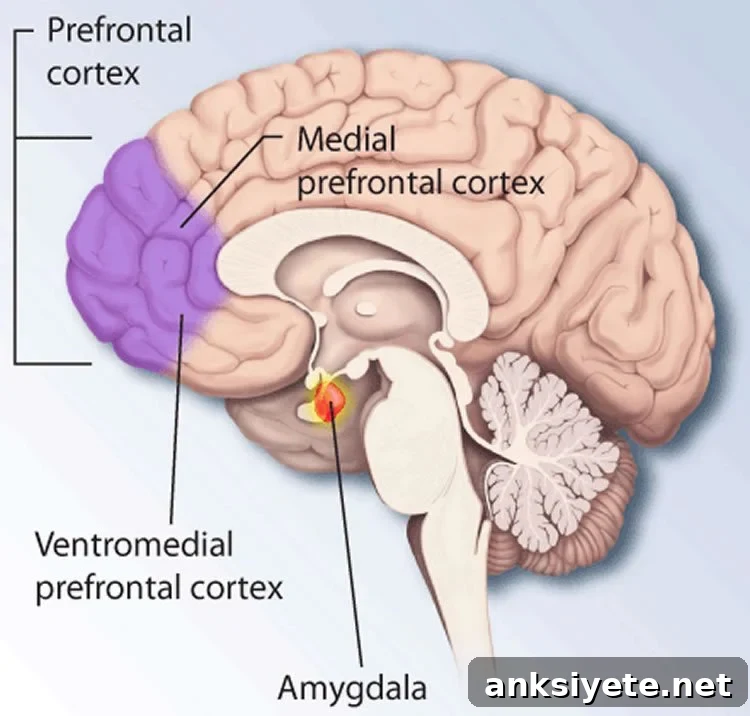
Published in the journal eLife, the study examined the medial prefrontal cortex (mPFC) — a brain region strongly associated with long-term memory — and found that distinct neuronal ensembles form codes that preferentially retain shared, general features across experiences while gradually losing the idiosyncratic, incidental details of each event.
The findings illuminate how the brain builds compact, adaptable knowledge structures that can be applied to new situations and support flexible behaviour.
“Memories of recent experiences are rich in incidental detail but, with time, the brain is thought to extract important information that is common across various past experiences,” says Kaori Takehara-Nishiuchi, senior author and Associate Professor of Psychology at the University of Toronto. “We predicted that groups of neurons in the mPFC build representations of this information during the period when long-term memory consolidation occurs, and that these representations come to dominate over representations of minor details.”
To test this hypothesis, the research team recorded neuronal activity in the prelimbic region of the rat mPFC as animals learned two distinct associative memories that shared a relational feature. One experience paired a visual and auditory cue (a light and a tone) with a consequence, while the other paired a different physical stimulus with a similar consequence, producing two memories that had overlapping relational structure but differed in perceptual specifics.
Rats were exposed to both experiences on separate occasions and neuronal activity was tracked from the first day of learning through a period of weeks following training. This timeline allowed the researchers to observe how representation of unique versus shared features evolved during the window when long-term memory consolidation is believed to occur.
“Our recordings showed that, at early stages after learning, mPFC ensembles represent both the specific, perceptual details of each experience and the shared relational features,” says Mark Morrissey, first author and former graduate researcher at the University of Toronto. “Over the course of about a month, however, these ensembles became less selective for the perceptual details unique to each association while becoming more selective for the relational features that the two memories had in common.”
Additional tests revealed that the generalized code formed in the mPFC can be deployed immediately in a novel context. When animals were placed in a new experimental setting, expression of memory and neuronal selectivity for the relational features generalized to that situation without requiring extended retraining.
These results address a longstanding question about whether generalized memories emerge simply because the brain passively forgets incidental information. “Our data argue against a passive forgetting account,” Morrissey explains. “Instead, groups of neurons actively develop coding that captures shared information across experiences while, in parallel, losing selectivity for details that are not relevant to the broader association.”
The authors propose that this unique coding dynamic in the mPFC supports the formation, maintenance and updating of associative knowledge structures. Those structures allow animals to apply past learning flexibly to new circumstances, a capacity that is central to adaptive behaviour.
Funding: Research funding provided by the Natural Sciences and Engineering Research Council of Canada and the Canada Foundation for Innovation.
Source: Emily Packer – eLife
Image source: Image used for illustration.
Original research: Morrissey, M. D.; Insel, N.; Takehara-Nishiuchi, K. “Generalizable knowledge outweighs incidental details in prefrontal ensemble code over time.” eLife. Published online February 14, 2017. DOI: 10.7554/eLife.22177. Full open access research article published in eLife.
MLA: eLife. “How the Brain Maintains Useful Memories.” NeuroscienceNews. 14 February 2017.
APA: eLife (2017, February 14). How the Brain Maintains Useful Memories. NeuroscienceNews. Retrieved February 14, 2017.
Chicago: eLife. “How the Brain Maintains Useful Memories.” NeuroscienceNews. Accessed February 14, 2017.
Abstract
Generalizable knowledge outweighs incidental details in prefrontal ensemble code over time
Recent memories often contain rich, incidental detail, yet over time the brain is thought to distill latent rules and structures that are common across experiences. In this study, neuronal firing in the rat prelimbic prefrontal cortex (mPFC) was tracked for weeks after the acquisition of two distinct associative memories. Results show that mPFC neurons became less selective for perceptual features unique to each association while, following a different time course, becoming more selective for relational features shared by the associations. When animals encountered a novel context, both behavioral expression of memory and neuronal selectivity for relational features generalized immediately to the new situation. These neural dynamics provide insight into the network-level processes by which the mPFC develops a compact, generalizable knowledge structure that supports flexible application of past learning to new experiences.
“Generalizable knowledge outweighs incidental details in prefrontal ensemble code over time” by Mark D. Morrissey, Nathan Insel, and Kaori Takehara-Nishiuchi. eLife. Published online February 14, 2017. DOI: 10.7554/eLife.22177.