
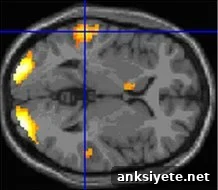
New brain imaging technology is helping researchers bridge the gap between art and science by mapping how the brain responds differently to poetry and prose.
Researchers at the University of Exeter used advanced functional magnetic resonance imaging (fMRI) to visualise which areas of the brain become active when people read different kinds of written material. This approach allowed the team to compare neural responses to literal prose, evocative prose, and poetry, and to explore how emotional content and personal connection shape brain activity.
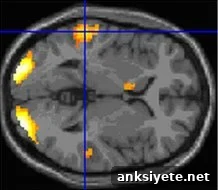
Previous research has identified a collection of brain regions commonly engaged during reading tasks, often referred to as a “reading network.” In this study, that network was active for all types of written material. Crucially, the Exeter team also observed that emotionally charged writing—particularly poetry—recruited additional areas of the brain associated with musical emotion. Several of these regions, predominantly in the right hemisphere, have been implicated in the physiological “shivers” or chills people sometimes report in response to moving music.
When participants read passages of poetry that they identified as favourites, the scans showed stronger stimulation of memory-related regions than of the typical reading areas. This suggests that reading a favourite poem can resemble an act of recollection or personal remembrance, engaging systems involved in autobiographical memory and the retrieval of emotionally significant experiences.
The study further found that poetry, when compared specifically to prose, tended to activate brain areas linked to introspection and self-reflection. Notable among these were the posterior cingulate cortex and the medial temporal lobes—regions that play roles in autobiographical memory, episodic recall, and inward-focused thought. These neural signatures align with subjective reports from readers who describe poetry as prompting reflection, perspective shifts, and heightened personal insight.
Professor Adam Zeman, a cognitive neurologist at the University of Exeter Medical School, led the interdisciplinary project with colleagues from psychology and English. The experimental group included 13 volunteers: faculty members and senior graduate students in English. During fMRI scanning sessions, their brain activity was recorded while they read a range of texts, including a straightforward extract from a heating installation manual, evocative novel passages, sonnets of varying difficulty, and each subject’s personally selected favourite poem.
Professor Zeman commented that advances in brain imaging are making it possible to gather empirical evidence about how aesthetic experiences affect the mind. He described the study as preliminary but important for building a framework that links psychological, biological, and anatomical perspectives on art. The work represents an early step in a larger effort to understand how different art forms engage the brain’s cognitive and emotional systems.
Although the sample size was modest and the participants were a specialist group with advanced literary training, the findings point to meaningful distinctions in how the brain processes different kinds of language. The observed overlap between areas responsive to music and those activated by emotionally potent poetry suggests shared neural mechanisms for processing rhythm, prosody, and affective resonance across art forms.
These results have several implications. For neuroscience, they highlight the value of studying complex, culturally significant stimuli—like poetry—rather than limiting experiments to simplified or decontextualised texts. For the humanities, the findings provide a biological perspective that complements interpretive readings, offering insight into why certain forms of writing feel internally resonant or musically moving. For education and therapy, understanding how favourite passages of poetry evoke memory and emotion could inform practices that use literature to support wellbeing, memory retrieval, and emotional expression.
Future research will need larger and more diverse participant samples, a wider variety of texts, and careful control of variables such as prior familiarity and individual differences in literary training. Longitudinal and cross-cultural studies could further explore how exposure, language background, and personal history influence the neural impact of poetry and prose.
Notes about this neuroimaging and psychology research
Contact: Louise Vennells – University of Exeter
Source: University of Exeter press release
Image Source: The image is credited to University of Exeter and is adapted from the press release.
Original Research: The study is published in the Journal of Consciousness Studies; full details are available from the journal and the authors.