
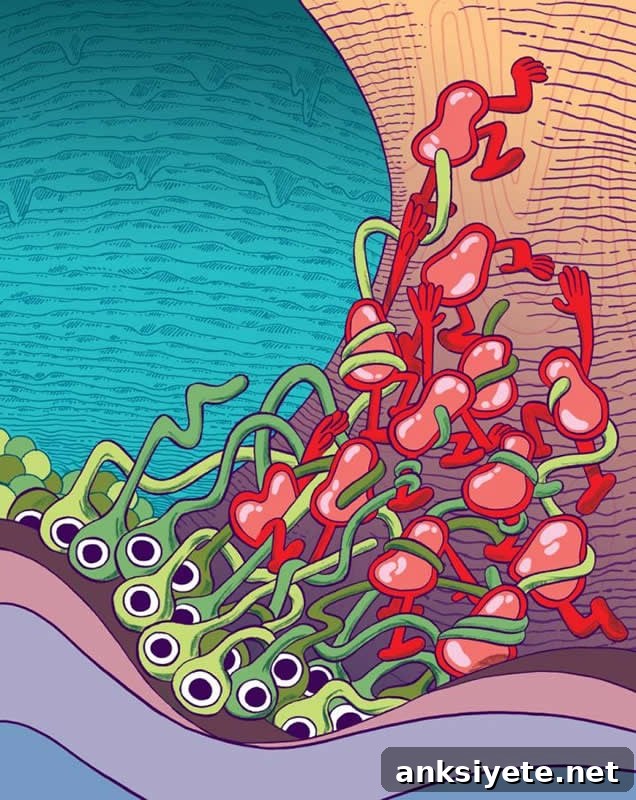
Summary: Pnoc-expressing neurons in the paranigral ventral tegmental area (pnVTA) become active when mice stop pursuing rewards. Activating these neurons reduces reward-seeking and promotes avoidance. The study shows that nociceptin receptor expression on VTA dopamine neurons is required to restrain reward-seeking behavior.
Source: UW Medicine
What happens when we give up?
A specific group of neurons that produce nociceptin — a neuropeptide that suppresses dopamine signaling — becomes highly active just before mice reach the point of giving up on a reward. This activity coincides with a sharp decline in pursuit of the reward, suggesting these neurons play a role in terminating motivated behavior.
Published July 25 in Cell, the study sheds new light on the complex mechanisms that control motivation and reward processing in the brain.
The nociceptin-producing neurons are concentrated in a subregion of the ventral tegmental area (VTA), a brain structure well known for its dopamine neurons that signal reward and reinforce motivated actions. While prior research has focused heavily on fast-acting neurotransmitters that influence VTA dopamine neurons, this work highlights the strong behavioral effects of a slower, peptide-based modulatory system.
“We are taking an entirely new angle on an area of the brain known as the VTA,” said co-lead author Christian Pedersen, a bioengineering Ph.D. student at the University of Washington School of Medicine and the UW College of Engineering.
Researchers from the University of Washington School of Medicine, Washington University School of Medicine, and other institutions spent four years dissecting how the nociceptin system influences motivation and reward-seeking.
“The major finding is that larger, complex neurotransmitters — neuropeptides — exert a powerful influence on animal behavior by acting on the VTA,” Pedersen said.
The authors suggest these discoveries may inform new approaches to treat conditions where motivation is disrupted: for example, increasing motivation in depression or reducing pathological motivation for drugs in addiction.
To observe this circuit in action, the team trained mice to work for sucrose. The task required the animals to poke a snout into a port; the number of pokes needed increased progressively (one, then two, then five, and so on) until each mouse stopped responding. Neural recordings showed that pnVTA Pnoc neurons ramped up activity as mice approached their breaking point and became most active when the animals ceased pressing for sucrose.
From an evolutionary perspective, the brain balances reward pursuit with homeostatic needs and safety. Persisting in the face of scarce resources or uncertain reward can be costly — it may expend precious energy or expose an animal to predators. The nociceptin circuit appears to be one mechanism that constrains persistence when continued pursuit is no longer adaptive.
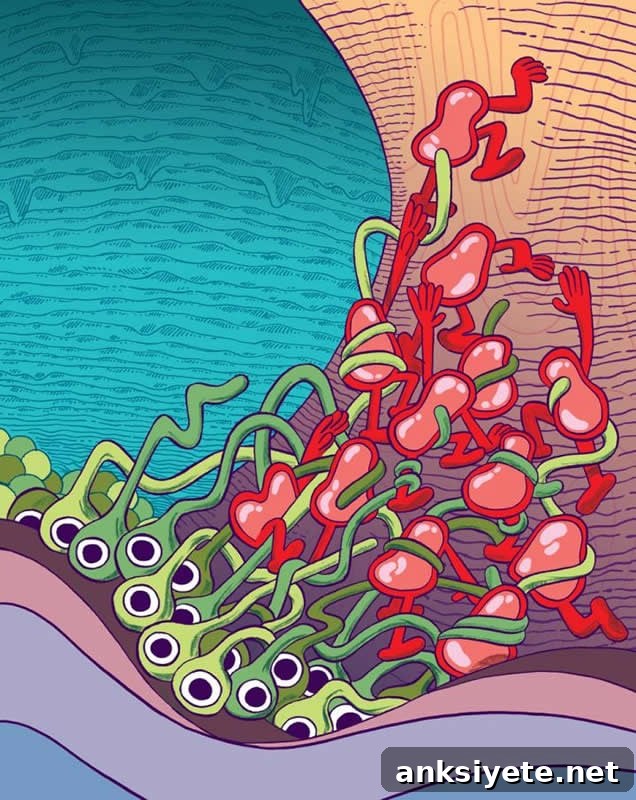
Disruption of these regulatory processes in humans can underlie psychiatric and behavioral conditions such as depression, addiction, and certain eating disorders, where motivation is either abnormally low or pathologically high.
Senior author Michael Bruchas, professor of anesthesiology and pain medicine and of pharmacology at the University of Washington School of Medicine and a leader in UW’s Center for Neurobiology of Addiction, Pain, and Emotion, emphasized the translational potential: “If these cells and their receptors can be targeted, we might boost motivation for people with depression or, conversely, reduce excessive motivation for drugs in addiction.”
Future research could explore whether selectively modulating this pnVTA nociceptin circuit helps people struggling with addiction or other disorders of motivation.
Source:
UW Medicine
Media Contacts:
Bobbi Nodell – UW Medicine
Image Source:
Image credited to Max Huffman.
Original Research:
“A Paranigral VTA Nociceptin Circuit that Constrains Motivation for Reward.” Christian Pedersen et al., Cell. DOI: 10.1016/j.cell.2019.06.034. (Closed access)
Abstract
A Paranigral VTA Nociceptin Circuit that Constrains Motivation for Reward
Highlights
• pnVTA Pnoc neurons project locally onto VTA dopamine neurons.
• pnVTA Pnoc neurons become active when animals are demotivated to seek rewards.
• Stimulation of pnVTA Pnoc neurons reduces breakpoint and promotes avoidance behavior.
• Nociceptin receptor (NOPR) expression on VTA dopamine neurons is necessary to limit reward-seeking behavior.
Summary
Nociceptin and its receptor are broadly expressed in brain regions tied to reward, but the timing and function of this signaling were unclear. Using a prepronociceptin (Pnoc)-Cre mouse line, the authors identified a distinct subpopulation of paranigral VTA neurons enriched for prepronociceptin. Fiber photometry during progressive-ratio operant tasks showed pnVTA Pnoc neurons are most active when mice stop pursuing natural rewards. Selective ablation or inhibition of pnVTA Pnoc neurons, and conditional deletion of the VTA nociceptin receptor, increased operant responding, indicating that the pnVTA Pnoc nucleus and VTA NOPR signaling are required to regulate reward motivation. Conversely, optogenetic and chemogenetic activation of pnVTA Pnoc neurons produced avoidance and reduced motivation. These results reveal a previously unrecognized neuropeptide-containing nucleus in the pnVTA that limits motivation for rewards and highlight a neuromodulatory circuit that controls motivated behavior.