
Researchers at the CIUSSS de l’Est-de-l’Île-de-Montréal (Institut universitaire en santé mentale de Montréal) and the University of Montreal report that women and men respond differently to negative images, a difference that appears linked to subtle variations in brain connectivity and hormonal and psychosocial factors. Their results were published in the journal Psychoneuroendocrinology.
“People are not equally vulnerable to mental illness,” said Adrianna Mendrek, lead author and researcher at the Institut universitaire en santé mentale de Montréal, and associate professor in the Department of Psychiatry at the University of Montreal. “Greater emotional reactivity in women may help explain why they are roughly twice as likely as men to experience depression and anxiety disorders.”
Using functional MRI, the team measured brain responses while healthy adults viewed images that evoked positive, neutral, or negative emotions. The study included 46 participants—25 women and 21 men—who rated each image as positive, negative, or neutral. Blood samples collected before scanning measured circulating sex hormones such as testosterone and estrogen, and participants completed questionnaires assessing feminine and masculine traits.
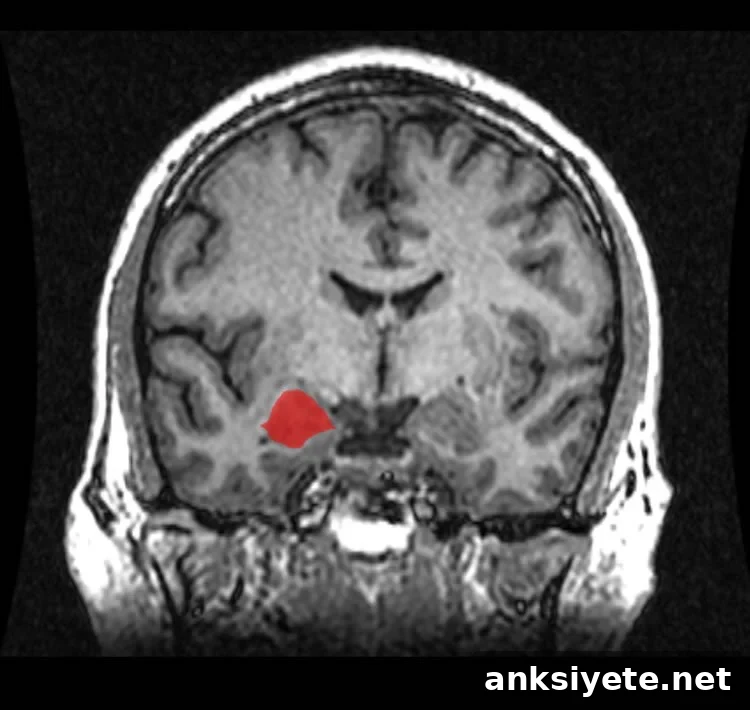
Behaviorally, women rated negative images as more emotionally intense than men did. At the neural level, both sexes showed activation in the right amygdala and the dorsomedial prefrontal cortex (dmPFC) when viewing negative images. However, effective connectivity between these regions differed by sex: men exhibited stronger coupling between the right amygdala and the dmPFC than women. Importantly, stronger amygdala–dmPFC interaction correlated with lower subjective sensitivity to negative images.
Stéphane Potvin, co-author and researcher at the Institut universitaire en santé mentale de Montréal and associate professor at the University of Montreal, highlighted this connectivity finding as the study’s most original contribution. “A stronger functional link between the amygdala and the dmPFC in men suggests a more analytical, regulatory approach to negative emotion,” he said. “Women may focus more on the felt experience itself, whereas men may engage more evaluative or cognitive processes when confronted with negative stimuli.”
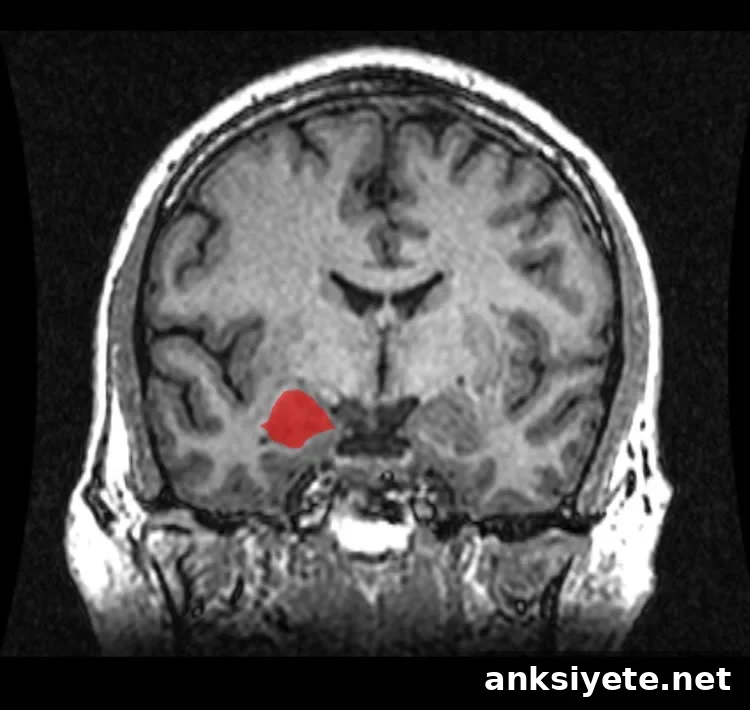
Neuroscientifically, the amygdala detects threats and signals emotional salience, while the dmPFC contributes to social cognition, appraisal, and higher-order regulation of emotion. The observed sex difference in connectivity suggests that, during negative emotion processing, men may recruit more top-down evaluative processes that dampen emotional reactivity, whereas women may experience more pronounced affective responses.
Hormones and gender-role traits helped explain these differences. Across participants, higher testosterone levels were linked to reduced sensitivity to negative images and appeared to strengthen amygdala–dmPFC connectivity. Conversely, higher scores on feminine traits—regardless of biological sex—were associated with greater emotional sensitivity. These results indicate that both biological (sex steroid hormones) and psychosocial (gender identity, feminine/masculine traits) factors shape how the brain responds to negative emotional stimuli.
The authors note that these findings may help clarify why depression and anxiety are more common in women. They also emphasize that sex differences in brain connectivity do not imply superiority or inferiority; rather, they reflect distinct neural strategies for processing negative emotions. Future research from the team will examine how different negative emotions (for example, fear, sadness, or anger) are processed across sexes and how menstrual cycle phases might influence brain responses in women.
Source: Catherine Dion, University of Montreal
Image credit: Amber Rieder, Jenna Traynor, Geoffrey B Hall (image used for illustrative purposes)
Original research: “Sex differences in effective fronto-limbic connectivity during negative emotion processing” by Ovidiu Lungu, Stéphane Potvin, Andràs Tikàsz, and Adrianna Mendrek, published in Psychoneuroendocrinology.
Abstract
Sex differences in effective fronto-limbic connectivity during negative emotion processing
Background: Given the higher prevalence of depression and anxiety in women, the study examined sex differences in brain connectivity during negative emotion processing. Prior work focused mainly on activation patterns, while connectivity between limbic structures and frontal regions received less attention.
Methods: Forty-six healthy adults (25 women, 21 men) viewed negative, positive, and neutral images during fMRI. Effective connectivity among significantly activated regions was analyzed using Granger causality and psychophysiological interaction methods. Sex steroid hormones and feminine–masculine trait measures were also collected.
Results: Women reported stronger subjective responses to negative images. Both sexes activated the right amygdala and dmPFC, but men showed greater effective connectivity originating from the right amygdala toward the dmPFC during high-negative conditions. This connectivity effect correlated negatively with ratings of negative images and feminine traits, and positively with testosterone levels.
Discussion: The findings reveal important sex differences in fronto-limbic connectivity during negative emotion processing and indicate that both hormonal biology and psychosocial gender characteristics contribute to these differences. The pattern suggests that men may engage more evaluative and regulatory neural processes, whereas women may experience relatively stronger affective responses to negative stimuli.
Study authors: Ovidiu Lungu, Stéphane Potvin, Andràs Tikàsz, and Adrianna Mendrek. Published online in Psychoneuroendocrinology.