
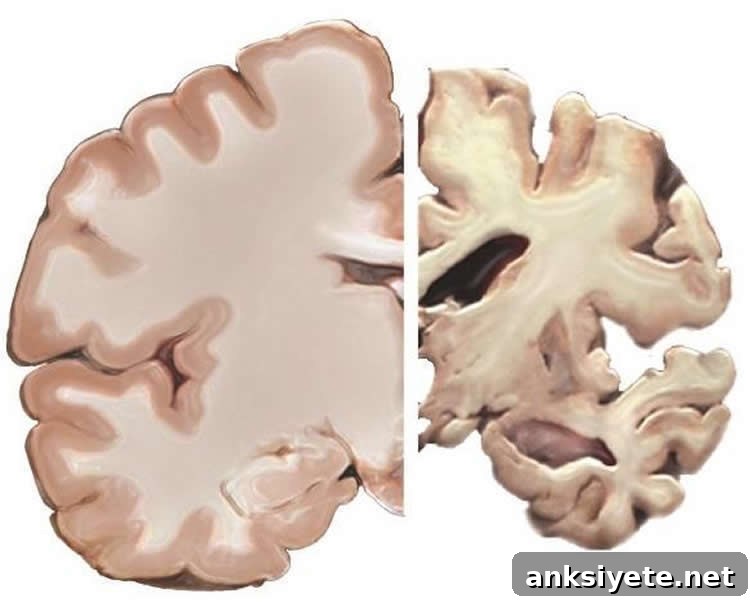
Summary: Researchers at USC applied machine learning to large medical datasets to uncover blood-based signatures linked to Alzheimer’s disease. The approach identified clusters of biological measures — including cardiovascular, immune, and metabolic indicators — that may improve early detection and noninvasive monitoring of the disease.
Source: USC
Nearly 50 million people worldwide live with Alzheimer’s disease or another form of dementia. Although age is the primary risk factor, most cases likely arise from complex interactions among genetics, lifestyle, and biological systems. Many of those interactions remain poorly understood.
In a new study, scientists with the University of Southern California used an advanced machine learning method to search for potential blood-based biomarkers that could signal early Alzheimer’s risk. The method was developed by Greg Ver Steeg, a computer science research assistant professor and senior research lead at the USC Information Sciences Institute. Machine learning, a branch of artificial intelligence, allows computers to detect patterns in data without explicit programming.
“This approach offers a fresh way to discover patterns that point to diagnostic markers,” said Paul Thompson, associate director of the USC Mark and Mary Stevens Neuroimaging and Informatics Institute and a professor at the Keck School of Medicine. “In a large repository of diverse health measures, the analysis helped expose predictive features of Alzheimer’s that were not obvious before.”
Identifying biomarkers
Most Alzheimer’s research has focused on established brain-based hypotheses such as beta-amyloid plaques and tau protein tangles. Measuring those markers reliably in blood remains challenging, so clinical diagnosis often centers on cognitive testing. By the time memory symptoms are evident, the disease process may have been active for many years. Detecting Alzheimer’s earlier—ideally before symptoms emerge—could open the door to more effective interventions through medication, lifestyle changes, and closer monitoring.
USC researchers asked whether routine blood data might conceal other meaningful signals of Alzheimer’s risk. To find those hidden signals, they collaborated with Ver Steeg, who specializes in extracting structure from very large, complex datasets.
Ver Steeg created an unsupervised machine learning algorithm called Correlation Explanation (CorEx). CorEx is designed to discover latent factors — groups of related variables — in datasets where relationships are subtle or distributed across many measures. The algorithm had already been used in other biomedical contexts and was well suited to search for multivariate signatures that single markers might miss.
“There may be no single measure that predicts cognitive decline or brain deterioration,” Ver Steeg explained. “But combinations of indicators — clusters of related measures — could provide a stronger signal. Our goal was to see whether the algorithm could reveal groups of features that predict Alzheimer’s better than any individual factor.”
Clusters of relationships
The team applied CorEx to data from 829 older adults in the Alzheimer’s Disease Neuroimaging Initiative (ADNI) database to identify predictors of cognitive decline and brain atrophy over one year. Participants represented three diagnostic categories at baseline: cognitively normal, mild cognitive impairment (MCI), and Alzheimer’s disease. The dataset included more than 400 measures drawn from brain imaging, genetics, plasma assays, cerebrospinal fluid markers, and demographic information.
When the algorithm was run on the ADNI data, distinct latent clusters emerged. Unsurprisingly, amyloid and tau-related measures were among the influential features. Crucially, however, CorEx also revealed consistent links between Alzheimer’s risk and measures of cardiovascular health, hormone levels, metabolic markers, and immune-system activity. For example, low vitamin B12 — a factor relevant to cardiovascular and neurological health — grouped with matrix metalloproteinases (enzymes associated with vascular processes) and T-cell–related proteins involved in immune response.
Some of the identified relationships had prior support in the literature, but the study emphasized that combinations of features often provided a stronger predictive signal than any single measure alone. “Perhaps treating a single abnormality won’t dramatically alter risk, but addressing a cluster of interacting factors could be more effective,” Thompson noted.
The study’s latent factors improved prediction along the cognitive trajectory from normal aging through MCI to Alzheimer’s, providing high accuracy on held-out test data. The researchers view the growing list of candidate biomarkers as a path toward earlier diagnosis, better prognosis, and more targeted blood tests to monitor disease progression. They plan to validate these findings in larger, independent cohorts and to apply the same CorEx approach to other brain disorders, including schizophrenia and depression.
Study: “Uncovering Biologically Coherent Peripheral Signatures of Health and Risk for Alzheimer’s Disease in the Aging Brain.”
Authors and institutions: Researchers from the USC Mark and Mary Stevens Neuroimaging and Informatics Institute and the USC Information Sciences Institute, including Greg Ver Steeg and Paul M. Thompson, with data from the Alzheimer’s Disease Neuroimaging Initiative (ADNI).
Published in: Frontiers in Aging Neuroscience.
Abstract
Uncovering Biologically Coherent Peripheral Signatures of Health and Risk for Alzheimer’s Disease in the Aging Brain
Brain aging involves complex, interacting biological processes. This study demonstrates the utility of an unsupervised machine learning technique, Correlation Explanation (CorEx), to discover how measures from structural brain imaging, genetics, plasma, and cerebrospinal fluid jointly inform Alzheimer’s disease risk. In 829 participants (average age 75.3 ± 6.9 years; 350 women and 479 men) from the ADNI database, data-driven latent factors combining plasma markers and brain metrics aligned with established biological pathways in Alzheimer’s. These factors improved disease prediction across the continuum from normal cognition and mild cognitive impairment to Alzheimer’s disease, achieving high accuracy on independent test data. The most predictive latent factors included variables central to cardiovascular, immune, and bioenergetic functions, illustrating the strength of unsupervised network-based measures for detecting and predicting Alzheimer’s disease.