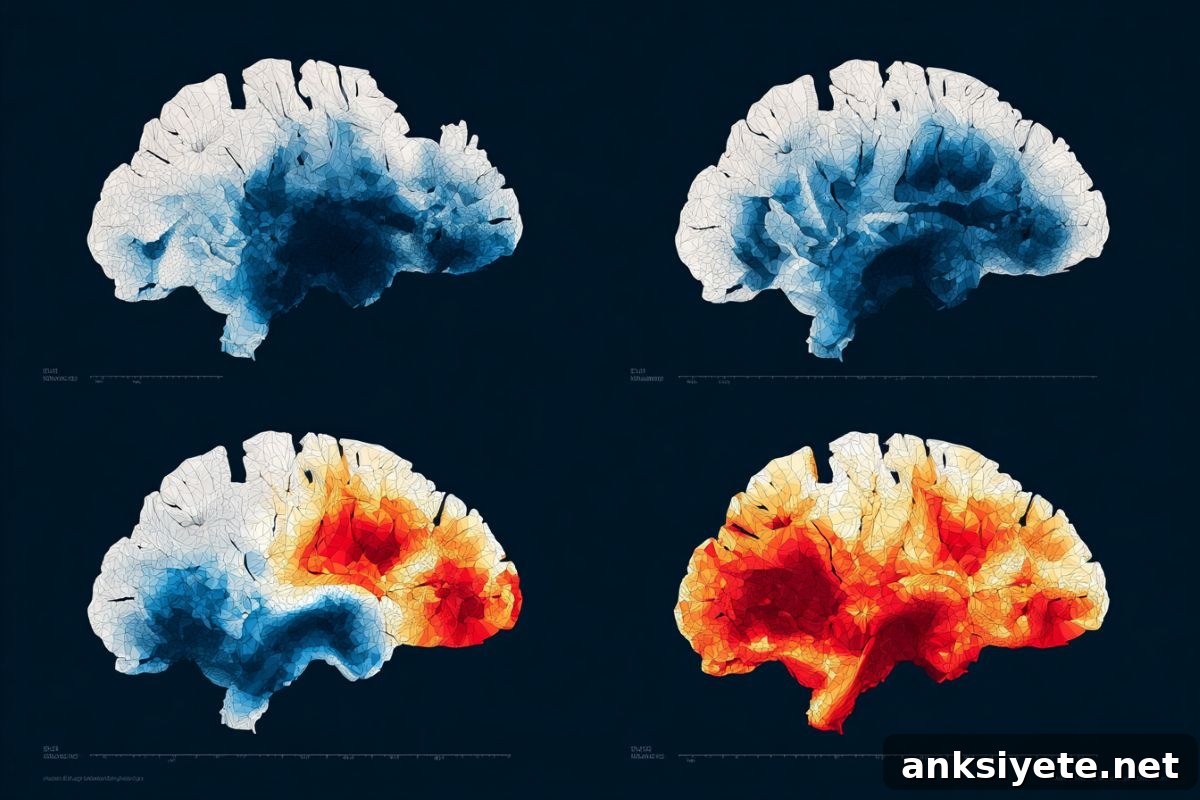
Summary: New research shows that fMRI signals do not always reflect true neural activity, overturning a key assumption used in tens of thousands of studies. In about 40% of cases, areas that showed increased fMRI signal actually had reduced neuronal activity, while decreased signals sometimes appeared where neural activity had risen.
By measuring actual oxygen consumption alongside conventional fMRI, researchers discovered that many brain regions respond to increased energy demand by extracting more oxygen from the same blood supply instead of increasing blood flow. These results call into question common interpretations of fMRI data in healthy and clinical populations and point toward a need for imaging methods that more directly measure energy use in the brain.
Key Facts:
- Mismatch Revealed: In roughly 40% of measured voxels, increases in the BOLD fMRI signal were associated with reductions in oxygen metabolism, indicating lower neural activity than the BOLD signal suggested.
- Oxygen Extraction Strategy: Many cortical areas meet additional energy demand by raising their oxygen extraction fraction rather than by boosting cerebral blood flow.
- Clinical Consequences: fMRI findings in conditions such as depression, Alzheimer’s disease, and normal aging may partly reflect vascular or hemodynamic differences rather than pure changes in neuronal activation.
Source: TUM
Researchers at the Technical University of Munich (TUM) and Friedrich-Alexander University Erlangen-Nuremberg (FAU) report that increased fMRI signals corresponded to reduced brain activity in approximately 40% of cases, while decreases in the fMRI signal sometimes coincided with heightened neural metabolic activity.
Lead author Dr. Samira Epp highlights the impact of the findings: “This contradicts the long-standing expectation that higher neuronal activity necessarily drives a matched increase in blood flow to supply more oxygen. Since tens of thousands of fMRI studies rely on that assumption, our results imply that many previously drawn conclusions may need re-evaluation.”
Task-based experiments expose deviations from the standard model
PD Dr. Valentin Riedl, now a professor at FAU, together with Dr. Epp assessed more than 40 healthy volunteers during their work at TUM. Participants completed a variety of cognitive tasks—such as mental arithmetic and autobiographical memory recall—that typically produce known patterns of BOLD signal change across distributed brain networks. While participants performed these tasks, the team recorded conventional fMRI signals and simultaneously measured actual oxygen consumption using an advanced quantitative MRI technique.
The physiological responses varied by task and brain region. For example, areas engaged in calculation showed increased oxygen consumption without the expected parallel rise in blood flow. Quantitative analyses revealed that these regions increased their oxygen extraction fraction, allowing them to draw more oxygen from an unchanged blood supply and thereby fulfill metabolic needs without greater perfusion.
Implications for interpreting brain disorders and aging
Riedl explains the broader relevance: “Many neuroimaging studies interpret changes in blood flow as direct markers of neural under- or over-activation. Our findings show that blood-flow-based BOLD signals can be misleading, especially in populations with vascular alterations—such as older adults or patients with vascular disease—where measured changes may primarily reflect vascular properties rather than neuronal function.” Animal research has previously suggested similar dissociations.
To improve accuracy, the authors recommend supplementing standard BOLD fMRI with quantitative MRI measures of oxygen metabolism. Over time, combining these approaches could shift neuroimaging from activation maps that depend on hemodynamic assumptions toward energy-based maps that show how much oxygen (and therefore energy) is actually consumed during information processing.
This energy-focused perspective could lead to clearer insights into aging, psychiatric conditions, and neurodegenerative diseases by highlighting absolute and relative changes in cerebral energy metabolism rather than relying solely on blood-flow proxies.
Funding: The study was performed at the Neuro-Head Center of the Institute of Neuroradiology at the TUM University Hospital and was supported by an ERC Starting Grant from the European Research Council.
Key Questions Answered:
A: BOLD fMRI reflects blood oxygenation changes rather than direct measures of neuronal energy use. When a region increases oxygen extraction from the same blood volume instead of increasing perfusion, the resulting BOLD signal can misalign with the true metabolic change.
A: They paired conventional BOLD fMRI with a quantitative MRI technique that directly tracks oxygen consumption and oxygen extraction fraction, revealing cases where metabolic changes and BOLD responses diverged.
A: The results suggest many prior interpretations of altered BOLD signals in psychiatric and neurological disorders should be revisited, particularly when vascular changes could influence blood flow independently of neuronal activity.
Editorial Notes:
- This article was edited by a Neuroscience News editor.
- The journal paper was reviewed in full.
- Additional explanatory context was added by staff to clarify implications for neuroimaging and clinical research.
About this neuroimaging and neurotech research news
Author:Ulrich Meyer
Source: TUM
Contact: Ulrich Meyer – TUM
Image: The image is credited to Neuroscience News
Original Research: Open access.
“BOLD signal changes can oppose oxygen metabolism across the human cortex” by Valentin Riedl et al. Nature Neuroscience
Abstract
BOLD signal changes can oppose oxygen metabolism across the human cortex
Functional magnetic resonance imaging (fMRI) infers brain activity indirectly by detecting blood oxygenation level–dependent (BOLD) signals, rather than directly measuring neuronal firing. This method depends on neurovascular coupling—the link between neuronal activity and blood flow—but it has been unclear whether this coupling behaves the same for positive and negative BOLD responses across the cortex.
The study found that approximately 40% of voxels showing significant BOLD changes during various tasks exhibited a reversal in oxygen metabolism, a phenomenon especially pronounced in the default mode network. These discordant voxels differed from concordant voxels in their baseline oxygen extraction fraction and in how they regulated oxygen demand—discordant regions adjusted oxygen extraction, while concordant regions relied on changes in blood flow.
These findings challenge the canonical interpretation of the BOLD signal and indicate that quantitative functional MRI, which directly assesses oxygen metabolism, offers a more reliable measure of absolute and relative changes in neuronal activity.