
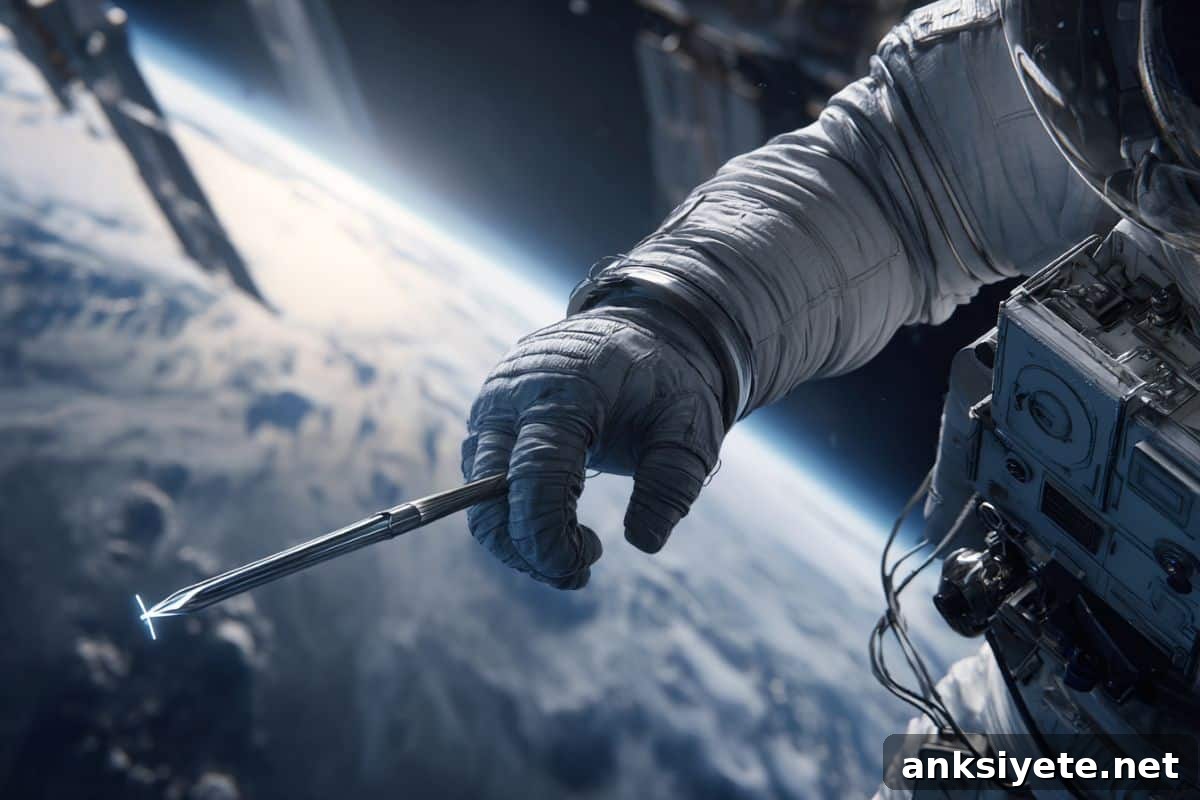
Summary: Even after spending months in microgravity, the human brain remains influenced by Earth’s pull. A new study shows astronauts consistently over-grip objects in space because their brains continue to anticipate gravity.
This research, the result of nearly two decades of coordination and analysis, demonstrates that our internal model of gravity is deeply ingrained: it fades only slowly in microgravity and then takes weeks to recalibrate when astronauts return to Earth.
Key Findings
- Gradual Adaptation: The brain does not switch instantly when entering weightlessness. Instead, it adjusts motor control and grip strategies gradually over months.
- Return to Earth: After returning to a 1g environment, astronauts initially misjudge object weight and handling, leading to incorrect grip force until their sensorimotor systems re-learn Earth’s gravity.
- Predictive, Risk-Based Control: Grip force reflects a predictive strategy: the brain estimates the risk of dropping or losing an object and sets force accordingly, rather than responding purely mechanically.
- Long-Term Effort: Philippe Lefèvre and collaborators highlight the complexity of conducting this work, which required nearly 20 years of planning with space agencies to ensure sensors and data collection survived the flight and provided usable measurements.
Source: SfN
On Earth, people apply grip force primarily to prevent objects from falling under gravity. In microgravity, objects do not fall, but inertia still governs motion: if an astronaut moves an object and the hand stops or slips, the object continues its straight-line motion and can drift, collide, or be lost.
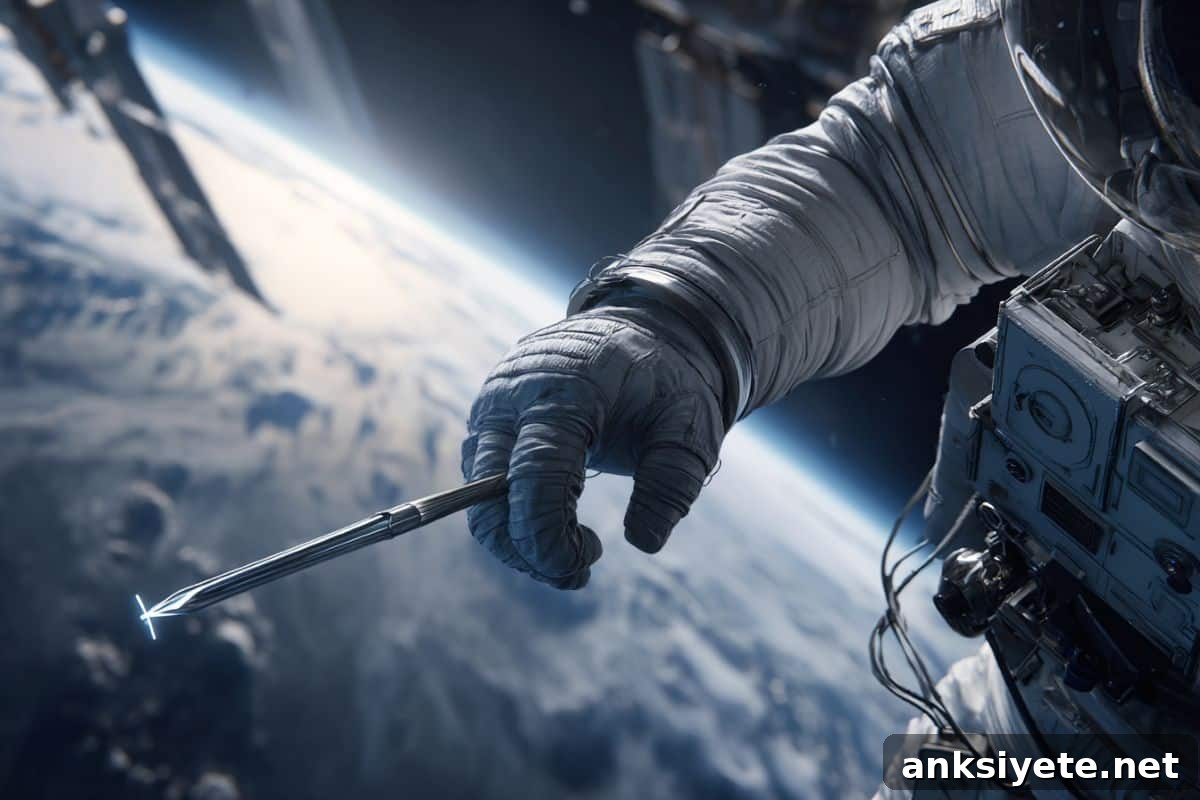
In a new Journal of Neuroscience paper, Philippe Lefèvre and colleagues at Université catholique de Louvain and Ikerbasque examined how astronauts adapt their hand grip when moving between gravity and weightlessness. Their experiments and data analyses reveal that the influence of Earth’s gravity persists far longer than might be expected when people enter space.
Astronauts in orbit tended to overcompensate with their grip because their brains continued to predict a downward pull. This tendency to apply more force than strictly necessary was particularly apparent during object manipulation and when moving items from one place to another.
When astronauts returned to Earth, they initially made incorrect predictions about object weight and handling. Over subsequent days and weeks, however, their grip forces gradually adjusted as sensory feedback and motor learning recalibrated the internal gravity model.
The authors interpret these results as evidence that sensorimotor control depends heavily on long-term internal models. Grip strength strategies balance the predicted costs and risks—such as the chance of dropping an item—against the metabolic cost of exerting force. In microgravity, the brain’s lingering expectation of gravity leads to conservative, higher-than-needed grips.
Lefèvre emphasized the practical and logistical challenges of this research. Coordinating hardware, sensors, and experimental protocols with space agencies and waiting for flight opportunities extended the project to nearly twenty years when combined with data compilation and analysis. The team is eager to publish additional findings from the same missions, including data on point-to-point movement accuracy, responses after object collisions, and adjustments related to skin friction and glove interfaces.
Key Questions Answered:
A: It will not fall downward, but it can drift or “fly” away due to inertia. An object in motion tends to stay in motion; if the hand stops or slips without a firm grip, the object continues along its path and can be lost or collide with something.
A: Likely yes. Sustained overcompensation increases muscle effort and could lead to fatigue. Understanding this effect can inform the design of tools, work procedures, and glove systems to reduce unnecessary strain caused by an Earth-centered motor strategy.
A: The study indicates that the imprint of Earth’s gravity is persistent. Even after several months in microgravity, astronauts’ predictions remain influenced by a 1g model. Adaptation is gradual rather than an immediate switch to a new internal model.
Editorial Notes:
- This article was edited by a Neuroscience News editor.
- The journal paper was reviewed in full.
- Additional context was added by the staff.
About this neuroscience research news
Author: SfN Media
Source: SfN
Contact: SfN Media – SfN
Image: The image is credited to Neuroscience News
Original Research: The findings will appear in Journal of Neuroscience