
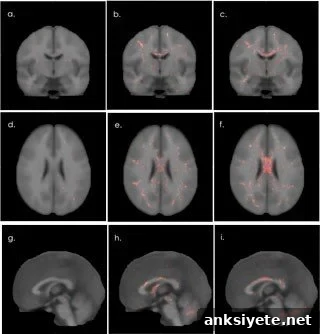
White matter ‘potholes’ are associated with severity of head injury and cognitive impairment.
Mild traumatic brain injury (TBI), commonly called concussion, is one of the most frequent neurological conditions, affecting an estimated 1.3 million Americans each year. Interest in mild TBI has grown because of its high incidence and lasting impact among two high-risk groups: professional athletes—particularly football players—and military personnel exposed to blast or blunt head trauma during deployments. Studies estimate that between 10 and 20 percent of U.S. service members deployed to Iraq or Afghanistan have experienced some form of TBI.
A research team from the Iowa City VA Medical Center and the University of Iowa Health Care recently reported measurable white matter abnormalities in veterans who returned from Iraq and Afghanistan with mild TBI. Comparing these veterans to returning service members without TBI, the investigators found that the number and distribution of so-called “potholes” in the brain’s white matter were greater in those with a history of mild TBI. The findings, which explore the potential of diffusion tensor imaging (DTI) to detect microstructural brain injury, were published in the American Journal of Psychiatry.
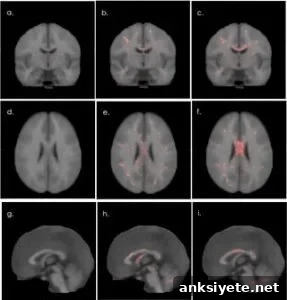
“In the military population we studied, patients with TBI have more alterations, sometimes called ‘potholes,’ in the white matter of their brains than patients without a history of TBI,” says senior study author Ricardo Jorge, M.D., professor of psychiatry at the University of Iowa. “The more severe the injury, the more white matter abnormalities occur. There is also a correlation between increased numbers of potholes and greater difficulty on cognitive tasks that require executive functions—skills such as planning, decision-making and organizing behavior.”
Diagnosing mild TBI remains a clinical challenge. Many cases depend on patient recall of an earlier head injury, and symptoms are often varied and nonspecific—ranging from headaches, vision or hearing problems, and balance difficulties to mood changes and cognitive complaints. Reliable tools to detect subtle brain damage, to monitor recovery, or to predict long-term outcomes are limited.
To examine brain microstructure after mild TBI, Jorge and colleagues used diffusion tensor imaging (DTI), an MRI-based technique that maps the diffusion of water along axonal fibers in white matter. Intact axons guide water diffusion in a preferred direction, producing high fractional anisotropy. When axons are disrupted, water diffuses more freely in multiple directions, lowering fractional anisotropy and indicating reduced white matter integrity.
Using DTI, the investigators studied 72 veterans with mild TBI and 21 veterans without mild TBI. Rather than relying solely on group-averaged maps, their analysis identified focal regions of reduced white matter integrity—described as “potholes”—that appear in different locations across individuals. This subject-specific approach revealed that veterans with mild TBI had a significantly higher number of these potholes compared with veterans who had not experienced TBI.
The increased number of white matter potholes was not explained by patients’ age, time since the trauma, prior non-deployment-related mild TBIs, or coexisting psychiatric conditions such as depression, anxiety, or post-traumatic stress disorder. Importantly, the researchers found a relationship between the number of potholes and worse performance on cognitive tests that measure planning and decision-making abilities, linking DTI-detected abnormalities to functional impairments.
In addition to the military cohort, the team evaluated a group of civilians who sustained noncombat-related mild TBI and were scanned soon after injury; this civilian group showed even greater numbers of white matter potholes, suggesting that timing after injury and injury context may influence DTI findings.
Although these results support the promise of DTI as a sensitive method to detect subtle white matter damage after mild TBI, Dr. Jorge emphasizes caution. The current study is not large enough to establish DTI-detected potholes as a definitive biomarker for TBI. Larger, multicenter studies and replication in patients with diverse causes of mild TBI will be necessary to determine whether this imaging approach can reliably diagnose injury, track recovery, or guide treatment.
Notes about this traumatic brain injury research
The study was conducted at the Iowa City VA Medical Center and received funding from the Veterans Administration and a grant from the National Institute of Neurological Disorders and Stroke (grant number 5R01NS55827). The research team included investigators from the University of Iowa Departments of Psychiatry and Radiology, the Iowa Consortium for Substance Abuse Research and Evaluation, the Iowa City Veterans Affairs Medical Center, Erasmus University Medical Centre (Rotterdam, the Netherlands), and the University of Cantabria (Santander, Spain).
Written by Jennifer Brown
Contact: Jennifer Brown – University of Iowa
Source: University of Iowa press release
Image source: Image adapted from University of Iowa press release
Original research: Abstract for “White Matter Abnormalities in Veterans With Mild Traumatic Brain Injury” by Ricardo E. Jorge, M.D.; Laura Acion, Ph.D., M.P.H.; Tonya White, M.D., Ph.D.; Diana Tordesillas-Gutierrez, Ph.D.; Ronald Pierson, M.S.; Benedicto Crespo-Facorro, M.D.; and Vincent A. Magnotta, Ph.D., American Journal of Psychiatry. Published online December 1, 2012. DOI: 10.1176/appi.ajp.2012.12050600