
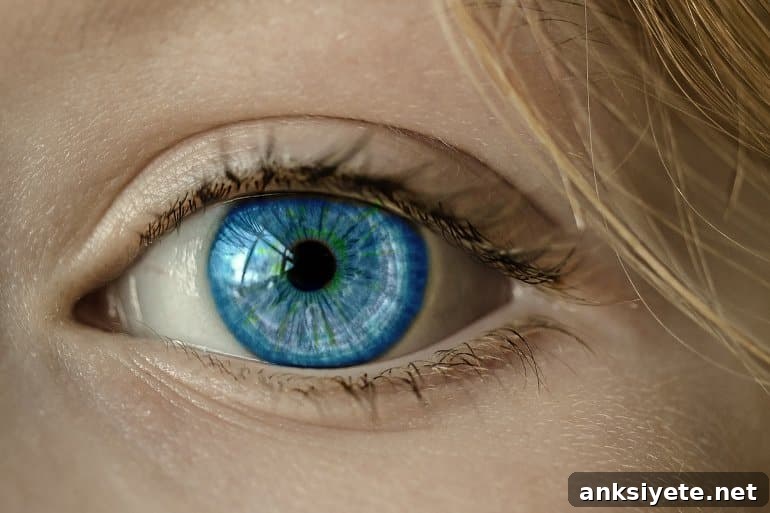
Summary: New research explains how rapid, state-dependent changes in pupil size alter visual sensitivity and influence how animals perceive their environment.
Source: Baylor College of Medicine
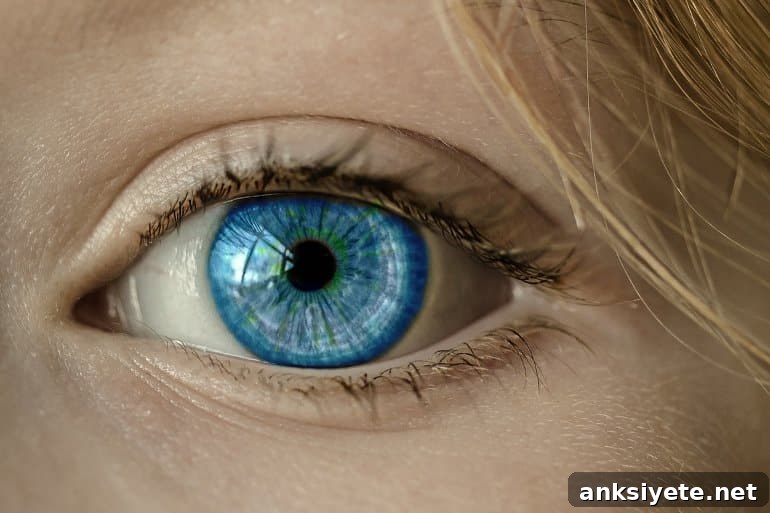
The eyes are often called the “windows to the soul,” and recent research provides neurobiological reasons for why pupil size reflects not only lighting conditions but also internal states like alertness, fear and attention. An international team from the Universities of Göttingen and Tübingen in Germany and Baylor College of Medicine in Houston has mapped how these rapid pupil adjustments change visual processing in the brain.
Published in Nature, the study explores whether the quick, state-linked changes in pupil diameter observed across vertebrates actually modify how visual information is represented and perceived.
Combining large-scale recordings with artificial intelligence
The researchers examined how state-dependent changes in pupil size influence vision by studying mice. They presented colored natural images while recording activity from thousands of neurons in the visual cortex, the brain region central to interpreting visual scenes.
Using these neuronal recordings, the team trained deep neural networks to build a computational “digital twin” of the mouse visual cortex. This model simulated how large populations of cortical neurons responded to visual input and allowed the researchers to compute each neuron’s preferred stimulus—the visual pattern or color each neuron responded to most strongly.
State-dependent shifts in color sensitivity
The model revealed a striking effect: when mice entered an alert state and their pupils dilated, many neurons quickly shifted their color preference from green toward shorter wavelengths, becoming more sensitive to blue and ultraviolet light. In a calmer state, those same neurons preferred greener stimuli. This shift occurred within seconds.
The change was most pronounced for neurons that sample the upper visual field—information from the sky—suggesting a functional adaptation linked to environmental demands. Follow-up experiments confirmed that the tuning shifts predicted by the model also occur in the biological neurons themselves.
To test causality, researchers used dilating eye drops to enlarge the pupil while the brain remained in a quiet state. The pharmacological pupil dilation reproduced the enhanced sensitivity to shorter wavelengths, supporting the idea that pupil size alone can alter which photoreceptors dominate retinal input.
“A larger pupil admits more light and thus changes how rods and cones in the retina contribute to vision,” said Dr. Katrin Franke, first author and research group leader at the Institute for Ophthalmology Research at the University of Tübingen. “This change in retinal input then shifts color sensitivity in the visual cortex and likely alters perception.”
The behavioral consequence of this rapid sensitivity shift appears adaptive. Co-first author Konstantin Willeke, a member of the group led by adjunct professor Fabian Sinz, noted that increased sensitivity to blue and ultraviolet likely helps mice detect aerial predators against the sky, improving survival when animals are alert.
Beyond this ecological advantage, the computational model itself has broad utility. By combining high-throughput experimental data with AI-driven modeling, the team produced a flexible digital twin that can be probed with many virtual experiments to generate targeted biological hypotheses.
“These digital twins let us run essentially unlimited experiments in silico to generate precise predictions that can then be tested physiologically,” said Fabian Sinz, a principal investigator who is now at Göttingen University.
Dr. Andreas Tolias, co-principal investigator and director of the Center for Neuroscience and Artificial Intelligence at Baylor, emphasized the broader implications: “The discovery that brain-state-related pupil changes modulate visual sensitivity has consequences far beyond predator detection in mice. It raises new questions about how moment-to-moment shifts in internal state influence perception in many species, including humans. Pupil dynamics may therefore both reflect and actively shape how we see the world.”
About this visual neuroscience research news
Author: Graciela Gutierrez
Source: Baylor College of Medicine
Contact: Graciela Gutierrez – Baylor College of Medicine
Image: The image is in the public domain
Original Research: Closed access. “State-dependent pupil dilation rapidly shifts visual feature selectivity” by Katrin Franke et al., Nature.
Abstract (rephrased)
State-dependent pupil dilation rapidly shifts visual feature selectivity
Sensory processing adapts to behavioral context to increase computational flexibility. In vision, active behavioral states associated with movement and pupil dilation typically amplify sensory responses but were thought not to change neurons’ preferred stimuli. Here, using population imaging in behaving mice, pharmacology and deep neural network modeling, the authors identify a rapid shift in color tuning toward ultraviolet wavelengths during active states.
This shift is driven specifically by pupil dilation, which alters the balance between rods and cones contributing to retinal input and thereby changes cortical tuning on fast timescales. The tuning change improves decoding of ethologically relevant stimuli—such as predators viewed against twilight sky—illustrating how pupil dynamics can tune visual representations to behavioral demands. These results suggest that pupil dilation is not only an indicator of brain state but also a mechanism that rapidly retunes visual processing by recruiting different photoreceptor populations.