
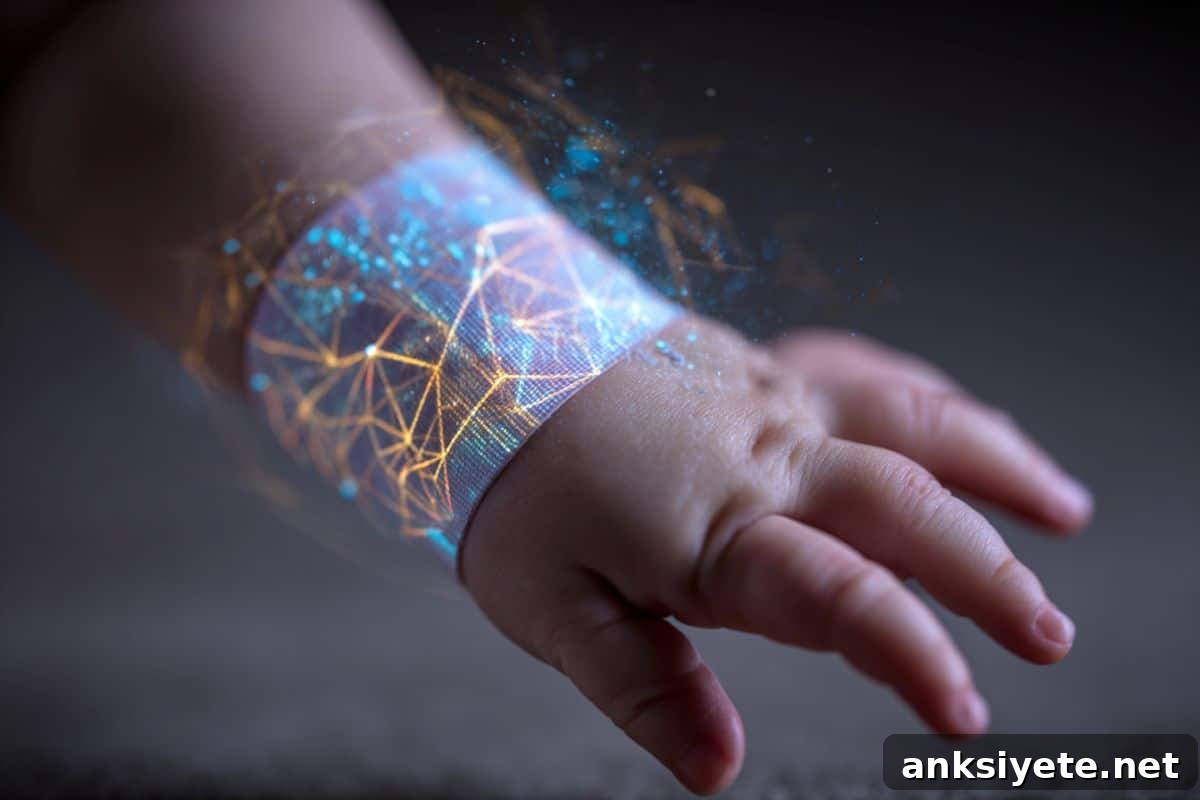
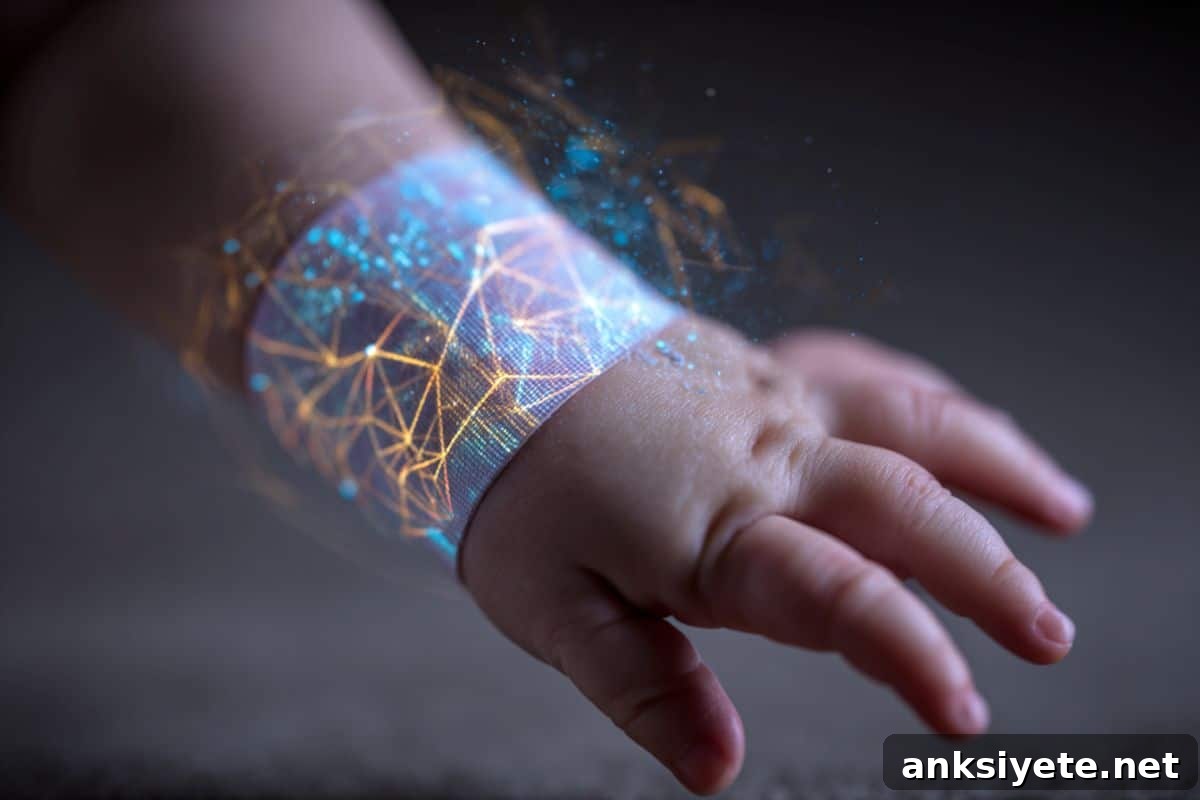
Summary: Researchers are developing a wearable system designed to detect subtle motor delays—one of the earliest and most frequently missed signs of autism spectrum disorder (ASD). Over five years, the project will test miniature sensors, similar to fitness trackers, that record infants’ natural movements at home to enable earlier identification and referral to intervention.
By tracking coordination, grasping, and movement variability as early as three months, the research team hopes to overcome limitations of standard pediatric exams and accelerate access to evidence-based early supports that can improve long-term outcomes.
Key Facts
- The “cascading” effect: Early motor difficulties can limit a child’s ability to explore, play, and interact, which in turn can lead to downstream delays in language and social development if not addressed.
- Underrecognized signs: Motor challenges are as common as language issues in ASD but are often missed in routine well-child checks that focus on gross milestones like sitting and crawling.
- Home-based data collection: The study will follow 120 infants at elevated likelihood for ASD (younger siblings of children with autism) from 3 to 12 months using small sensors on wrists and ankles, capturing real-world movement patterns.
- Predictive analytics: Researchers at UCLA will apply machine learning to fine-grained “movement variability” metrics that have already shown strong potential for predicting later autism diagnoses.
Source: UCLA
UCLA Health researchers aim to validate a practical wearable approach for catching very early motor signs of autism and other developmental conditions in infants.
Funded by a $3.1 million grant from the National Institute of Neurologic Disorders and Stroke, this five-year study will evaluate compact sensor devices—worn comfortably on the wrists and ankles—to continuously measure infants’ spontaneous movements during their first year of life.
“Early detection and timely intervention are the most important factors for improving developmental trajectories in autistic children, yet identifying those who need support remains difficult,” said Dr. Rujuta Wilson, lead investigator and pediatric neurologist at UCLA Health. “We know brain differences can begin prenatally in children who later receive an autism diagnosis, so our goal is to develop scalable clinical predictors that work in both home and clinic settings.”
Motor concerns—such as reduced coordination, asymmetrical reach, or challenges with grasping—often emerge before social or language symptoms. Despite their prevalence, these motor signs are frequently underrecognized and undertreated. Standard pediatric screening commonly focuses on broad milestones, which can miss subtler movement patterns that signal developmental risk.
Wilson and colleagues emphasize that untreated motor difficulties can persist and contribute to a “cascade” of additional delays by restricting opportunities for exploration, play, and social interaction—experiences that are critical for learning communication and other skills.
The study will enroll approximately 120 infants who have an older sibling with ASD, increasing the probability of observing early markers. Wearable sensors will be secured in soft arm and leg warmers and worn at home from ages 3 to 12 months, with assessments every three months. At each time point, researchers will collect continuous movement data and perform behavioral assessments. Formal evaluations for ASD and other developmental conditions will occur at 12 and 24 months.
To enhance accessibility, most data collection sessions can be conducted in participants’ homes. Families will receive both verbal and written feedback on developmental findings and can consult with Dr. Wilson and the study team about any concerns.
This project builds on prior work from Wilson’s laboratory that identified movement variability metrics with strong predictive value for later autism diagnoses. The current study aims to validate those findings, expand the set of movement markers using machine learning, and determine how such measures could be incorporated into routine pediatric care.
“With support from the National Institute of Neurologic Disorders and Stroke, we will refine a practical battery of movement-based indicators that could be deployed in well-child visits,” Wilson said. “Our objective is to strengthen early surveillance so families can access appropriate interventions sooner.”
The study began in January and is scheduled to conclude in December 2030.
Funding: National Institute of Neurologic Disorders and Stroke (grant 1R01NS142720-01A1).
Key Questions Answered:
A: Motor signs often appear earlier than social or language differences, sometimes months in advance. Detecting them during infancy—when the brain is highly plastic—creates a window for intervention that may improve long-term independence.
A: No. Traditional monitors track safety; these sensors capture high-resolution movement data—coordination, symmetry, timing, and fine-grained variability—that reveal patterns the eye cannot reliably detect.
A: That is the long-term goal. The study aims to validate scalable, affordable movement metrics that could be integrated into routine well-child visits to make early screening more widely available.
Editorial Notes:
- This article was edited by a Neuroscience News editor.
- The journal paper was reviewed in full.
- Additional context was added by editorial staff.
About this ASD and neurotech research news
Author: Will Houston
Source: UCLA
Contact: Will Houston – UCLA
Image: Image credit: Neuroscience News