Summary:
A multi-institutional research consortium led by scientists at the Keck School of Medicine of USC’s Stevens Neuroimaging and Informatics Institute (Stevens INI), Stanford University, and Johns Hopkins University has been awarded a $4.5 million Discovery Research grant from Breakthrough Discoveries for thriving with Bipolar Disorder (BD²). Over three years, the team will investigate the biological mechanisms that drive mood switching in bipolar disorder, concentrating on a specialized population of neurons they call “retrosplenial switch cells.” The study will integrate postmortem single-cell histology, polygenic risk score analyses from a 4,000-person clinical cohort, and large-scale ENIGMA connectome neuroimaging to understand how the retrosplenial cortex alternates between depression and mania.
Key Facts:
- Focus on “Switch Cells”: Building on recent findings that implicate the retrosplenial cortex in psychiatric illness, investigators propose that specialized retrosplenial neurons act as regulatory gates that control transitions between manic and depressive states.
- $4.5 Million BD² Discovery Grant: The three-year initiative is funded by BD² and brings together researchers at USC Stevens INI, Stanford, and Johns Hopkins to pursue mechanistic discoveries in bipolar disorder.
- Multi-Scale Triangulation: The project combines three complementary scientific layers: single-cell molecular profiling of postmortem human brain tissue, polygenic prediction modeling within the 4,000-participant BD² Integrated Network, and macroscale structural and functional connectomics via the ENIGMA consortium.
Source: Keck School of Medicine of USC
Bipolar disorder affects nearly 3% of people worldwide and is marked by recurring shifts between severe depressive episodes and elevated manic or hypomanic states. Despite its prevalence and impact, the biological processes that trigger rapid mood switching—how the brain shifts from one extreme affective state to another—remain poorly understood. This gap hampers the development of targeted therapies and often leaves patients reliant on broad-spectrum mood stabilizers and trial-and-error treatment approaches.
To address this critical gap, a multidisciplinary research team led by Christopher R.K. Ching, PhD, assistant professor of research neurology at Stevens INI, has launched a coordinated study that spans molecular, genetic, and systems-level neuroscience. Co-leads Laramie Duncan, PhD (Stanford University), and Fernando Goes, MD (Johns Hopkins University) will collaborate with an international network of investigators. The project is backed by a $4.5 million, three-year BD² Discovery Research award.
The Retrosplenial Cortex and Its “Switch Cells”
The retrosplenial cortex (RSC), located in the posterior medial cortex, has long been associated with episodic memory, spatial navigation, and orientation. Damage to the region can produce profound dissociative symptoms, including loss of sense of self and altered emotional experience. In a landmark 2025 study published in Nature Neuroscience, Duncan and colleagues identified specific neuronal subtypes within the RSC that display distinct transcriptional and genetic vulnerabilities in bipolar disorder.
Those neurons, termed “retrosplenial switch cells,” are hypothesized to act as critical nodes that help stabilize mood under normal conditions. When these cells are genetically or functionally impaired, the team believes their dysregulation could precipitate abrupt switches into mania or depression. The new grant will enable deeper molecular and functional characterization of these cells in human tissue and living brains.
Connecting Single Cells to Global Brain Networks
The research integrates three complementary dimensions to form a coherent model of mood switching:
- Molecular and Cellular Profiling: Using high-resolution molecular labeling and single-cell spatial transcriptomics, investigators will map cellular populations within the retrosplenial cortex from postmortem brains of individuals with and without bipolar disorder. This approach will reveal cell-type-specific transcriptional signatures, morphological differences, and molecular pathways implicated in vulnerability.
- Genomic Risk and Clinical Trajectories: Drawing on the BD² Integrated Network, a longitudinal cohort of 4,000 participants diagnosed with bipolar disorder, the team will test whether polygenic risk scores and related genomic predictors correlate with the rate of mood switching, episode frequency, and treatment response to standard mood stabilizers.
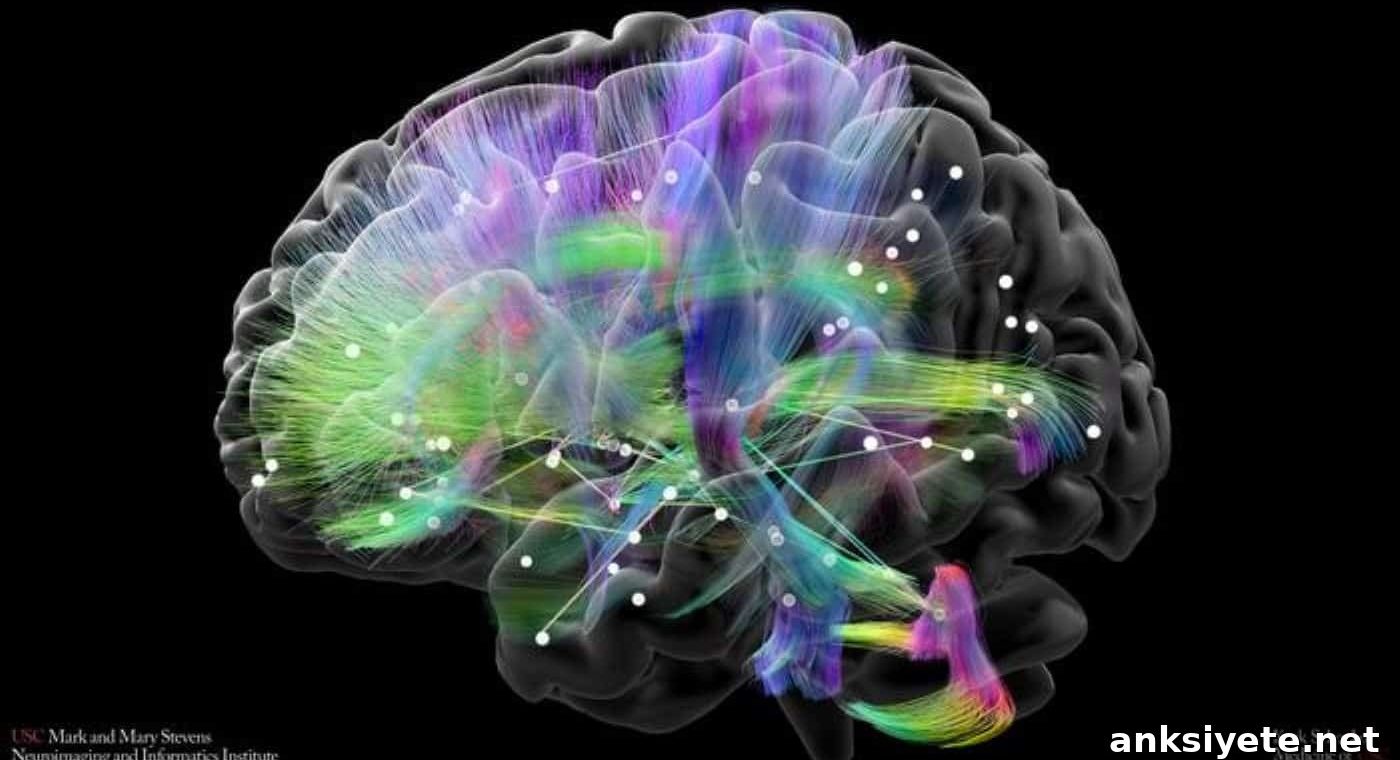
- Macroscale Connectome Neuroimaging: Structural MRI and functional MRI data across the BD² cohort will be analyzed to map how the retrosplenial cortex communicates with frontal, limbic, and subcortical regions. The work leverages analytic frameworks developed in the ENIGMA Bipolar Disorder Working Group to relate cellular and genetic variation to large-scale network dynamics.
“We will apply cutting-edge structural and functional brain network modeling approaches developed within our global ENIGMA studies,” said Melody Kang, a USC neuroscience PhD student involved in the project. Ching currently directs the ENIGMA Bipolar Disorder Working Group, a worldwide collaborative network that aggregates neuroimaging and clinical data from more than 250 institutions.
A Multidisciplinary Discovery Engine
By examining the retrosplenial cortex across genomic, cellular, and whole-brain scales, the team aims to build an integrated model of bipolar mood instability that links molecular cascades to clinical phenomena. The findings are intended to identify specific molecular pathways active in retrosplenial switch cells, which could inform the development of next-generation, targeted therapeutics aimed at preventing or reversing pathological mood switching.
“This is the kind of ambitious, multidisciplinary project that traditional funding mechanisms rarely support,” Ching said. “The BD² award gives us a unique opportunity to connect neuroimaging observations in living patients with the cellular and genetic mechanisms that may underpin mood switching, moving us closer to clinically actionable biomarkers and treatments.”
Arthur W. Toga, PhD, director of Stevens INI, emphasized the collaborative nature of the work: “Mood switching profoundly affects daily life for people with bipolar disorder, yet its biology remains elusive. By combining imaging, genetics, and cell biology and sharing data openly across teams, this project substantially increases our chances of finding results that matter to patients.”
Although this research is exploratory and does not immediately test new medications, its goal is to identify cellular and molecular targets within retrosplenial switch cells that could underpin future, mechanism-based interventions designed to halt or modulate mood-switching processes.
Editorial Notes:
- This article was edited by a Neuroscience News editor.
- The referenced journal paper will be reviewed in full upon its release.
- Additional context and clarifications were added by editorial staff to aid understanding.
About this neuroscience Research:
- Media Contact: Laura LeBlanc
- Source: USC
- Image Credit: Image credited to Stevens INI