
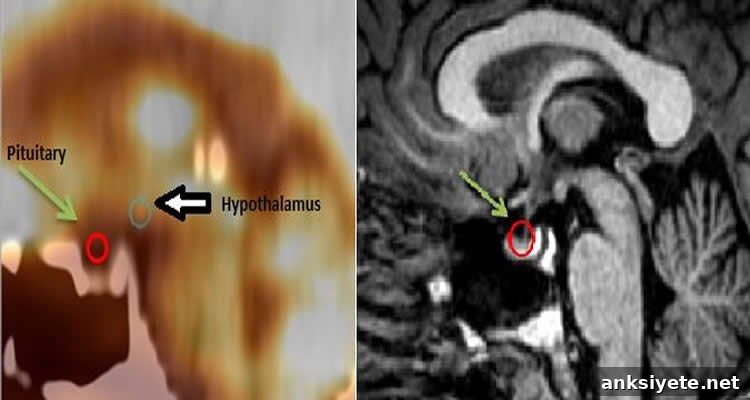
Hybrid PET/CT imaging focused on the pituitary region shows promise for distinguishing military veterans with post-traumatic stress disorder (PTSD) from those with mild traumatic brain injury (MTBI), according to a study presented at the annual meeting of the Radiological Society of North America (RSNA).
The study adds weight to the hypothesis that a subset of veterans diagnosed with PTSD may in fact have hormonal disturbances caused by pituitary gland dysfunction following blast-related injury.
MTBI refers to brain injury resulting from an external force, while PTSD is a mental health disorder that can develop after exposure to a traumatic event. Clinically, the two conditions commonly overlap: research indicates that as many as 44 percent of returning veterans who experienced MTBI with loss of consciousness also meet diagnostic criteria for PTSD. Differentiating between PTSD and MTBI is challenging because their symptoms often overlap and conventional structural neuroimaging frequently appears normal.
To investigate biological differences, researchers used 18F-fluorodeoxyglucose (18F-FDG) PET/CT to examine metabolic activity in the hypothalamus and pituitary glands of veterans with blast-related MTBI. The hypothalamus and pituitary sit at the base of the brain and, together with the adrenal glands, form the hypothalamic–pituitary–adrenal (HPA) axis. This axis plays a central role in regulating stress responses, mood, energy balance and other essential physiological processes.
“The HPA axis is a feedback system: damage to any component affects the others,” said Thomas M. Malone, B.A., Department of Neurosurgery, Saint Louis University School of Medicine. “It is thought to be important in PTSD, but neuroimaging research in veteran populations has been limited.”
The investigators reviewed 159 brain 18F-FDG PET/CT exam records. They found that FDG uptake in the hypothalamus was significantly lower in veterans with MTBI only, compared with healthy controls. Conversely, FDG uptake in the pituitary gland was significantly higher in the group with both MTBI and PTSD than in the MTBI-only group.
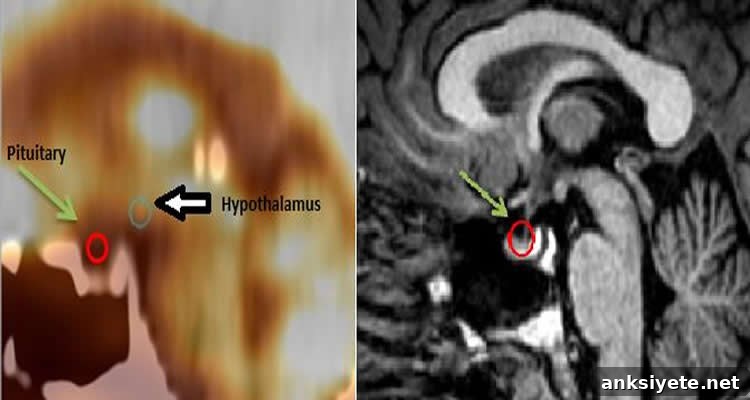
Higher FDG uptake in the pituitary among veterans with MTBI and PTSD supports the possibility that some cases attributed to PTSD may actually reflect hypopituitarism—insufficient production of one or more pituitary hormones. Increased metabolic activity on PET/CT could indicate that the gland is working harder to compensate for disrupted hormone signaling.
“This raises the possibility that some presentations labeled PTSD might be hypopituitarism presenting with similar symptoms,” Malone explained. “If so, identifying hormonal irregularities could open treatment pathways by addressing specific endocrine deficits on an individual basis.”
Malone offered an analogy: increased pituitary activity in these patients could be like placing a car in deep snow and continually pressing the accelerator—the engine revs, but the car does not move. In the biological context, the gland may be hyperactive metabolically while failing to restore normal hormone balance.
These findings indicate that PET/CT may be a useful tool to help distinguish PTSD from MTBI and to reveal underlying biological alterations linked to stress-related disorders. A clearer biological understanding could influence evaluation strategies, such as targeted endocrine screening for veterans with persistent symptoms after blast exposure.
“This work sheds light on the complex problem of PTSD, which shares symptoms with depression and anxiety and is often approached primarily with psychotherapy and psychopharmacology,” Malone said. “Our results reinforce the concept that veterans with MTBI and PTSD may have distinct biological changes compared with those who have MTBI alone.”
Co-authors on the study include Osama A. Raslan, M.D., M.B., B.Ch.; Diane M. Whitson, M.P.H.; Razi Muzaffar, D.O.; P.T. Roskos, Ph.D.; Patrick V. Kelly, Ph.D.; Richard R. Buchholz, M.D.; and Medhat M. Osman, M.D.
Contact: Linda Brooks – Radiological Society of North America
Source: Radiological Society of North America press release
Image Source: Image credited to Radiological Society of North America and adapted from the press release
Original Research: Research presented at the Annual Meeting of the Radiological Society of North America.