
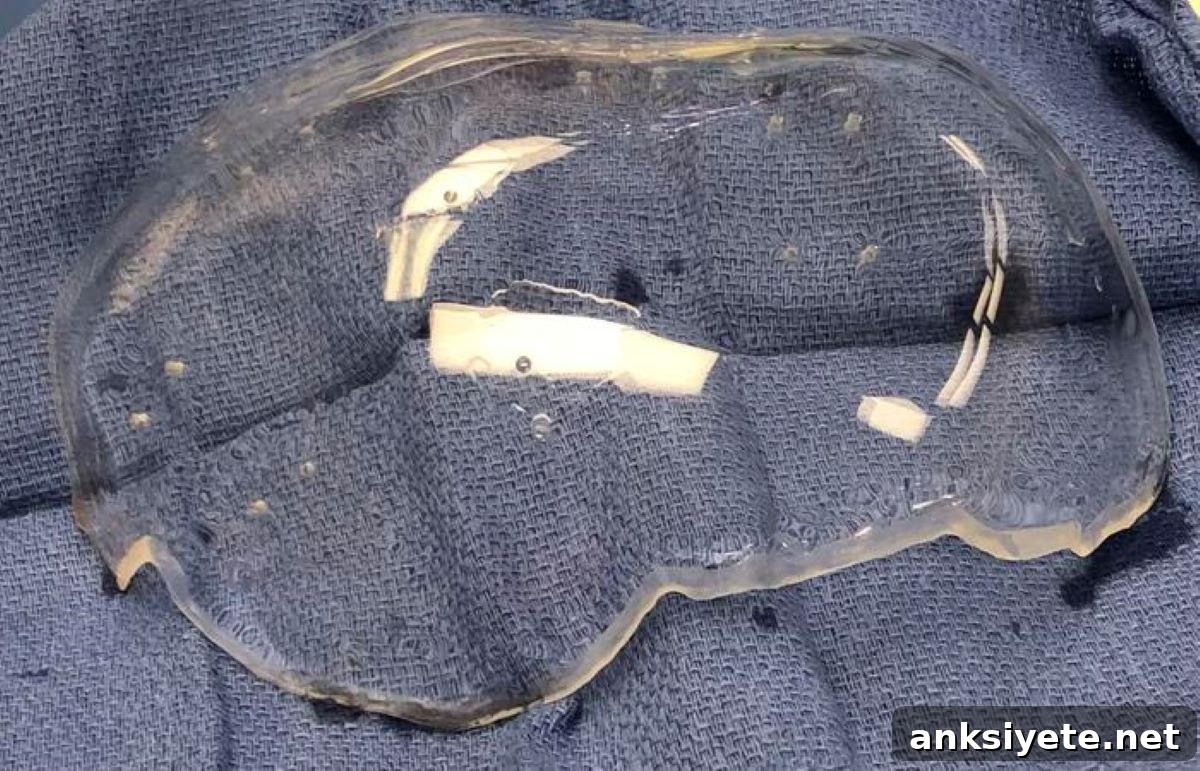
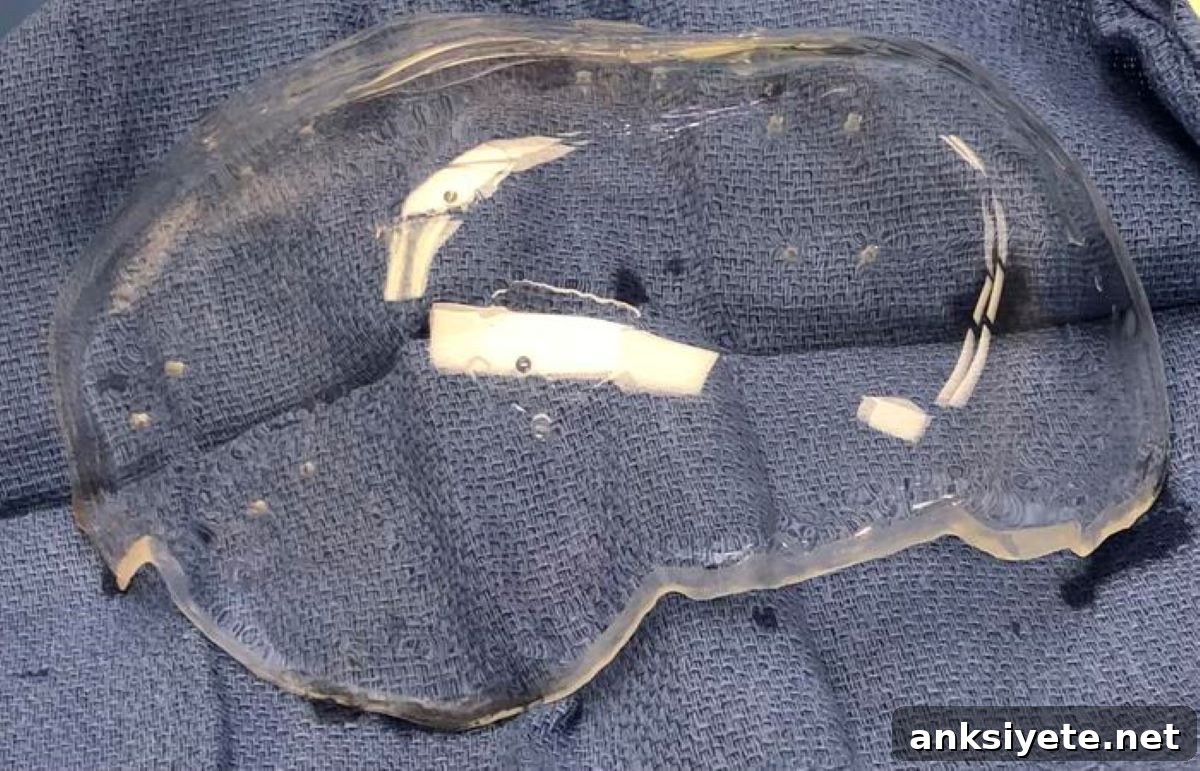
Summary: Researchers at the Keck School of Medicine of USC and Caltech developed a transparent cranial implant that permits high-resolution functional ultrasound imaging (fUSI) of the human brain. This acoustic window enables sensitive, real-time monitoring of brain activity without inserting electrodes into brain tissue, offering new possibilities for clinical monitoring and neuroscientific research, especially for patients who have suffered traumatic brain injury (TBI).
Key Facts:
- Innovation: A clear, ultrasound-transparent skull implant enables functional ultrasound imaging through the cranial window.
- Minimally invasive monitoring: fUSI through the implant provides high-resolution functional data without intracranial electrodes or imaging through intact bone.
- Clinical and research potential: The technique may improve patient monitoring after TBI and expand research on brain function, cognition, motor control and autonomic processes.
Source: USC
In a first-of-its-kind clinical demonstration, scientists from the Keck School of Medicine of USC and the California Institute of Technology designed and implanted a transparent polymethyl methacrylate (PMMA) cranial prosthesis in a patient, then recorded functional ultrasound imaging (fUSI) data through that window. Their results indicate that fUSI can capture task-related cortical activity in an awake, behaving adult, outside of an operating room setting.
“This is the first application of functional ultrasound imaging through a skull replacement in an awake, task-performing human,” said Charles Liu, MD, PhD, professor of clinical neurological surgery and director of the USC Neurorestoration Center. The team emphasizes that an acoustic window can provide clinically relevant functional information while avoiding the risks and invasiveness of implanted electrodes.
The study participant, 39-year-old Jared Hager, suffered a traumatic brain injury in a 2019 skateboarding accident. Emergency surgery required removal of part of his skull to relieve pressure, and because of pandemic-related delays he awaited reconstruction for more than two years. While he was missing bone, Hager volunteered to participate in research exploring new neuroimaging techniques, including early experiments with functional photoacoustic computed tomography (fPACT) and the fUSI methods used in this study.
When reconstructive surgery was scheduled, the research team collaborated with Longeviti Neuro Solutions to design a custom, ultrasound-transparent PMMA implant that both repaired Hager’s skull and allowed fUSI measurements. Before surgery, the team optimized fUSI settings using an in vitro cerebrovascular phantom and animal models to identify pulse sequences and parameters that maximize signal quality through PMMA.
Researchers collected fUSI recordings while Hager performed tasks pre- and post-implant: a computerized “connect-the-dots” game and guitar playing. Comparing the datasets showed that, although signal fidelity decreased compared with direct soft-tissue imaging, the cranial window still provided usable, task-specific cortical maps. These results demonstrate that fUSI through a PMMA implant can capture functionally meaningful brain signals in an awake person.
Functional ultrasound imaging measures blood flow changes associated with neural activity and offers finer spatial resolution than many traditional methods. Unlike intracranial electroencephalography (EEG), fUSI does not require electrodes embedded in brain tissue, and its equipment is more portable and less costly than MRI systems. For clinicians, an added practical benefit of a transparent implant is direct visual monitoring for complications such as hematoma formation beneath the prosthesis.
Technological development and collaboration
The project builds on long-standing collaborations between Liu and Caltech scientists Mikhail Shapiro, PhD, and Richard Andersen, PhD, to develop ultrasound sequences capable of detecting hemodynamic signals linked to neural activity and to improve brain–computer interface approaches. Preclinical tests in rodents showed that thin PMMA windows produced the clearest fUSI images, guiding the design of the human cranial implant.
Following successful preclinical validation, the team applied the refined fUSI protocol in the clinical setting. The group reports mapping and decoding of task-modulated cortical activity during the gaming task and identification of motor-related responses during guitar strumming. These findings indicate that high-resolution (approximately 200 μm) functional imaging is feasible through an acoustically transparent cranial window.
Clinical implications and future directions
While the implant and fUSI protocol remain experimental pending clinical trials, this proof-of-concept study suggests several future applications. For TBI patients and others who require cranial reconstruction, a clear implant could enable ongoing, noninvasive monitoring of brain function and recovery. For researchers, widespread use of acoustic windows could allow longitudinal studies of neural dynamics in naturalistic settings, improving understanding of cognition, sensation, movement and autonomic regulation.
The research team plans to refine fUSI acquisition and processing to enhance resolution and sensitivity. Future studies with additional participants are needed to systematically link fUSI measurements to specific cognitive and motor functions and to establish clinical utility across diverse neurological conditions.
“Our findings show we can extract useful functional information through an acoustic cranial window,” Liu said. “The next questions are which signals are most actionable clinically and how this technology can be translated to help more patients.” Hager continues to assist the team by participating in follow-up studies and testing complementary approaches, such as laser spectroscopy to measure cerebral blood flow.
About this research
In addition to Charles Liu, MD, PhD, and Jonathan Russin, MD, the study includes contributions from Mikhail Shapiro, PhD, Richard Andersen, PhD, Kay Jann, PhD, Claire Rabut, Sumner Norman, Whitney Griggs, and Vasileios Christopoulos. The work was supported by multiple funders, including the National Institutes of Health and several fellowships and institutional centers.
Funding: Supported in part by NIH [R01NS123663]; the T&C Chen Brain-Machine Interface Center; the Boswell Foundation; the National Eye Institute [F30 EY032799]; the Josephine de Karman Fellowship; the UCLA-Caltech Medical Scientist Training Program [NIGMS T32 GM008042]; the Della Martin Postdoctoral Fellowship; the Human Frontier Science Program [LT000217/2020-C]; the USC Neurorestoration Center; and the Howard Hughes Medical Institute.
About this neurotech research news
Author: Laura LeBlanc
Source: USC
Contact: Laura LeBlanc – USC
Image: Photo credit: Todd Patterson
Original Research: Open access. “Functional ultrasound imaging of human brain activity through an acoustic transparent cranial window” by Charles Liu et al., published in Science Translational Medicine.
Abstract
Functional ultrasound imaging of human brain activity through an acoustic transparent cranial window
Accurate visualization of human brain activity is essential for understanding normal function and neurological disease, yet many current recording methods are either invasive, low in sensitivity, or impractical outside specialized settings. Functional ultrasound imaging (fUSI) offers sensitive, high-resolution mapping of neurovascular responses, but adult human skull bone blocks the ultrasound frequencies required for this technique.
In this study, investigators evaluated polymethyl methacrylate (PMMA) cranial implants and designed a custom ultrasound-transparent cranial window for an adult patient undergoing reconstructive surgery after traumatic brain injury. Using in vitro cerebrovascular phantoms and an in vivo rodent cranial defect model, the team optimized fUSI pulse sequences and measured signal intensity and signal-to-noise ratio through implants of varying thickness and a titanium mesh control.
Results showed that high-sensitivity neural activity recordings are achievable through a thin PMMA implant. In the human participant, fUSI captured task-modulated cortical responses during a “connect the dots” video task and a guitar-strumming activity, demonstrating mapping and decoding of functional cortical activity in an awake individual outside the operating room. This proof-of-principle indicates that fUSI through an acoustically transparent cranial window can serve as a high-resolution (≈200 μm) modality for measuring adult human brain activity.