
Summary: Global dementia cases are projected to reach 139 million by 2050. To accelerate prevention and treatment research, Texas A&M’s Dementia & Alzheimer’s Research Initiative (DARI) awarded $1.325 million in seed grants to support 11 projects. One of these projects is investigating how disrupted circadian rhythms harm the brain’s immune system and whether a novel extracellular vesicle (EV) therapy can protect microglia and reduce Alzheimer’s-related inflammation.
Key Research Findings
- The circadian trigger: Chronic disruption of sleep-wake cycles — such as from shift work or persistent irregular schedules — activates microglia, the brain’s primary immune and “clean-up” cells.
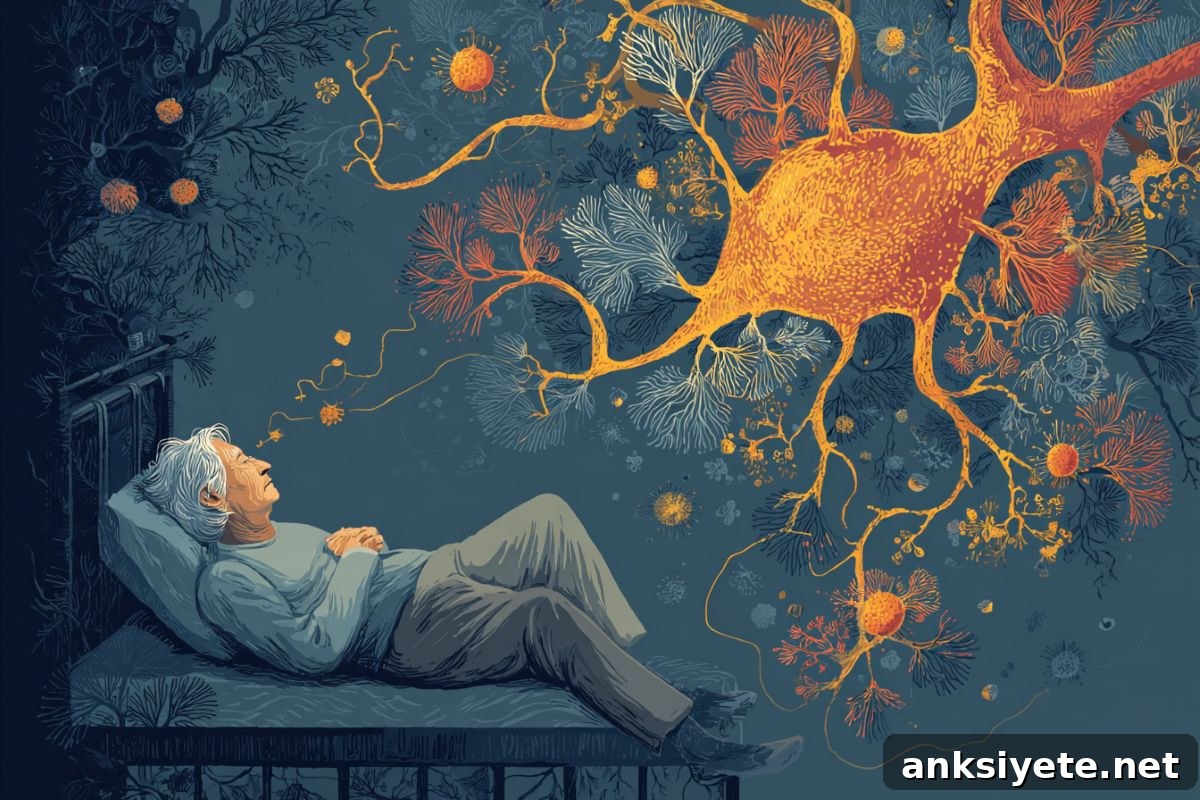
- Stress-primed microglia: Healthy microglia have a branched, tree-like form that lets them monitor the brain. Under prolonged circadian stress, the team observed microglia with abnormal, extended branching and other morphological changes consistent with a “stress-primed” state that impairs normal function.
- Debris accumulation and risk: When microglia fail to clear damaged cells and amyloid plaques efficiently, cellular debris and toxic proteins can build up. This accumulation is a major contributor to cognitive decline and progression of dementia.
- Extracellular vesicle (EV) therapy: Developed by Ashok Shetty, EV therapy uses nano-sized particles derived from stem cells that carry protective proteins and signaling molecules. These EVs appear to communicate anti-inflammatory signals to microglia, helping them remain in a protective, surveillance mode rather than shifting into a damaging inflammatory state.
- Environmental influence on risk: Souza and collaborators emphasize that only about 3% of Alzheimer’s risk is attributable to genetics; the remaining 97% is linked to environmental and lifestyle factors, making prevention through behavioral and therapeutic strategies especially important.
Background and project goals
Alzheimer’s disease and other dementias currently affect roughly 55 million people worldwide, including about 7.2 million in the United States. Incidence rises by around 10 million new cases per year globally, with projections estimating 78 million cases by 2030 and 139 million by 2050. In response, Texas A&M Health and the university’s Division of Research launched DARI to speed detection, prevention, and treatment efforts.
Karienn Souza, a research assistant professor at the Naresh K. Vashisht College of Medicine at Texas A&M University, is among the inaugural 2026 seed grant recipients. Her laboratory, working with David Earnest and others, developed an animal model to mimic chronic circadian rhythm disruption and study its long-term effects on the brain’s immune system.
Their experiments showed that prolonged circadian misalignment activates microglia and alters their morphology. Souza explains that microglia change form depending on the brain’s condition — shifting from a normal, ramified surveillance state to an inflammatory, atrophied, or otherwise dysfunctional state when exposed to persistent stressors.
With DARI funding, Souza’s team will test whether Shetty’s EV therapy can prevent or even reverse microglial dysfunction and the downstream neuroinflammation associated with dementia. The EVs deliver protective proteins and molecular signals that help preserve microglial function, reducing the risk that the brain will accumulate damaging waste products, including amyloid plaque.
Souza hopes the project will clarify how environmental influences such as irregular work schedules or social timing contribute to Alzheimer’s risk and identify actionable strategies to reduce disease progression. “Only 3% of Alzheimer’s risk is genetic, and the rest is environmental,” she notes, underscoring the importance of targeting lifestyle factors alongside new therapeutics.
Key Questions Answered
A: It’s not that simple. One-off sleep loss does not directly cause Alzheimer’s, but chronic circadian disruption is a significant environmental stressor. Over time, it can prime microglia to stop clearing toxic debris effectively, which may accelerate cognitive aging and raise disease risk.
A: EVs are tiny, nano-scale particles released by stem cells and other cells. They carry proteins, lipids, and signaling molecules that can alter the behavior of recipient cells — in this case, sending anti-inflammatory instructions to microglia so they maintain protective functions.
A: Preventing dementia is a central goal of DARI. By identifying environmental triggers (like circadian disruption) and developing interventions such as EV therapy, researchers aim to reduce or delay disease onset and progression through both behavioral and biological strategies.
Editorial Notes
- This article was edited by a Neuroscience News editor.
- Journal sources were reviewed in full.
- Additional context was provided by staff to clarify methods and implications.
About this Alzheimer’s disease research news
Author: Laura Tolentino ([email protected])
Source: Texas A&M University
Contact: Laura Tolentino – Texas A&M
Image: Image credited to Neuroscience News.