
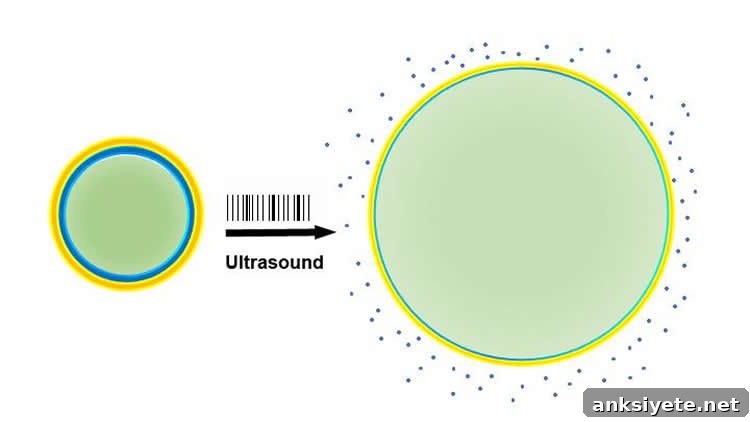
Summary: Researchers from Johns Hopkins have developed a noninvasive technique to deliver concentrated doses of drugs to precise locations in the brain of rats using focused ultrasound to trigger release from biodegradable nanoparticles.
Source: Johns Hopkins Medicine
Ultrasound pulses activate targeted release of drugs from nanoparticles
Biomedical engineers at Johns Hopkins University report a noninvasive method that releases and delivers focused doses of medication directly to selected regions of the rat brain using ultrasound. The approach encapsulates a drug inside biodegradable nanoparticles and then uses precisely targeted ultrasound pulses—similar to those in clinical imaging—to trigger local release. Because release occurs only where the ultrasound is applied, the total systemic dose can be much lower and side effects limited.
The research team notes this platform could be adapted for many psychoactive and other drugs, expanding clinical therapies and experimental studies both inside and beyond the brain. Many components of the system—the biodegradable materials, the ultrasound technology, and the drugs used in the work—have prior human safety data, so the investigators believe translation to clinical testing may be quicker than with entirely novel technologies. They intend to initiate the regulatory process within the next year or two.
“If further testing supports safety and efficacy in humans, this approach would let us direct medications to very specific brain regions and also enable new ways to study the function of those regions,” says Jordan Green, Ph.D., associate professor of biomedical engineering and member of the Kimmel Cancer Center and the Institute for Nanobiotechnology.
Details of the work appear in the journal Nano Letters (published January 2017).
The brain is protected by the blood-brain barrier (BBB), a molecular filter that lines brain blood vessels and prevents most drugs from entering. Only very small, oil-soluble molecules and gases cross easily, so systemic drug treatments for brain disorders must either rely on such molecules or expose the entire brain and body to a drug. The Johns Hopkins team sought a different route: deliver an active drug only where needed by releasing it from a circulating nanoparticle while it passes through local blood vessels and then letting the freed drug cross the BBB in that small area.
To accomplish this, the researchers designed nanoparticles with a biodegradable outer shell formed from amphiphilic building blocks—molecules with one oil-loving end and one water-loving end. The oil-loving interior binds the drug, while the particle core contains the liquid perfluoropentane. When focused ultrasound is applied through the scalp and skull, the perfluoropentane vaporizes and expands, stretching the particle shell and releasing the drug payload into the surrounding blood. The freed drug then diffuses across the local BBB into nearby brain tissue.
In experiments the team optimized sonication parameters in vitro using plastic tubing to determine ultrasound pulse power and frequency that reliably uncage drugs without causing high-intensity ultrasound effects such as BBB disruption. They tracked particle biodistribution in rats using fluorescently labeled nanoparticles and found most particles accumulated in the liver and spleen—typical clearance organs—while no intact particles entered the brain, as expected given their size.
To test therapeutic effect, the researchers induced seizures in rats, administered propofol-loaded nanoparticles, and then applied MRI-guided focused ultrasound to selected brain regions. Propofol is a small-molecule anesthetic commonly used to treat seizures. As soon as ultrasound triggered local drug release, seizure activity in the treated animals subsided, demonstrating effective, focal neuromodulation without evidence of parenchymal injury or widespread BBB opening.
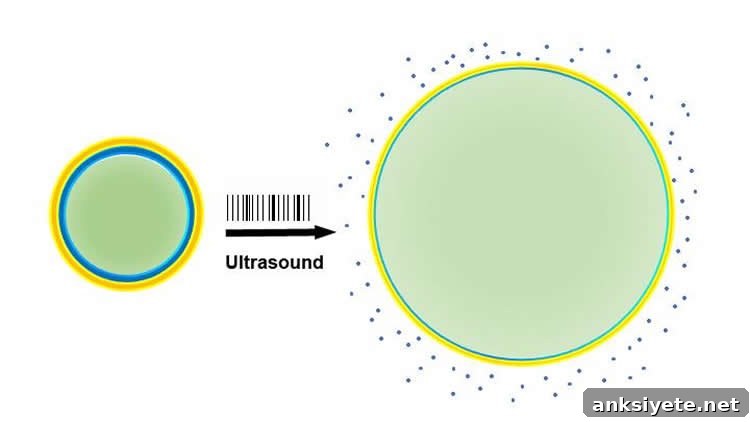
“These experiments demonstrate that focused, noninvasive ultrasound can be used to manipulate brain cell activity by triggering local drug delivery,” Green explains. Clinical ultrasound systems can target volumes only a few cubic millimeters in size—far smaller than many current neuromodulation alternatives—making this approach highly specific.
Co‑author Raag Airan, M.D., Ph.D., notes immediate clinical opportunities include preoperative brain mapping for neurosurgery. Today, mapping often requires awake surgery with direct cortical stimulation to identify vital functional regions. Ultrasound-triggered drug uncaging could temporarily and reversibly suppress small, localized brain areas prior to surgery with minimal invasiveness, simplifying planning and potentially improving safety.
The investigators acknowledge that current reliance on real-time MRI guidance increases cost and access barriers. They are developing software to allow synchronization of a single MRI image with the ultrasound guidance system to reduce costs and expand accessibility. Even with current imaging constraints, the team expects the technique to be clinically useful in situations where a drug’s effects last days to weeks, and broadly useful in research for precisely probing the roles of specific brain regions.
Other contributors to the study include Randall Meyer, Nicholas Ellens, Kelly Rhodes, Keyvan Farahani, Martin Pomper and Shilpa Kadam from the Johns Hopkins University School of Medicine. The work was supported by grants from the National Institute of Biomedical Imaging and Bioengineering, the National Institute of Child Health and Human Development, the National Cancer Institute, Philips Inc., the Foundation of the American Society for Neuroradiology, the National Science Foundation Graduate Research Fellowship Program, Achievement Rewards for College Scientists, and the Walter and Mary Ciceric Foundation.
Abstract
Targeted, noninvasive neuromodulation that works in otherwise awake subjects would transform basic and clinical neuroscience. The authors developed biodegradable nanoparticles that enable focused ultrasound–triggered uncaging of a neuromodulatory drug (propofol) using sonication parameters achievable with current clinical transcranial focused ultrasound systems. These particles are potent enough to silence seizures in an acute rat model without detectable brain tissue damage or blood-brain barrier opening. Continued development could yield focal, image-guided, noninvasive clinical neuromodulation across multiple pharmacological pathways.
Original research citation: “Noninvasive Targeted Transcranial Neuromodulation via Focused Ultrasound Gated Drug Release from Nanoemulsions,” Raag D. Airan et al., Nano Letters (published online January 17, 2017). DOI: 10.1021/acs.nanolett.6b03517.